
Lower cholesterol and blood glucose naturally with psyllium husk fiber!
This easy daily psyllium husk fiber drink takes seconds to make and adds viscous soluble fiber to your diet. Learn how much to use, when to drink it, and why I include it in my daily routine.

Save This Recipe!
Type your email & I'll send it to you!
Psyllium husk is one of my favorite ways to add viscous soluble fiber to the diet. My simple daily psyllium drink requires just psyllium and water and takes seconds to make.
Jump to:
- 🔍 Quick Look: Psyllium Husk Fiber Drink
- 👩🏽⚕️ Dietitian's Note
- 🌿 What Is Psyllium Husk?
- 🌱 Whole Psyllium Husk vs. Psyllium Powder
- 👩🏼🌾 Ingredients for Daily Drink
- 📝 How to Take Psyllium Husk
- ❤️ How Psyllium Lowers Cholesterol
- 🩸 How Psyllium Can Reduce Blood Glucose Spikes
- ⚖️ Psyllium Husks for Weight Loss
- 🚽 How it Supports Regularity
- ⏱️ Dosage and Timing
- 💊 Does Psyllium Reduce the Absorption of Nutrients?
- 💦 Side Effects of Psyllium Husks
- ⚱️ Does Psyllium Husk Contain Heavy Metals?
- 🌾 Psyllium Husk Alternatives
- 🍽️ Psyllium Husk Nutrition and Calories
- 🍞 More Psyllium Recipes
- 🙋🏽♀️ Recipe FAQs
- 🥣 More Cholesterol-Lowering Recipes
- 👩🏽🍳 Made this recipe?
- ⚖️ Convert the Recipe to Metric (g & mL)
- Daily Psyllium Husk Drink Recipe
- 🛍️ Shop Recipe Cookware and Ingredients
- 💬 Comments
🔍 Quick Look: Psyllium Husk Fiber Drink
- ⏱️ Prep Time: 3 minutes
- 🎛️ Cook Time: No cooking required
- 👥 Servings: 1
- 📊 Calories: ~15 kcal (based on nutrition panel)
- 👩🏽🍳 Flavor Profile: Virtually tasteless and neutral. The texture is more noticeable than the flavor-slightly thick, smooth, and gel-like as the psyllium hydrates.
- 💪🏼 Nutrition: 4.5 grams of fiber
- ⭐ Difficulty: Just stir psyllium into water and drink promptly. Ready in under 3 minutes.
👩🏽⚕️ Dietitian's Note
As a Registered Dietitian, I especially like that psyllium has been studied in randomized controlled trials and meta-analyses. But how much you take, when you take it, and how you mix it matter.
What makes psyllium interesting isn't simply that it's fiber. It absorbs water and forms a viscous gel in the digestive tract. This unique property helps explain why psyllium may lower LDL cholesterol, reduce post-meal blood sugar spikes, support regularity, and increase fullness.
Why You'll Love This Recipe:
This Psyllium Husk Fiber Drink is easy to make, virtually tasteless, and healthy. Plus, it's:
- One main ingredient: Just psyllium and water.
- Easy daily fiber: One tablespoon adds a concentrated source of viscous fiber.
- Heart healthy: Psyllium can help lower LDL cholesterol.
- Blood sugar friendly: Taking it around meals may reduce post-meal glucose spikes.
- Supportive of regularity: Its water-holding properties can help normalize stool consistency.
- Helpful for increasing fullness: Its gel-forming properties may help with satiety.
🌿 What Is Psyllium Husk?
Psyllium comes from the seeds of Plantago ovata. The outer husk is exceptionally rich in viscous, gel-forming soluble fiber.
When psyllium contacts water, it absorbs liquid, swells, and forms a gel.
This viscosity is central to many of psyllium's benefits. It helps alter bile acid handling, slows the digestion and absorption of carbohydrates, holds water in stool, and may increase fullness.
Psyllium is also relatively resistant to fermentation compared with many other soluble fibers, allowing it to retain much of its water-holding and gel-forming capacity as it travels through the gastrointestinal tract.
🌱 Whole Psyllium Husk vs. Psyllium Powder
Both come from the same plant. Psyllium powder is simply psyllium husk that has been ground more finely.
Whole husks are light and flaky and hydrate somewhat more gradually. Powder is denser and thickens liquid much faster.
There isn't compelling evidence that one provides greater metabolic benefits than the other.
How to Substitute Whole Psyllium Husk and Powder
For this psyllium drink recipe, substitute about ~1 teaspoon psyllium powder for 1 tablespoon whole psyllium husk, but check the package label as this varies by brand. The exact amount isn't critical for a drink, but for baking, it's best to substitute by weight because powder packs more densely and volume can vary by brand and grind. If a recipe calls for 5 grams whole psyllium husk, use 5 grams psyllium powder.
👩🏼🌾 Ingredients for Daily Drink
Below, I share ingredient notes from both a nutrition expert's and trained chef's perspective.
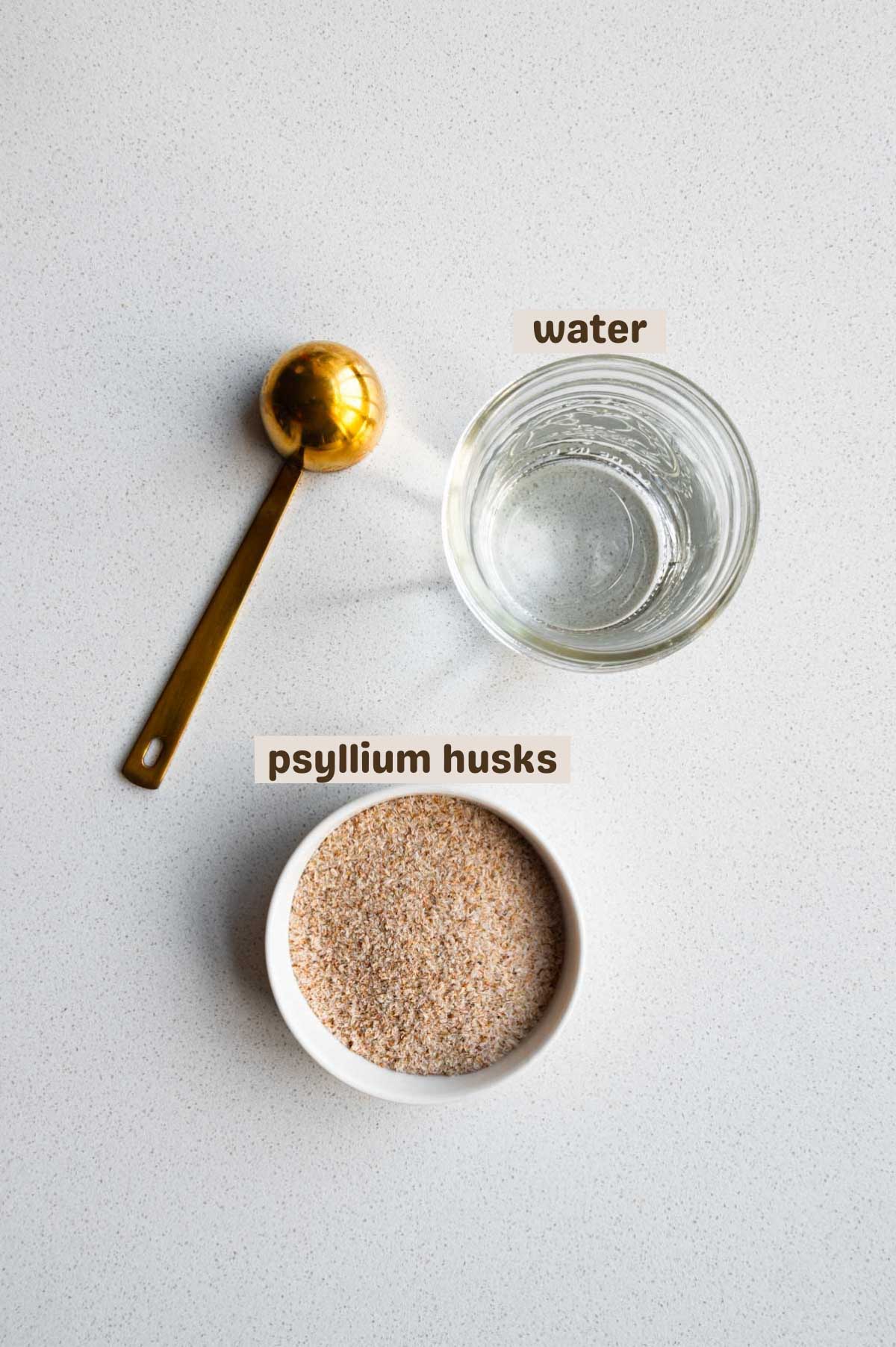
- Whole psyllium husk or powder: Use 1 tablespoon whole psyllium husk (3 teaspoons). If using powder, substitute 1 tablespoon whole husk with about 1 ½ to 2 teaspoons powder.
- Water: Use at least 8 ounces (1 cup/240 mL) water per 1 tablespoon whole psyllium husk.
See the printable recipe card below for quantities.
📝 How to Take Psyllium Husk
The complete recipe with exact amounts is below. These additional tips will help you get the best results.
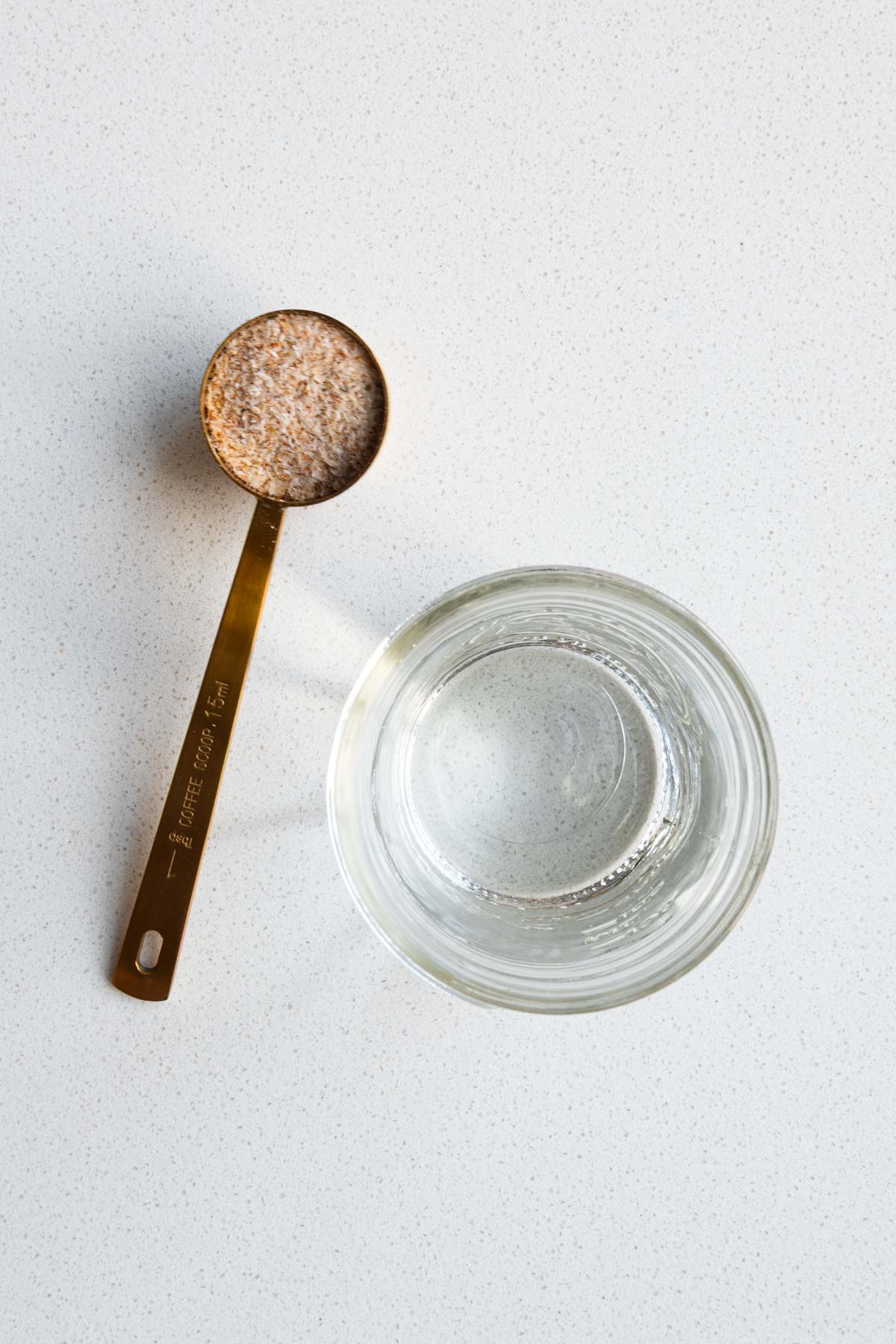
- Add the water first: Pour at least 8 ounces of water into a large glass.
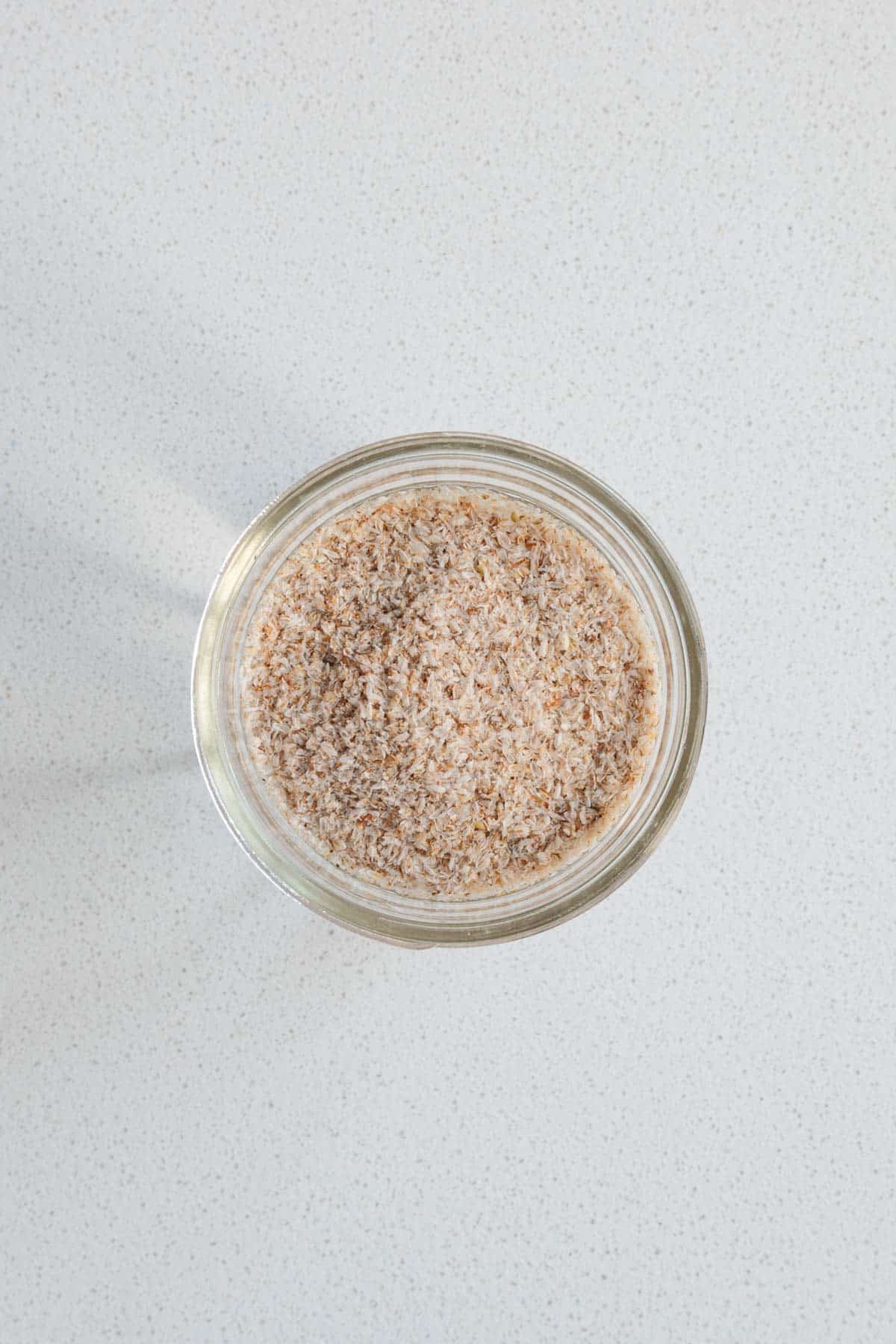
- Add the psyllium: Add 1 tablespoon whole psyllium husk.
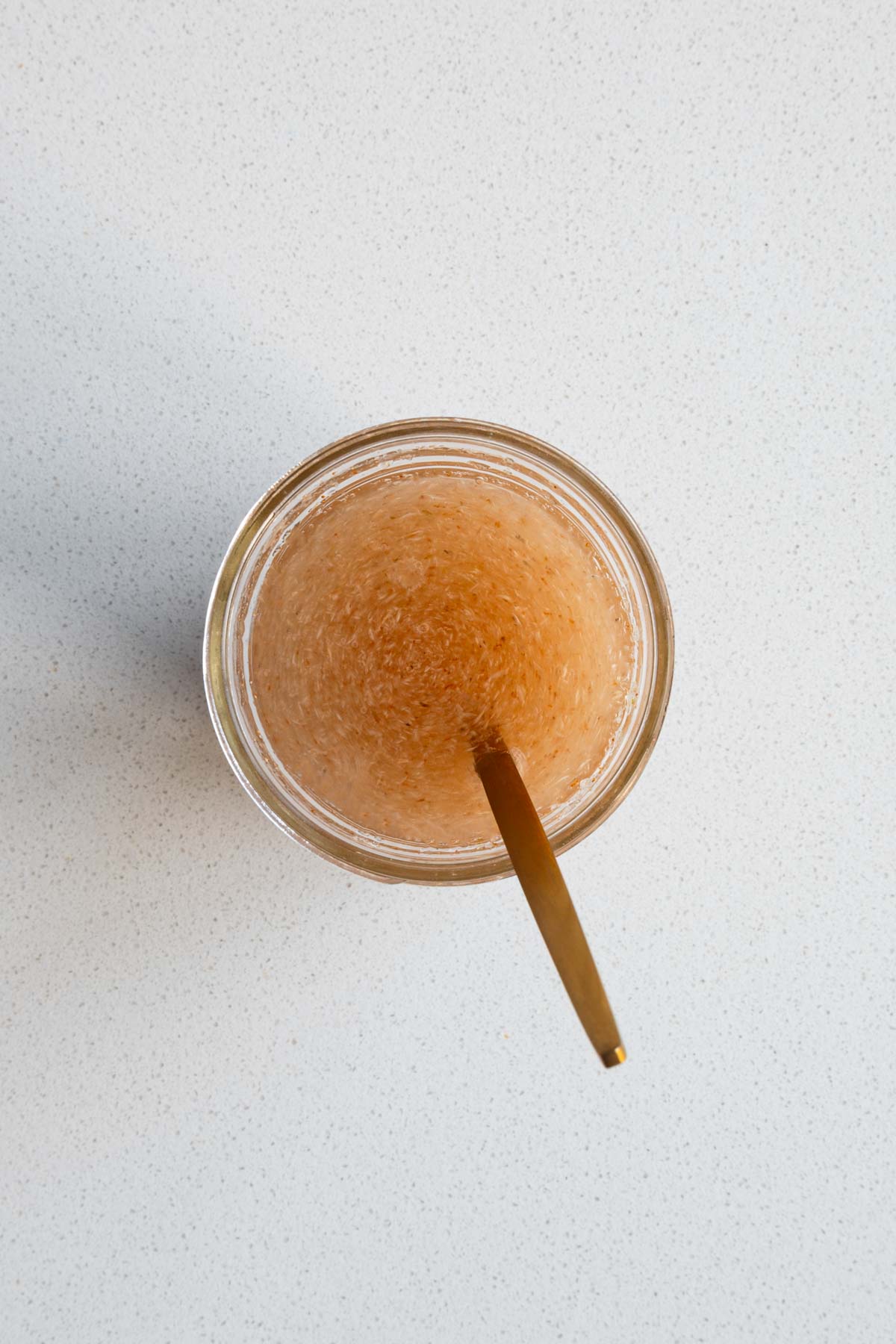
- Stir immediately: Stir vigorously until evenly dispersed.
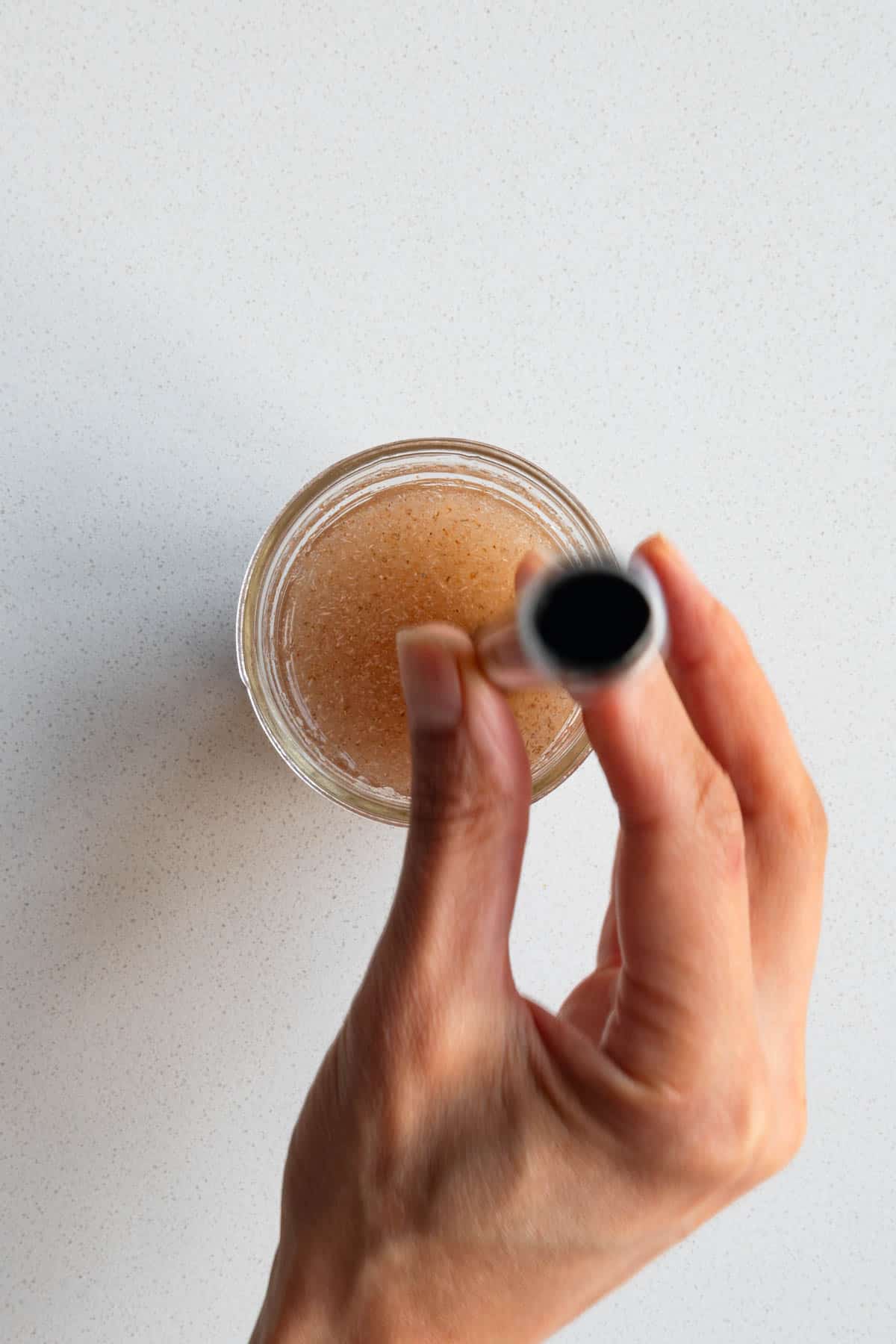
- Drink promptly: Drink while the mixture is still thin and easy to swallow. Do not wait for it to become a thick gel. Follow with additional water if desired.
❤️ How Psyllium Lowers Cholesterol
The mechanism comes back to viscosity.
Psyllium's gel can interfere with the normal reabsorption of bile acids, increasing their loss through the stool.
Your liver then needs to make replacement bile acids. Because cholesterol is used to make bile acids, this process can increase hepatic cholesterol demand and LDL clearance from circulation.
So psyllium doesn't simply "soak up cholesterol." It changes bile acid handling, which helps lower circulating LDL.
Note: For cholesterol lowering, studies commonly used about 5 g of psyllium twice daily, taken before breakfast and the evening meal. This is roughly equivalent to 2 tablespoons of whole psyllium husks per day, depending on the brand. Psyllium powder is more compact, so measure by weight when possible; 5 g is about 1 teaspoon for some brands.
🩸 How Psyllium Can Reduce Blood Glucose Spikes
Psyllium's viscosity can also slow carbohydrate digestion and glucose absorption.
Think of glucose moving through water versus moving through a loose gel. The viscous environment created by psyllium slows the rate at which glucose reaches the intestinal surface and enters circulation.
The result can be a slower, smaller rise in blood glucose after eating.
The effects tend to be more substantial in people with impaired glucose regulation than in people whose glucose regulation is already normal.
⚖️ Psyllium Husks for Weight Loss
The fiber in psyllium husk absorbs water and creates a viscous gel that may increase fullness and reduce hunger between meals.
However, studies examining actual weight loss have produced mixed results.
For this reason, I think of psyllium as a satiety-supporting fiber rather than a weight-loss supplement.
If fullness is your goal, taking psyllium shortly before the meal when you tend to be hungriest may be useful.
🚽 How it Supports Regularity
Psyllium's water-holding properties can help normalize stool consistency.
With hard stools, it retains water and creates softer, bulkier stool that's easier to pass.
Interestingly, it may also be useful with loose stools.
Psyllium Husk for Diarrhea
Psyllium's gel can hold water and add form to loose stool, which is why the same fiber can potentially be useful for both constipation and diarrhea.
However, psyllium isn't a treatment for every cause of diarrhea.
Persistent or severe diarrhea, blood or black stool, fever, significant abdominal pain, or signs of dehydration require medical evaluation.
⏱️ Dosage and Timing
There isn't one perfect dose for everyone.
For beginners: Start with a smaller amount and gradually increase.
As a daily fiber boost: My recipe uses 1 tablespoon (5 grams) whole psyllium husk once daily.
For cholesterol: Around 10 grams daily (~2 tablespoons whole husk or ~2 teaspoons powder), often divided between two doses, is similar to amounts commonly studied.
For blood sugar: Take psyllium with or shortly before a carbohydrate-containing meal.
To increase fullness: Take it shortly before the meal when you tend to feel hungriest.
When Should I Take Psyllium?
For cholesterol, consistency is likely more important than the exact time of day.
For blood sugar, timing matters more because you want psyllium's viscosity to interact with the meal. A practical window is: with the meal to approximately 30 minutes beforehand.
If you're taking it once daily, I would choose a meal that makes sense for your particular goal and is easy to stick with consistently.
💊 Does Psyllium Reduce the Absorption of Nutrients?
Because psyllium forms a viscous gel, it can alter or delay the absorption of substances in the gastrointestinal tract. However, normal psyllium use has not been shown to cause widespread nutrient malabsorption.
For example, evidence does not support saying that psyllium meaningfully blocks calcium across the board.
Still, I prefer not to take concentrated vitamin and mineral supplements at exactly the same time as psyllium, particularly:
- Iron
- Calcium
- Zinc
- Magnesium
- Multivitamins
A simple conservative approach is to separate these supplements from psyllium by about 2 hours.
What About Medications?
Medication interactions deserve more attention.
Psyllium's gel-forming properties can delay or reduce the absorption of certain oral medications.
Interactions or special timing precautions have been reported for medications including digoxin, lithium, carbamazepine, salicylates, and nitrofurantoin, among others.
Because the appropriate spacing depends on the specific medication, I would not rely on one universal 2-hour rule for every drug.
Check your medication instructions or ask your pharmacist how far apart your specific medication should be taken from psyllium.
💦 Side Effects of Psyllium Husks
Psyllium is generally well tolerated, but suddenly adding a concentrated source of fiber can cause:
- Gas
- Bloating
- Abdominal discomfort or cramping
- Changes in stool frequency or consistency
- Constipation if taken without enough liquid
Rarely, psyllium can cause choking or gastrointestinal obstruction, particularly if consumed without adequate fluid. Allergic reactions are also possible.
How to Reduce Side Effects
If you aren't accustomed to a high-fiber diet, start with a smaller amount and gradually increase.
Always take psyllium with at least 8 ounces (240 mL) water.
Seek medical attention for difficulty swallowing or breathing, severe or persistent abdominal pain, vomiting, or symptoms suggestive of an obstruction or serious allergic reaction.
⚱️ Does Psyllium Husk Contain Heavy Metals?
This is something I pay attention to because psyllium may be consumed every day for years.
ConsumerLab tests psyllium products for lead, arsenic, cadmium, and mercury. I only use brands that performed well in their testing. You can find my preferred options under Cholesterol Lowering Pantry.
For something I consume daily, I look for:
- Plain psyllium with minimal added ingredients
- A clearly stated amount per serving
- Independent contaminant testing
- Testing for lead, arsenic, cadmium, and mercury
Is Organic Psyllium Better?
Not necessarily.
Organic certification tells you how the crop was grown and processed. It doesn't mean the psyllium contains more fiber, provides greater health benefits, or automatically contains less lead or other heavy metals.
If you prefer organic psyllium, that's fine. But for a product I'm consuming daily, I would prioritize verified contaminant testing over the organic label alone.
🌾 Psyllium Husk Alternatives
Not all fibers behave like psyllium, so the best alternative depends on your goal.
Ground flaxseed: Provides soluble and insoluble fiber, ALA omega-3s, and lignans. It's a nutritious whole food but isn't a direct functional substitute for psyllium.
Chia seeds: Form a gel when hydrated and provide fiber, ALA omega-3s, protein, and minerals, but aren't interchangeable with psyllium gram-for-gram.
Oats and barley: Contain beta-glucan, another viscous soluble fiber with evidence for lowering LDL cholesterol.
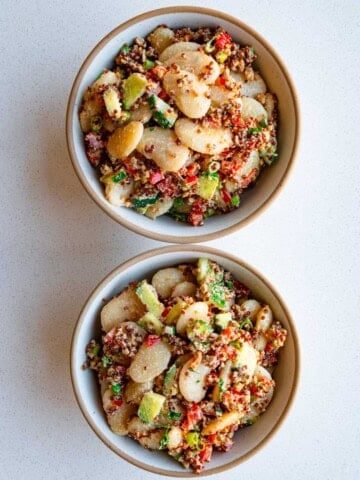
Beans and lentils: Provide several types of fiber plus resistant starch, plant protein, minerals, and phytochemicals.
Methylcellulose: Another supplemental bulk-forming fiber that may help with bowel regularity, although it doesn't necessarily provide all of psyllium's metabolic effects.
I prefer getting the majority of fiber from whole plant foods and using psyllium to add a specific type of viscous, gel-forming fiber.
🍽️ Psyllium Husk Nutrition and Calories
Plain psyllium is essentially a concentrated source of dietary fiber with very little digestible carbohydrate, protein, or fat.
The exact amount of fiber and calories varies by brand and serving size, so check your product's Nutrition Facts panel.
Psyllium isn't nutritionally equivalent to fiber-rich whole foods. Beans, lentils, fruits, vegetables, whole grains, nuts, and seeds provide fiber plus vitamins, minerals, protein, healthy fats, and phytochemicals.
That's why I use psyllium to complement-not replace-a fiber-rich diet.
🍞 More Psyllium Recipes
This Psyllium Jelly is hard to beat. It takes just a few minutes to make and transforms psyllium husks into a lightly sweet, spoonable jelly.
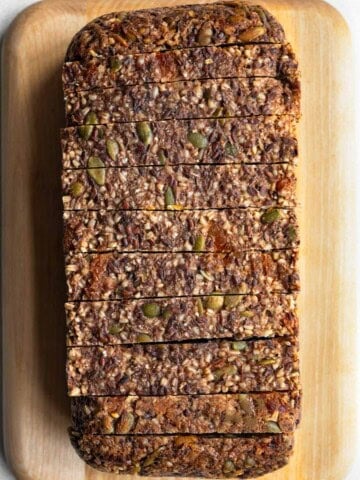
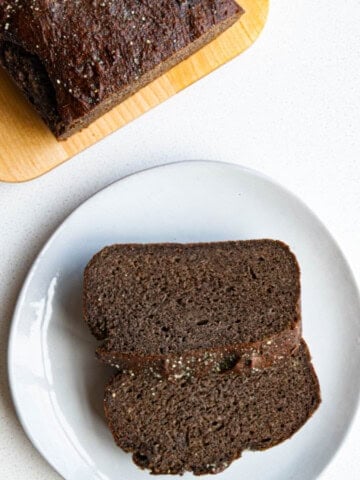
This hearty sliceable Gluten-Free No-Yeast Porridge Bread is packed with flax seeds, pumpkin seeds, and sunflower seeds for a satisfying
My 4-Ingredient Easy Lentil Bread (Vegan), made with red lentils for extra protein. The perfect texture every time.
Rich, silky, and intensely chocolatey, Healthy Chocolate Mousse isn't just a healthier dessert-it's built around ingredients that have been studied for their ability to lower LDL ("bad") cholesterol.
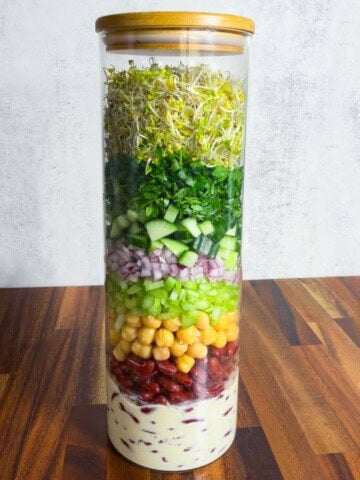
Try these Cholesterol Lowering Recipes on my site
🙋🏽♀️ Recipe FAQs
Psyllium has been used daily in numerous clinical trials. Increase gradually, consume it with adequate liquid, and talk with your healthcare provider if you have difficulty swallowing, gastrointestinal disease, or take medications that may interact with it.
Plain psyllium provides very little digestible carbohydrate, protein, or fat. Nutrition labels vary, so check your specific product for its listed calories and fiber.
Psyllium is the fiber itself. Metamucil is one brand of supplement that contains psyllium and, depending on the product, may contain additional ingredients.
🥣 More Cholesterol-Lowering Recipes

👩🏽🍳 Made this recipe?
Let me know your thoughts on Psyllium Husk by leaving a ⭐️ rating below or sharing it on Instagram.
⚖️ Convert the Recipe to Metric (g & mL)
Use these AI tools to do this:
Daily Psyllium Husk Drink Recipe
Ingredients
- 1 tablespoon whole psyllium husks or ~1 teaspoon psyllium powder (5 grams)
- 8 ounces water (1 cup/240 mL) plus more as needed
Save This Recipe!
Type your email & I'll send it to you!
Instructions
- Add the water first: Pour at least 8 ounces of water into a large glass.
- Add the psyllium: Add 1 tablespoon whole psyllium husk.
- Stir immediately: Stir vigorously until evenly dispersed.
- Drink promptly: Drink while the mixture is still thin and easy to swallow. Do not wait for it to become a thick gel. Follow with additional water if desired.
Notes
Nutrition
This information is provided as a courtesy and is only an estimate. Nutritional values may vary depending on factors such as product types and brands used.
🛍️ Shop Recipe Cookware and Ingredients

Note: As an Amazon Associate, I earn from qualifying purchases.
Nisha's Favorites
Get my tried-and-true products.
John Allen says
I prefer to use whole psyllium husk mixed into a smoothie after it has been blended. Much more appealing than drinking a viscous liquid alone!
Nisha Melvani, RDN says
Another good option-though this is pretty tasteless.
O’Malley Pamela says
Sorry, the unicity product
O’Malley Pamela says
Do you know if this has similar results to the uninitiated product that is on social media?
Nisha Melvani, RDN says
If you mean Unicity Balance, there is some overlap, but they aren’t the same product. Unicity Balance is a blend of several soluble fibers plus other ingredients, whereas plain psyllium husk is a single fiber.
Kate says
Can you add anything to the water to help with flavor? Without interfering with its benefits. I noticed it doesn’t taste just like water anymore after adding the powder and mine gels up suuuuper quickly. Wondering if some flavor would help?
Nisha Melvani, RDN says
Absolutely! Try a squeeze of fresh lemon or lime, a pinch of cinnamon or ginger, or a splash of unsweetened herbal tea. These can add flavor without interfering with psyllium’s benefits. And if it gels very quickly, use a little more water and drink it promptly.
Richard says
I have made the porridge seed bread and it is quite edible. It doesn‘t have a strong taste and possibly better with some ‘no sugar addedมา, fruit jam, but not butter. It’s really heavy and a single slice is quite satisfying. I want to eat it with some thin soups like tomato, which would be a great combination I think. As for syllium husk, I have been adding it to my morning cereal (two heaping teaspoons) along with rolled oats, blueberries, walnuts and soy milk. I used to also add ground flax and chia seeds, but the cereal became too think and required more water or coffee afterward. Now that I have read your story about how to use it, I will try that version. I have cardiac and sugar concerns, so this will be perfect for me. Thanks for the great advice as always.
Nisha Melvani, RDN says
Thank you so much for sharing this! I agree—the porridge bread is quite hearty, and a single slice can be surprisingly satisfying. Pairing it with a tomato or vegetable soup sounds delicious. And I’m glad the psyllium post was helpful! Taking the psyllium separately with plenty of water may be much more pleasant than adding it to an already fiber-rich cereal. Your oats, blueberries, walnuts, and soy milk already make a wonderful breakfast. I hope the new routine works well for you!
Lilo Stephens says
Where does one find whole psyllium husk. I found the powder at the drug store, but I have yet to find the whole-husk version.
Nisha Melvani, RDN says
Many health food stores carry it. https://linksta.io/8d2c1fb1