
Makes store-bought bread hard to go back to!
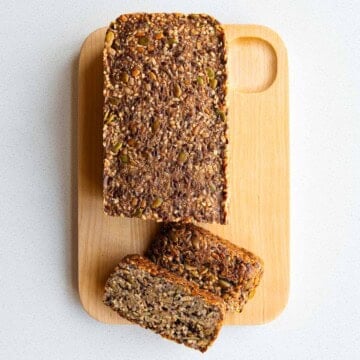
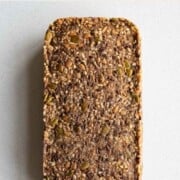
This hearty sliceable Gluten-Free No-Yeast Porridge Bread is packed with flax seeds, pumpkin seeds, and sunflower seeds for a satisfying, fiber-rich loaf with a deliciously chewy texture. Unlike traditional homemade bread, there's no yeast or kneading required.

Save This Recipe!
Type your email & I'll send it to you!
Made with simple whole-food ingredients, this easy seed bread is naturally vegan and can be made gluten-free with certified gluten-free oats and quinoa flakes. Psyllium husk binds everything together, creating a sturdy, sliceable loaf that's perfect for toast, sandwiches, or topping with nut butter. Similar to Mestemacher bread.
Jump to:
- 🔍 Quick Look: No-Yeast Porridge Seed Bread
- 👩🏽⚕️ Dietitian's Note
- 👩🏼🌾 Ingredients
- 🌱 Substitutions
- 📝 How to Make No-Yeast Porridge Bread with Flax Seeds
- 🌿 Variations
- ✔️ Storage & Meal Prep Tips
- 🍞 What To Eat with Porridge Bread
- 🙋🏽♀️ Recipe FAQs
- 🍽️ Related Recipes
- 👩🏽🍳 Made this recipe?
- ⚖️ Convert the Recipe to Metric (g & mL)
- Gluten-Free No-Yeast Porridge Bread Recipe
- 🛍️ Shop Recipe Cookware and Ingredients
- 💬 Comments
🔍 Quick Look: No-Yeast Porridge Seed Bread
- ⏱️ Hands On Time: 5 minutes
- 💧Soak Time: 6 hours
- 🥣 Rest time: 25 minutes
- 🎛️ Cook Time: 90 minutes
- 👥 Servings: 10
- 📊 Calories: ~200 kcal (based on nutrition panel)
- 👩🏽🍳 Flavor Profile: Nutty, hearty, and savory with a satisfying chewy texture and the rich, toasted flavor of flax, sunflower, and pumpkin seeds.
- 💪🏼 Nutrition: 8 grams of protein, 7 grams of fiber. Each slice provides approximately 28% of the Daily Value for magnesium, 17% for zinc, and 13% for iron.
- ⭐ Difficulty: Easy. No yeast, kneading, or bread-making experience is required.
👩🏽⚕️ Dietitian's Note
This No-Yeast Porridge Bread, inspired by Mestemacher-style breads, combines several ingredients I particularly like for supporting heart and metabolic health.
Oats provide beta-glucan, a type of soluble fiber associated with lowering LDL cholesterol when consumed regularly in sufficient amounts as part of an overall heart-healthy diet.
Flax seeds contribute fiber and ALA omega-3 fatty acids, while pumpkin and sunflower seeds provide unsaturated fats, plant-based protein, and minerals.
Psyllium is another source of viscous soluble fiber. It forms a gel in the digestive tract that can help reduce cholesterol absorption and increase the excretion of bile acids. The liver then uses cholesterol to make additional bile acids, which can contribute to lower LDL cholesterol.
The combination of whole grains, seeds, and psyllium also makes this loaf substantially different nutritionally from many conventional breads made primarily from refined flour.
Why You'll Love This Recipe:
These Gluten-Free Seed Bread is delicious and easy to slice. Plus, it's:
- A no-yeast homemade bread recipe: This easy no yeast bread comes together without proofing or complicated bread-making techniques.
- Packed with seeds: Flaxseeds, sunflower seeds, and pumpkin seeds add texture, healthy fats, plant-based protein, fiber, and minerals.
- Made with whole grains: Steel-cut oats and quinoa flakes make this porridge bread hearty and satisfying.
- Easy to make: Mix everything in one bowl, let it rest, press it into the pan, and bake.
- Gluten-free: Use certified gluten-free steel-cut oats and quinoa flakes for a naturally gluten-free bread.
- Freezer-friendly: The dense, hearty slices store and freeze well and are delicious toasted.
👩🏼🌾 Ingredients
Below, I share ingredient notes from both a nutrition expert's and trained chef's perspective.
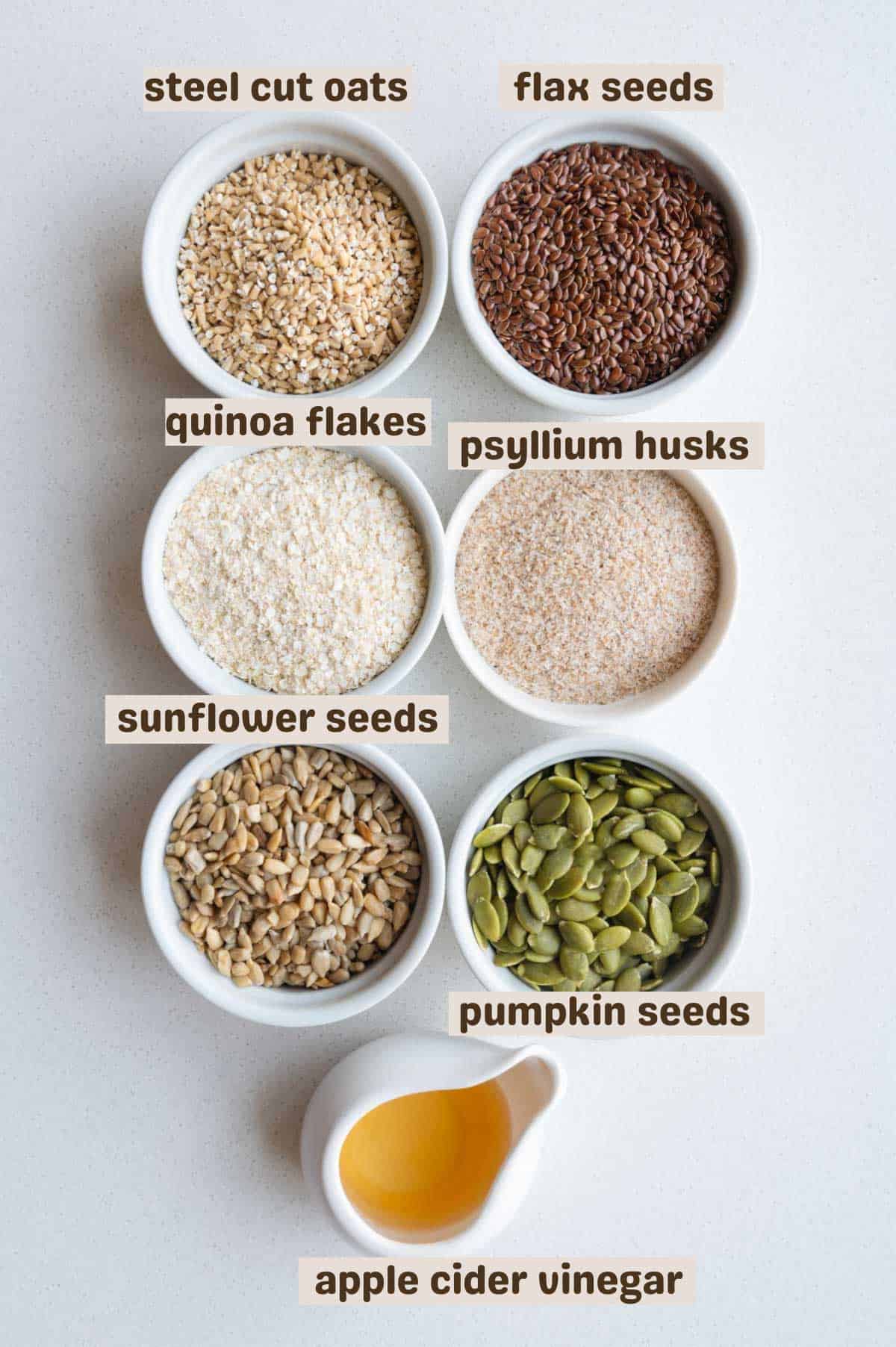
- Steel-cut oats form the hearty whole-grain base of this porridge bread. Soaking them for 6 to 7 hours softens the pieces enough for baking while maintaining their pleasantly chewy texture. Do not soak them for significantly longer, and drain them very thoroughly before adding them to the bread mixture.
- Whole flax seeds give this loaf its characteristic seed bread texture while adding fiber and alpha-linolenic acid (ALA), a plant-based omega-3 fatty acid. They also make this a particularly nutrient-dense flax seed bread.
- Sunflower seeds add crunch, plant-based protein, unsaturated fats, vitamin E, and minerals.
- Pumpkin seeds add a delicious nutty flavor along with protein, magnesium, iron, and zinc.
- Quinoa flakes help fill the spaces between the larger oats and seeds, giving the loaf a more cohesive texture. You can also use oat flakes. For gluten-free bread, use quinoa flakes or certified gluten-free oat flakes.
- Psyllium husk is essential for holding this no yeast bread together. Once hydrated, it forms a gel-like structure that binds the oats and seeds so the finished loaf can be sliced. Psyllium is also particularly rich in soluble, viscous fiber.
- Apple cider vinegar adds subtle acidity and balances the hearty flavor of the oats and seeds.
- A small amount of fine sea salt enhances the nutty flavors. You can reduce or omit it for a lower-sodium loaf.
See the printable recipe card below for quantities.
🌱 Substitutions
This recipe is versatile and easy to adapt. Below are some simple ingredient substitutions.
- Quinoa flakes: Quinoa flakes work best in this recipe. For a substitute, use the same amount of oat flakes-quick oats are the closest match, followed by rolled oats. For gluten-free bread, be sure to use certified gluten-free oats.
- Pumpkin seeds: Replace them with additional sunflower seeds.
- Sunflower seeds: Replace them with additional pumpkin seeds.
- Apple cider vinegar: Use an equal amount of another mild vinegar, such as white wine vinegar.
- Steel-cut oats: I do not recommend replacing the steel-cut oats with whole oat groats in this recipe. Their larger size can overwhelm the loaf and make it harder to slice cleanly.
- Psyllium husk: I do not recommend omitting the psyllium. It is a structural ingredient that helps bind this no yeast bread.
📝 How to Make No-Yeast Porridge Bread with Flax Seeds
The complete recipe with exact amounts is below. These additional tips will help you get the best results.
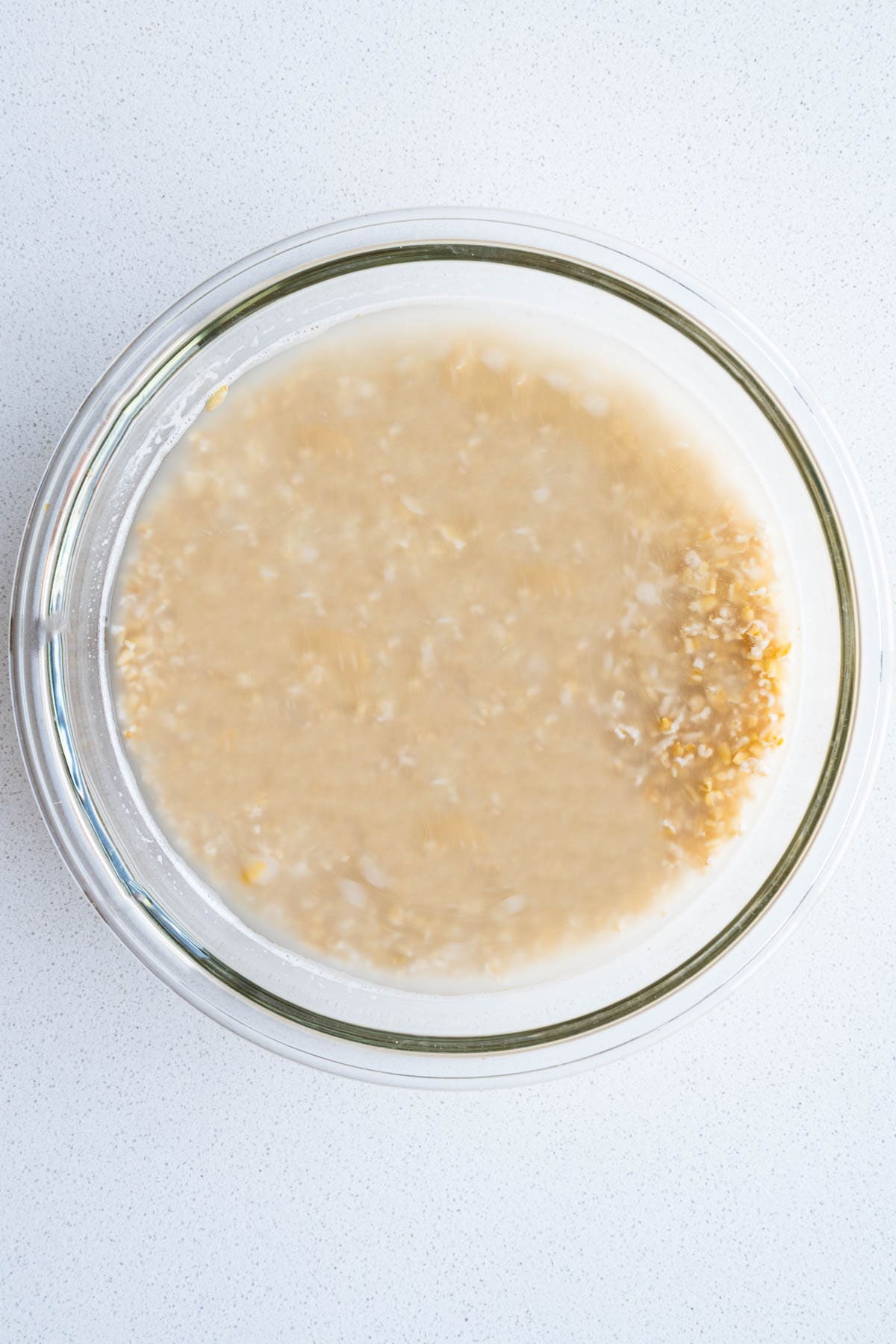
- Stick to the soaking time. Six to seven hours softens the steel-cut oats enough that they are pliable without allowing them to become overly waterlogged.
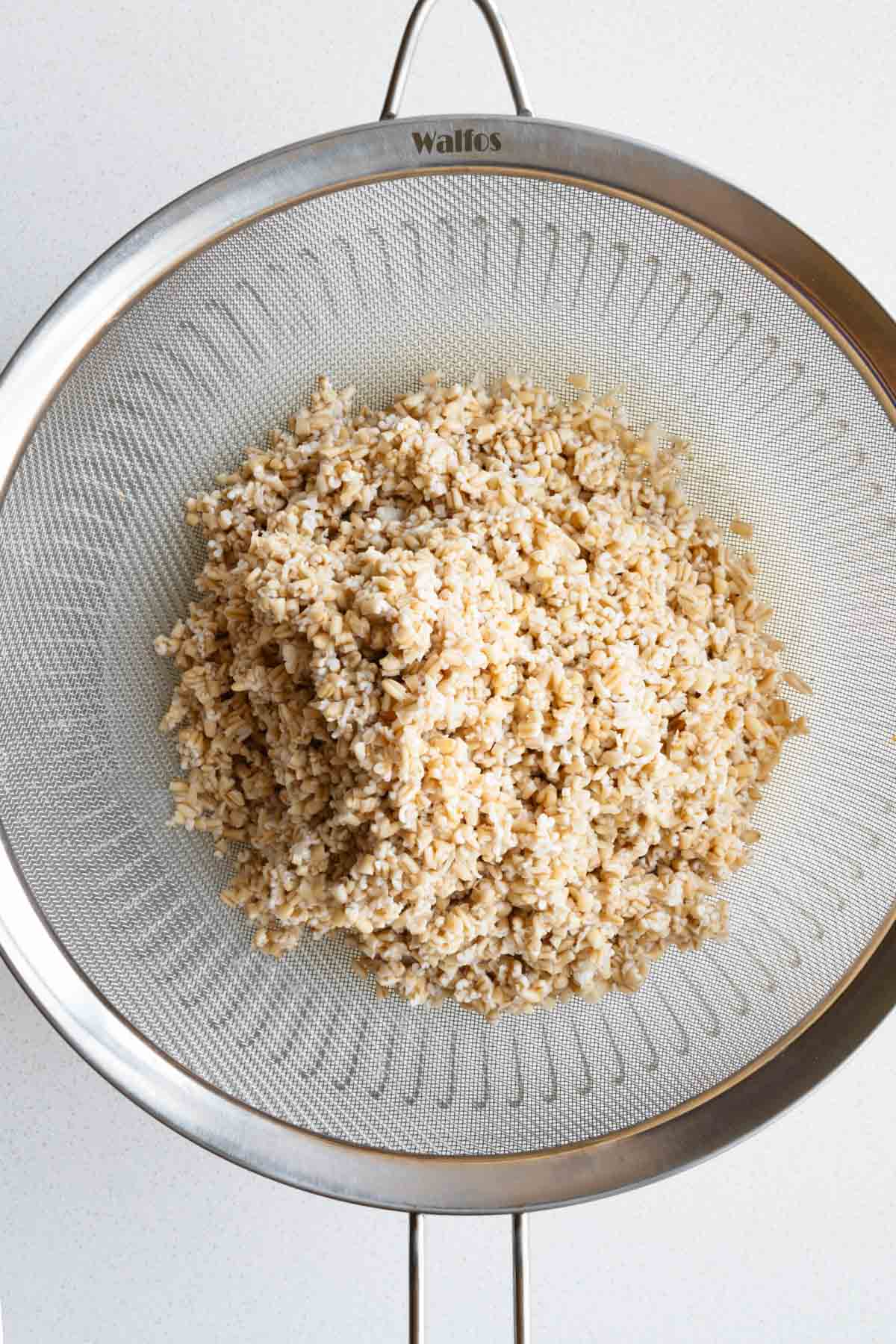
- Drain the oats very well. After soaking, excess water can alter the hydration of the loaf and make the center too moist.
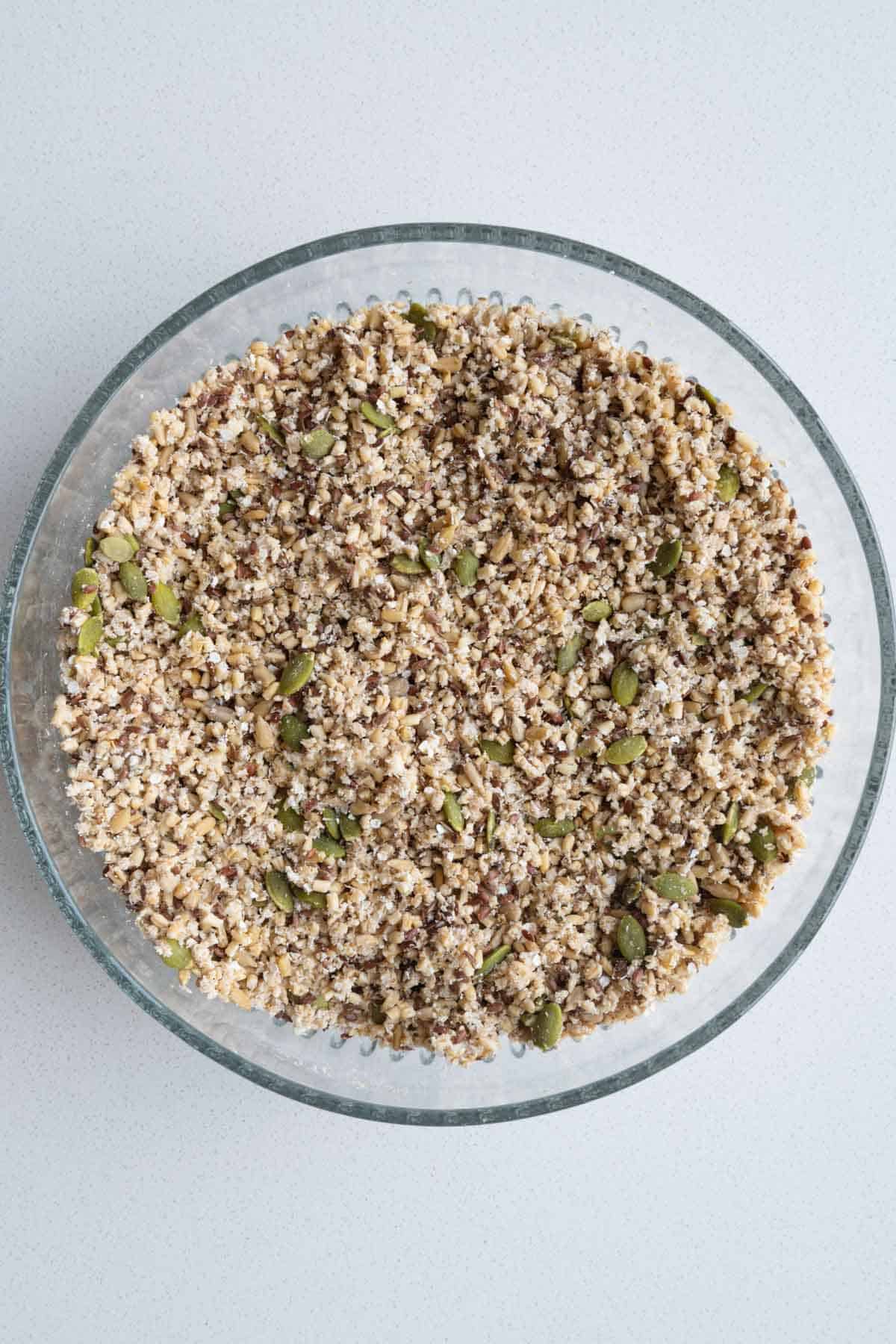
- Mix the dry ingredients and wet ingredients separately.
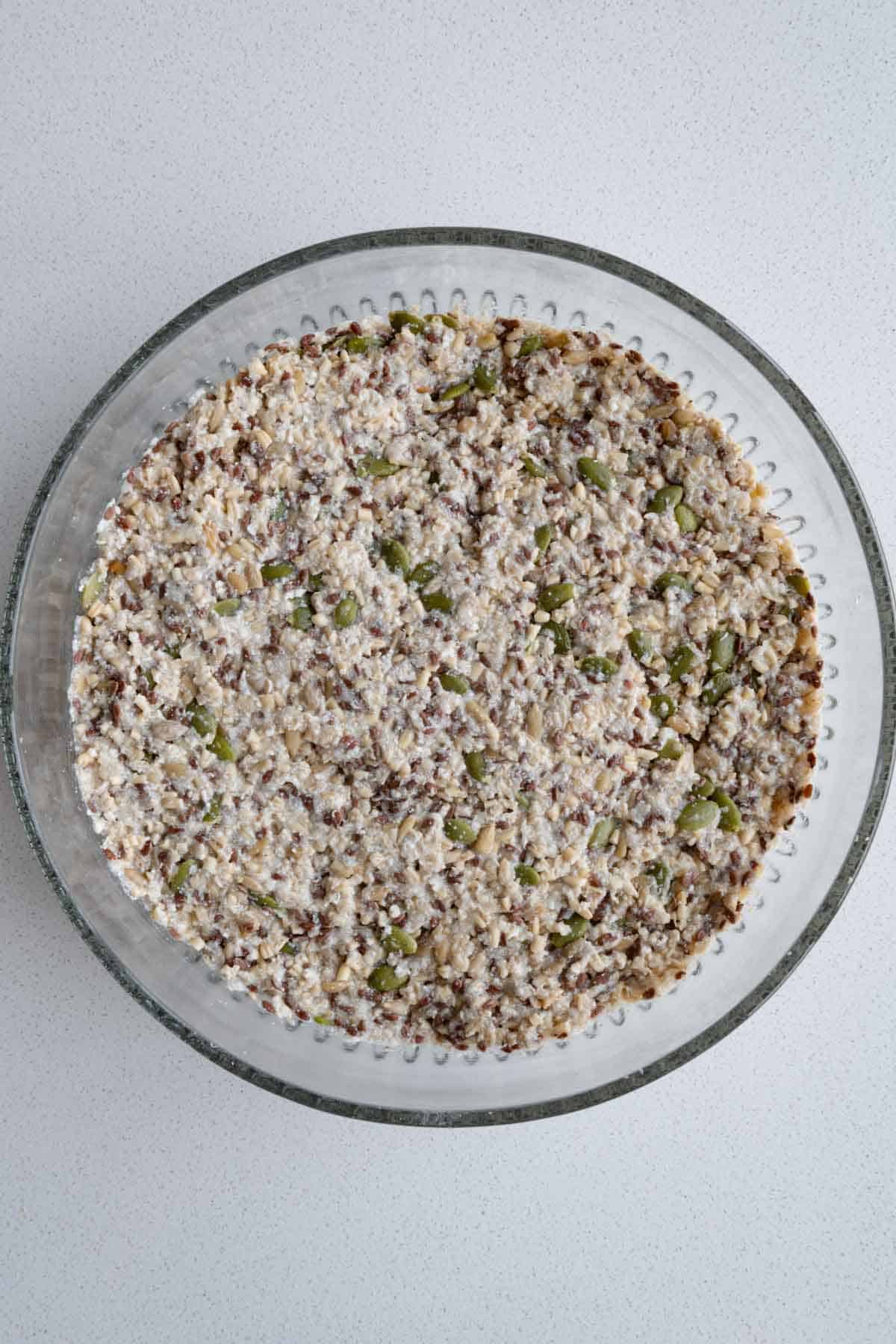
- Add the wet to dry and mix thoroughly. Psyllium needs to be distributed evenly throughout the mixture. Do not skip the resting time. Those 25 to 30 minutes allow the psyllium to absorb water and create the structure that holds this seed bread together.
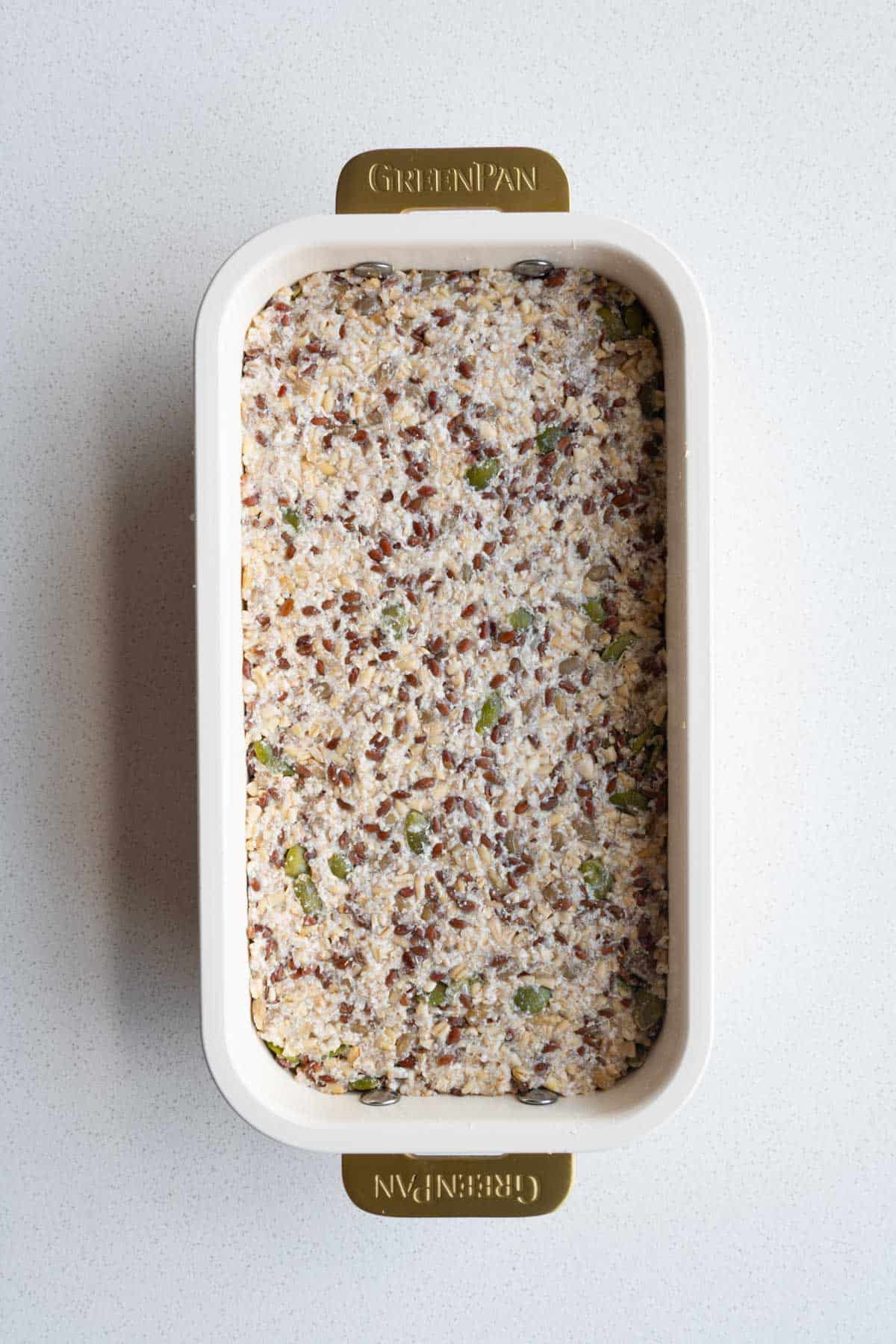
- Pack it firmly. Once the mixture is in the loaf pan, press it down firmly across the entire surface, including the corners. Air pockets can make the finished bread more likely to crumble.
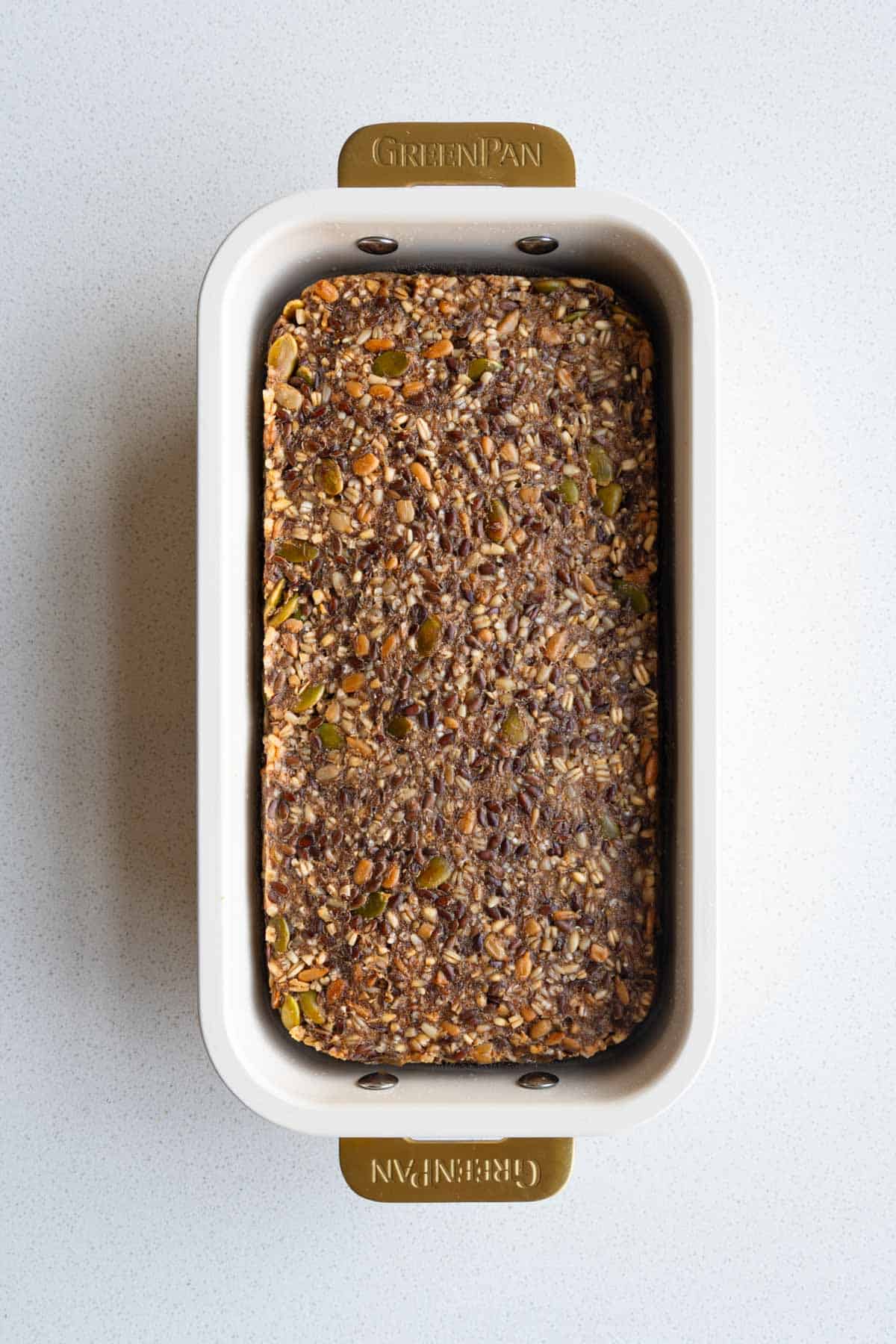
- Bake low and slow. The lower oven temperature and longer bake time help the moisture gradually evaporate, giving this dense porridge bread a firmer, more sliceable texture without over-browning the outside.
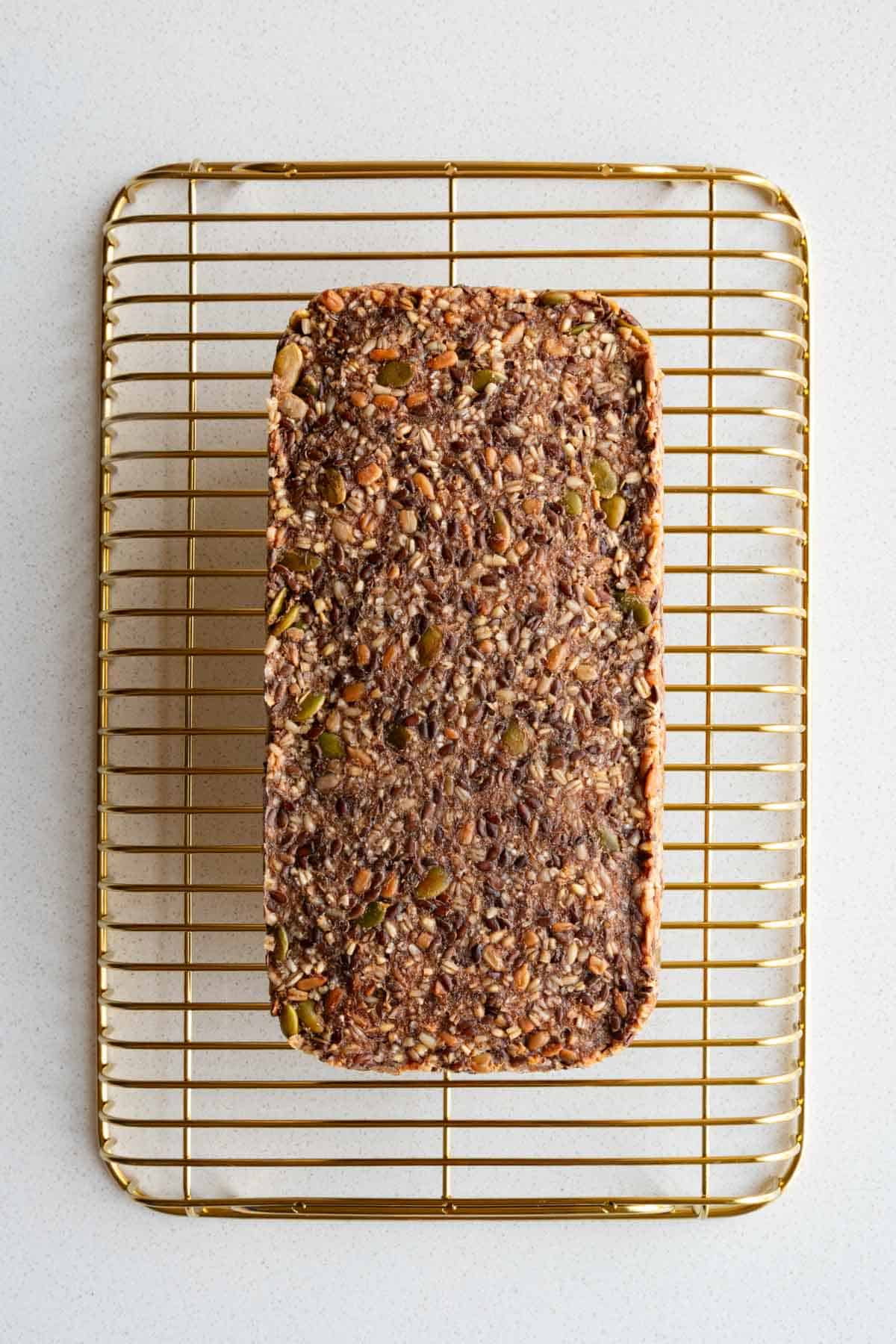
- Cool before slicing. The loaf continues to set as it cools. Cutting into it while very hot can compromise the texture.
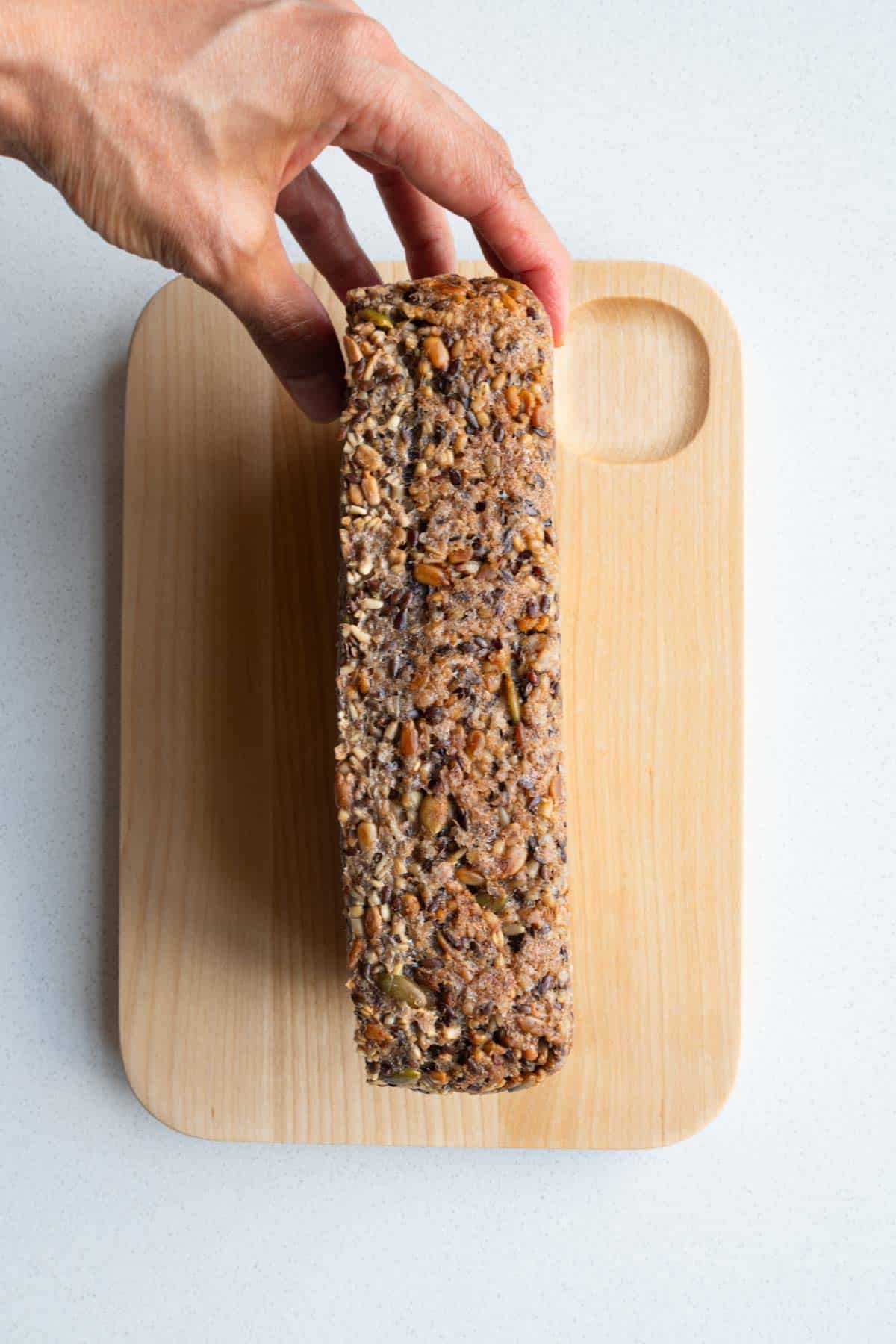
- Check the sides. The loaf should look beautifully golden and feel firm and sturdy, especially along the sides.
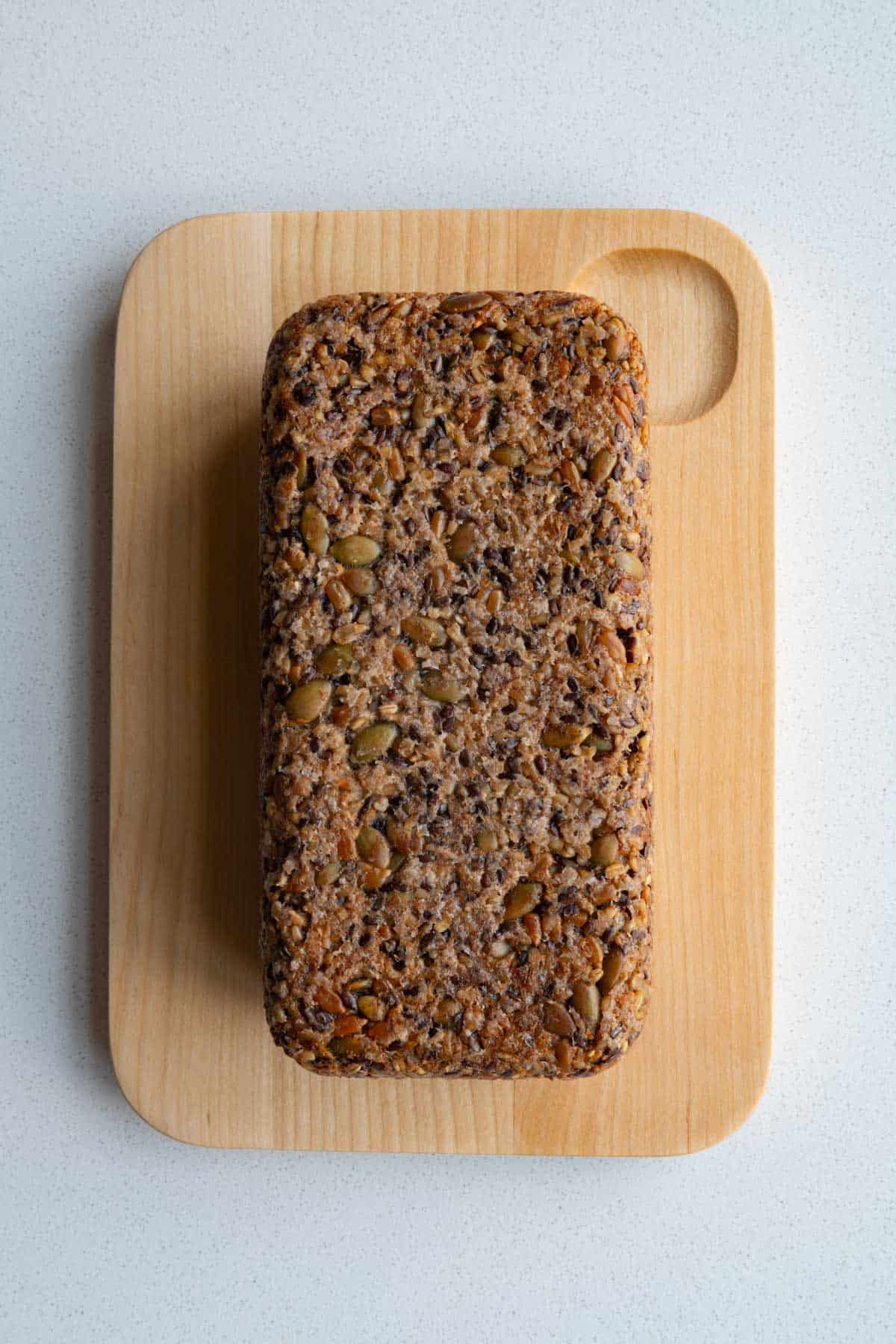
- Check the bottom. This firm base is a good sign that enough moisture has baked off for clean, easy slicing once cooled.
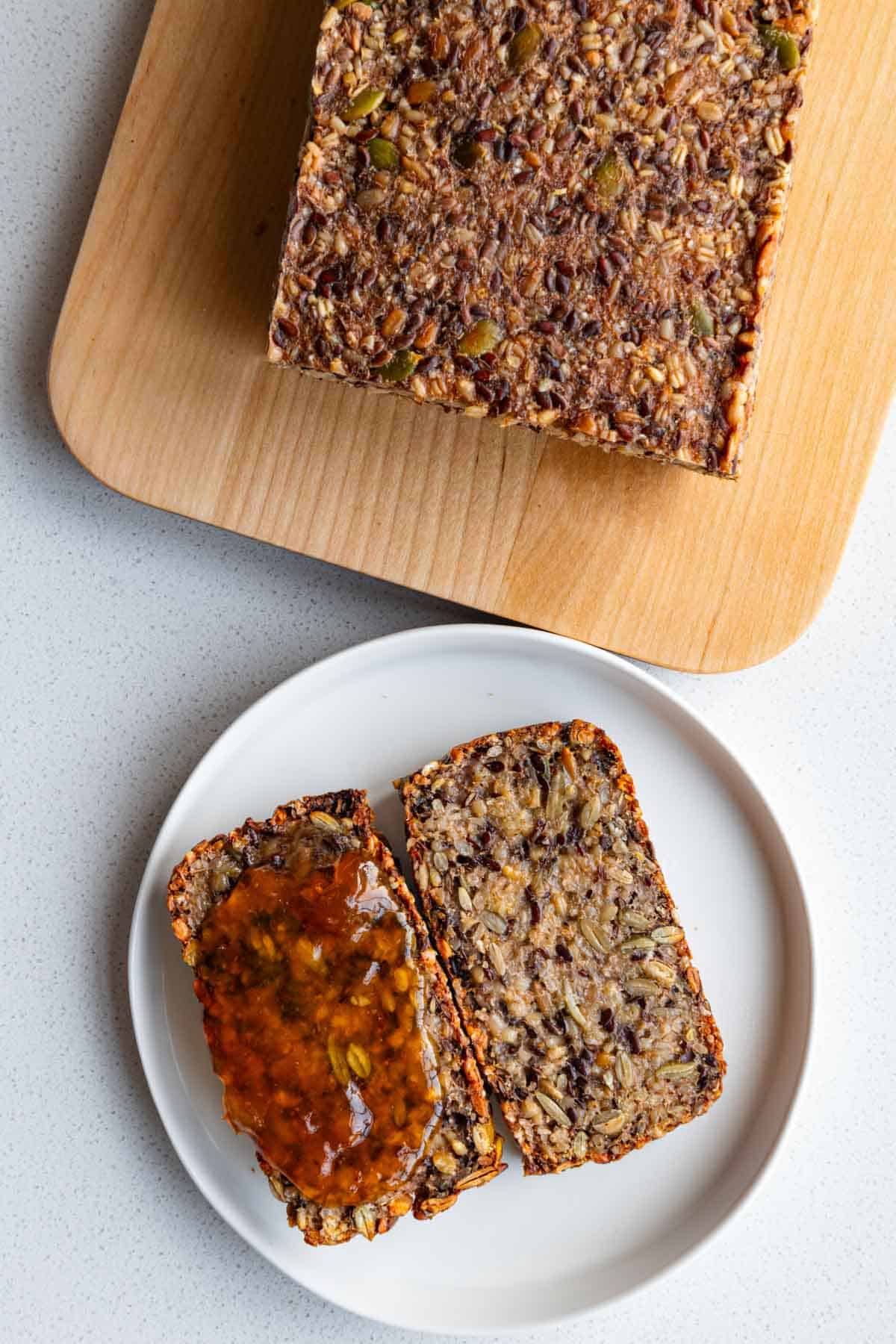
- Toast it (optional). Like many dense whole-grain seed breads, the texture and nutty flavor are especially good toasted. Add a dollop of Psyllium Jelly for even more cholesterol-lowering benefits.
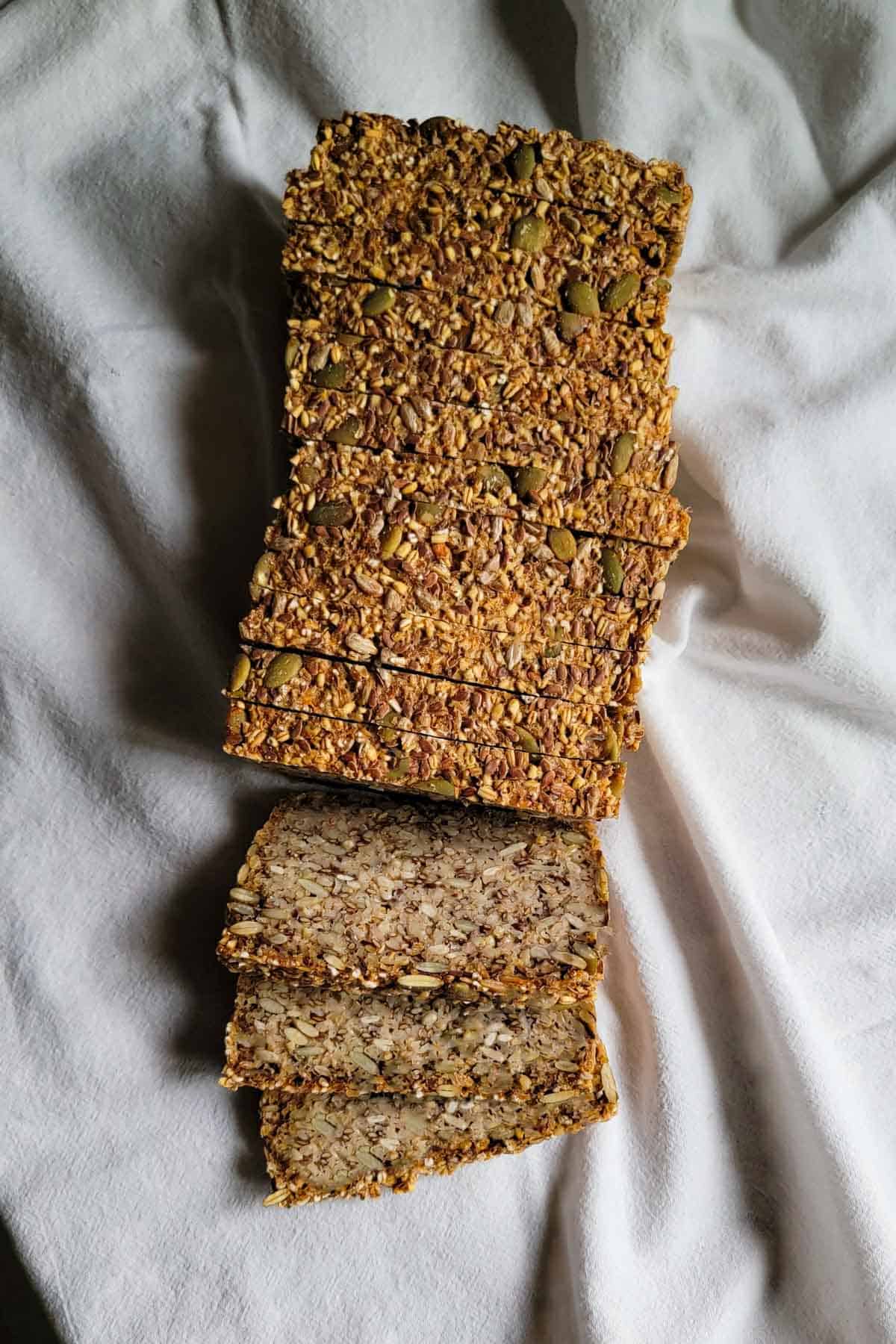
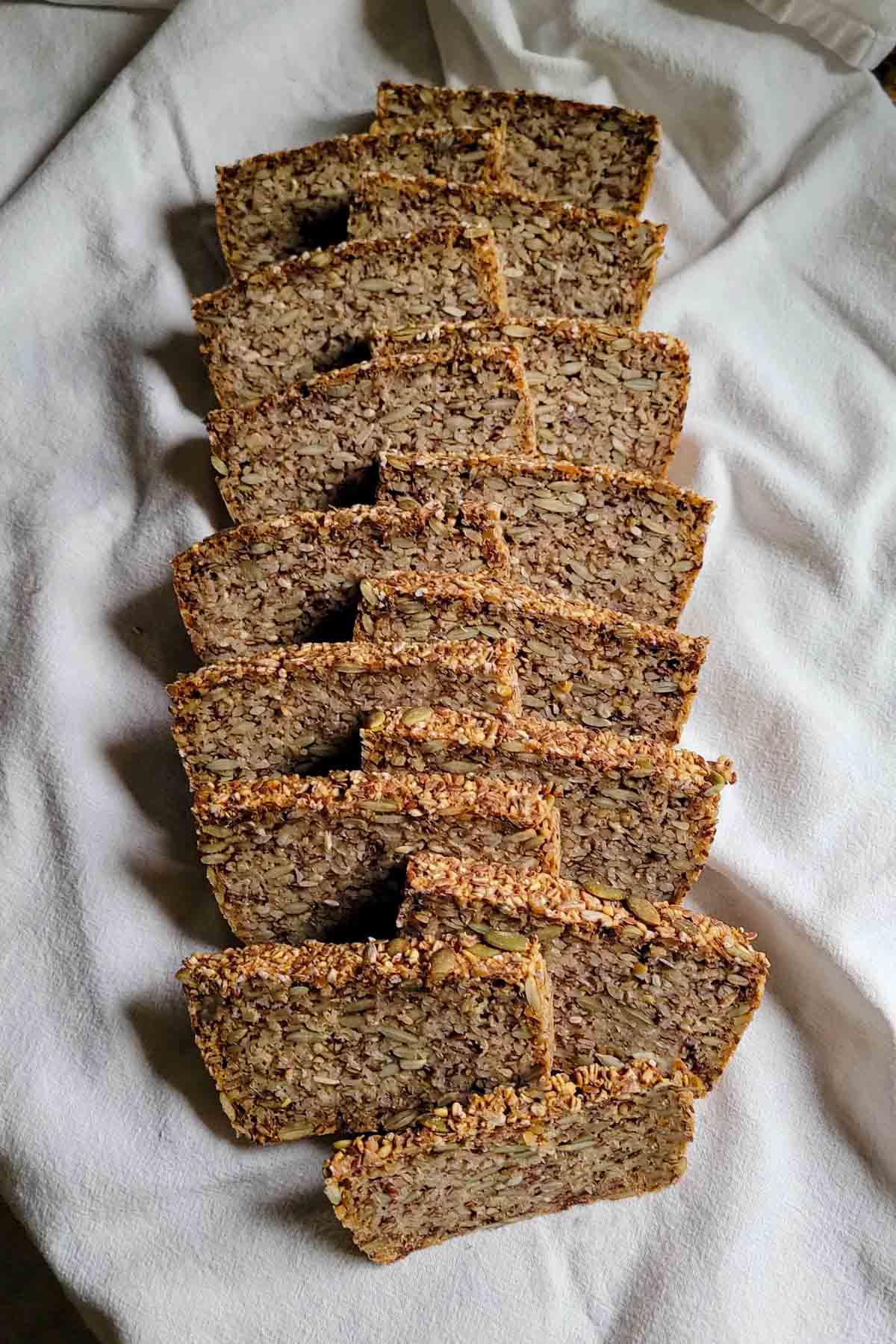
Porridge Bread made by a member of our community-thank you for sharing your photos!
🌿 Variations
Extra-Flax Seed Bread
Replace some of the sunflower or pumpkin seeds with additional whole flaxseeds for an even more seed-forward loaf.
Gluten-Free Porridge Bread
Use certified gluten-free steel-cut oats and certified gluten-free oat flakes, or use quinoa flakes. Oats are naturally gluten-free but can be cross-contaminated during growing and processing, so certification is important for people who need to strictly avoid gluten.
Lower-Sodium Bread
Reduce the salt or leave it out entirely. The toasted seeds still provide plenty of nutty flavor.
Toasted Seed Bread
For a deeper, nuttier flavor, lightly toast the pumpkin and sunflower seeds before mixing them into the dough. Let them cool before using.
✔️ Storage & Meal Prep Tips
Let the porridge bread cool completely before storing. Store the loaf in an airtight container in the refrigerator for up to 5 days. Because this homemade bread contains no preservatives and is naturally moist, refrigeration is preferable to leaving it at room temperature for several days.
For the best texture, toast refrigerated slices before serving.
Meal Prep
This flax seed bread is ideal for meal prep because you can bake one loaf, slice it, and keep individual portions ready to toast throughout the week.
For longer storage, slice the completely cooled loaf and freeze the slices with parchment between them. This makes it easy to remove only what you need. Toast individual slices directly from frozen or thaw them first.
🍞 What To Eat with Porridge Bread
This Psyllium Jelly is hard to beat. It takes just a few minutes to make and transforms psyllium husks into a lightly sweet, spoonable jelly.
Make this delicious and healthy Chia Seed Jam recipe using ground chia seeds for maximum health benefits.
Creamy, tangy, and dairy-free, this nut-free Protein Cream Cheese is made with protein-packed super-firm tofu, miso, lemon, garlic, and fresh herbs.
Boost plant-based protein with this Lentil Bean Dip, combining creamy beans and lentils with bold flavors.
5-minute Protein Guacamole with plant-based protein and spinach! This healthy protein-packed dip tastes incredible!
🙋🏽♀️ Recipe FAQs
Porridge bread is a hearty bread made with oats or other grains that have been soaked, cooked, or softened before baking. This version uses soaked steel-cut oats with seeds, quinoa flakes, and psyllium for a dense, rustic loaf without yeast or kneading.
It can be. Use certified gluten-free steel-cut oats and certified gluten-free oat flakes, or choose quinoa flakes. While oats themselves do not naturally contain gluten, regular oats may be contaminated with gluten-containing grains during processing.
This is a type of seed bread because it contains generous amounts of flax seeds, sunflower seeds, and pumpkin seeds. Steel-cut oats give it the hearty texture of porridge bread, while psyllium helps bind the loaf.
This moist, flourless-style seed bread is best stored in the refrigerator once completely cooled. Refrigeration helps maintain freshness, and individual slices are excellent reheated in the toaster.
No. This recipe uses whole flaxseeds intentionally for texture. The psyllium husk is responsible for much of the binding, so there is no need to grind the flaxseeds for the loaf to hold together.
🍽️ Related Recipes


👩🏽🍳 Made this recipe?
Let me know your thoughts on No-Yeast Porridge Bread with Seeds by leaving a ⭐️ rating below or sharing it on Instagram.
⚖️ Convert the Recipe to Metric (g & mL)
Use these AI tools to do this:
Gluten-Free No-Yeast Porridge Bread Recipe
Ingredients
- 1 ½ cups dry steel cut oats
- ½ cup whole flax seeds
- ½ cup pumpkin seeds pepitas
- ½ cup sunflower seeds
- ½ cup quinoa flakes or oat flakes (see notes)
- 3 tablespoons whole psyllium husks
- 1 ½ cups water
- 4 teaspoons apple cider vinegar
- 1 ½ teaspoon salt optional
Save This Recipe!
Type your email & I'll send it to you!
EQUIPMENT
- 1 Loaf pan 8½ x 4½-inch or similar size, nontoxic nonstick or parchment-lined
- 1 large bowl
- 1 Fine Mesh Sieve
Instructions
- Soak the steel-cut oats: Place the steel-cut oats in a bowl and cover generously with water. Soak for 6 to 7 hours, until the oats are pliable and can be pressed between your fingers but still retain their shape. Do not oversoak. Drain very thoroughly using a fine mesh sieve.
- Combine the dry ingredients: Add the drained steel-cut oats, flaxseeds, sunflower seeds, pumpkin seeds, quinoa flakes, psyllium husk, and salt, is using, to a large bowl. Mix until evenly combined.
- Mix the liquids: In a separate container, stir together the water and apple cider vinegar.
- Mix wet with dry: Pour over the oat and seed mixture. Mix thoroughly. Stir very well, making sure the psyllium and liquid are evenly distributed and there are no dry pockets.
- Rest: Let the mixture sit for 25 to 30 minutes. This gives the psyllium time to fully hydrate and helps bind the loaf.
- Preheat the oven to 325°F (163°C).
- Pack the loaf pan: Transfer the mixture to a nontoxic nonstick or parchment-lined 8 ½ x 4 ½-inch loaf pan. Press the mixture down very firmly and evenly. Compacting the mixture well is important for a loaf that holds together when sliced.
- Bake: Bake on the middle rack at 325°F (163°C) for 90 minutes. Optional for a firmer crust: Carefully remove the bread from the pan for the final 10 to 15 minutes of baking and place it directly on the oven rack or a baking sheet.
- Cool: Let the porridge bread cool completely, preferably on a cooling rack, before slicing. Allow at least 30 minutes so the loaf has time to firm up.
Notes
Nutrition
This information is provided as a courtesy and is only an estimate. Nutritional values may vary depending on factors such as product types and brands used.
🛍️ Shop Recipe Cookware and Ingredients

Note: As an Amazon Associate, I earn from qualifying purchases.
Nisha's Favorites
Get my tried-and-true products.

kazumi makwana says
Hi, can I use sprouted gluten free oats rather than steel cut oats??
Nisha Melvani, RDN says
What type of oats are they- rolled, groats?
Helga says
Made the bread last night, and it’s delicious!
Nisha Melvani, RDN says
Awww so glad you loved this bread. Thank you.
Wendy De Los Reyes says
Tasty and easy bread recipe! I'll keep this in the rotation.
Nisha Melvani, RDN says
So happy you enjoyed it! I love hearing that it was both tasty and easy to make. Thank you for adding it to your rotation!
Monika says
Hi, as someone who suddenly developed a yeast allergy last year and missing those German/Skandi style dense breads ever since, this recipe is life changing. My QOL has shot up. Thank you for developing it, and also generously offering the recipe for all to use. This will be a household recipe from now on.
Nisha Melvani, RDN says
This means so much to me! I’m thrilled that the bread has given you back something you’ve really missed and that it will become a regular in your home. Thank you for taking the time to share this with me.
Betsi says
This is such a wonderful and wholesome recipe! I thank you for sharing!
I was wondering! Could I use chia seeds instead of Flax if I ever happen to be short on them?
Thank you so dearly much in advance.
Nisha Melvani, RDN says
Thank you so much! I wouldn’t replace the whole flaxseeds with chia. Chia absorbs considerably more water and forms a gel, so using them could make the bread denser and slightly gummy. I’d recommend replacing the flax with another whole seed, such as additional sunflower or pumpkin seeds, for a texture closer to the original.
Shez says
My husband agrees with me that this is fantastic bread. I can’t find purity protocol gf steel-cut oats, so I used my spice grinder to chop up my safe-for-me oat groats. This worked really well
Thanks for yet another winner recipe
Nisha Melvani, RDN says
That's a great strategy! I originally was going to make it that way actually!
Ivani norman says
Thank you for the recipe. Will try out and let you know how it came out.
Nisha Melvani, RDN says
Great! Enjoy
Denise Iversen says
So you don't grind the flax seed?? I thought flax seed did not get absorbed or digested unless it was ground up. Anxious to try this bread.
Nisha Melvani, RDN says
Please read all the comments. I answered this very question. Thank you so much.
Kerry says
This worked so well and was delicious
I soaked the steel oats for 6 hours
I subbed the 40g quinoa flakes for rolled oats and it worked well
Baked 160° for 90 mins I prefer no crust
A good solid sliceable loaf 🍞
I liked the link to switch to metric conventions (UK)
Nisha Melvani, RDN says
Thank you so much for sharing your substitutes here. Super helpful. Glad you enjoyed this bread.
Manon Roberge says
In that recipe, your flaxseed are whole. Would we get more nutrition out of them if we were grinding them or could we replace them with Chia seeds or even black basil seeds?
Nisha Melvani, RDN says
The whole flaxseeds are intentional. They add structure, texture, and fiber to the loaf. You still get nutritional benefits from whole flaxseeds, including fiber, and some seeds will be broken during chewing and digestion, but you are right that grinding flax makes its omega-3 fats and lignans more available for absorption. I recommend including ground flax elsewhere in your diet if you want to maximize those benefits.
Arlene says
I haven't rated the recipe because before I try, I have a quick question:
Have you tried adding the water you drained from the oats back in later with the apple cider vinegar? Thanks!
Nisha Melvani, RDN says
I haven’t tried using the oat soaking water in the bread. I prefer to drain the oats very thoroughly and use fresh water so the amount of liquid added to the dough is consistent each time. The soaking water can vary depending on how much water was used and how much starch and other compounds have leached into it, which could affect the texture. I hope you enjoy the bread!
Sandy RasQue says
this looks so good! could you add dried fruit to this? A sort of raisin bread.
Nisha Melvani, RDN says
I have not tested this but I believe small pieces of dried fruit will be fine.
Kristina Valdiviezo says
Wonderful porridge loaf recipe! Turned out perfectly.
Nisha Melvani, RDN says
So glad to hear that! I appreciate you taking the time to leave a comment. Thank you.
Terri says
Could I use regular quinoa instead of quinoa flakes?
Nisha Melvani, RDN says
If you don't have quinoa flakes, quick oats or oat flakes are a much better substitute in this bread.
Lizette Anglin says
I made also made homemade Quoina flakes but they aren’t very flat like flake. Are the Quoina flakes (vs regular Quoina) for the bulk of a flake?
Nisha Melvani, RDN says
Do not substitute dry whole quinoa for quinoa flakes. It may not fully cook or soften in this bread. Use oat flakes or quick oats instead.
Karen says
Can I put quinoa in blender to makes flakes ?
Nisha Melvani, RDN says
If you don't have quinoa flakes, quick oats or oat flakes are a much better substitute in this bread.
Lizette Anglin says
Can I substitute rolled oats for the steel cuts oats? And, if yes, do you soak them?
Nisha Melvani, RDN says
I have not tested this. It might work with a shorter soaking time.
Stacey says
Hello. I am allergic to psyllium. Can I use a vegan egg product in its place to substitute?
Nisha Melvani, RDN says
I don’t think a vegan egg replacer would be a reliable substitute. You could experiment with ground flax or chia, but the amount of liquid would likely need to be adjusted and the loaf may be softer and less sliceable. I’d hate to recommend an exact substitution without testing it first.
evelyne says
This is the bread i always wanted to make.!!wow its go good!
i almost never make reviews
its easy to make!
Nisha Melvani, RDN says
Thank you so much for taking the time to leave a review. I appreciate it so much!
Michelle says
Are rolled oats the same as oat flakes?
Nisha Melvani, RDN says
Quinoa flakes work best if you can find them. Otherwise, quick oats, and then rolled oats in that order.
Michelle says
Perfect, thank you!!
Megan says
Hello! Would the flax seeds need to be ground to effectively benefit from them in this recipe? TIA!
Nisha Melvani, RDN says
I use whole flaxseeds in this bread because they add texture and help create that hearty, seeded loaf. The benefits aren’t lost—whole flax still provides fiber and lignans and you well get some of the omega-3s with chewing—but ground flax is better absorbed, particularly for its omega-3 fats. I include ground flax elsewhere in my diet for that reason. You can try using 1/4 cup ground flaxseed in place of the ½ cup whole flaxseeds, but he texture will be different. T recommend following the recipe as written for the best tasting bread.
Jason Frishman says
I wonder about using quinoa flour, i have that, not flakes. What do the flakes do in the bread? Are they binding, texture?
Thanks!
Nisha Melvani, RDN says
The quinoa flakes are mainly there to add bulk and texture and to absorb some of the liquid; the psyllium is doing most of the binding. Quinoa flour is much finer and absorbs liquid differently, so I wouldn’t substitute for flour. If you don’t have quinoa flakes, oat flakes (or quick oats) would be a better substitute.
Daiana Martin says
Hi Nisha!
I´d like to know if I can use whole oat groats intead of steel-cut oats, sin steel cut oats are very expensive in my country.
Thank you for sharing all these wonderful recipes!
Nisha Melvani, RDN says
Hi, I tested this with oat groats and it did not work as well. The groats are too large. You can pulse them dry in a food processor first to make them slightly smaller. That might work.
T says
Can lemon juice be used instead of vinegar?
Nisha Melvani, RDN says
Yes, that will work.
Jenny Whitehouse says
Do you have the recipe in Grammes please
Nisha Melvani, RDN says
See the conversion block right above the recipe card.
Pookah says
The weights given by AI vary wildly, 1.5 cups of steel cut oats says 135g on ChatGBT, a weights conversion site specifically stating the food being measured by cups is 240g. This is so different it's impossible to use. Measuring by volume is so inaccurate.
Nisha Melvani, RDN says
Good thing this recipe is so forgiving as it always works in cups.
Dorothy Satterfield says
Why do you use whole flaxseed, instead of ground, in this recipe? Aren’t whole flaxseeds indigestible?
Nisha Melvani, RDN says
Whole flaxseeds are used here primarily for structure and texture—they help create a firm, sliceable loaf without making the mixture overly dense or gummy. While whole flaxseeds aren’t absorbed as well as ground flaxseed, they still contribute fiber and texture, and some will be broken down during chewing. For maximizing the nutritional benefits of flax, I recommend ground flaxseed in recipes where structure isn’t as important.
Myra J Santos says
But CAN we successfully use ground flax seeds? I have all of the ingredients already at home and don't want to buy whole flax seeds just to try this recipe.
Nisha Melvani, RDN says
For this particular porridge bread, I would prefer substituting another whole seed rather than replacing the ½ cup whole flaxseeds 1:1 with ground flaxseed. Ground flax behaves quite differently. It absorbs substantially more water and forms a gel, so using a full ½ cup flaxseed meal could make this already psyllium-bound loaf denser, wetter/gummier, and potentially change the amount of water needed. For the most similar texture, replace the whole flaxseeds with an equal amount of additional sunflower seeds or pumpkin seeds, or a combination of the two. Hemp hearts can also replace some of the flaxseeds.