
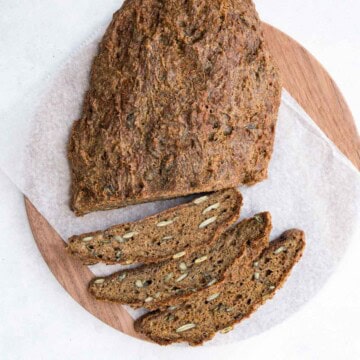
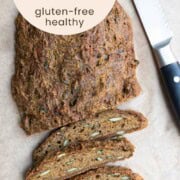
This Quinoa Bread is gluten-free, yeast-free, and surprisingly easy to make with just a handful of wholesome ingredients. It bakes into a hearty loaf with a crisp crust and a soft, sliceable center-perfect for toast, sandwiches, or dipping into soups.

Save This Recipe!
Type your email & I'll send it to you!
🔍 Quick Look: Quinoa Bread
- ⏱️ Prep Time: 15 minutes
- 🎛️ Cook Time: 1 hour
- 👥 Servings: 7
- 📊 Calories: ~260 kcal per serving (based on nutrition panel)
- 👩🏽🍳 Flavor Profile: Nutty and mildly earthy, wholesome flavor that pairs well with both sweet and savory toppings.
- 💪🏼 Nutrition: 11 grams of protein, 7 grams of fiber
- ⭐ Difficulty: easy, just two steps
Jump to:
- 🔍 Quick Look: Quinoa Bread
- 👩🏽⚕️ Nutritionist's Note
- 👩🏼🌾 Ingredients
- 🌾 Substitutions
- 📝 How to Make Gluten-Free Quinoa Bread
- ✏️ Expert Tips
- ✔️ Storage Tips
- 🍞 Delicious Ways to Serve Quinoa Bread
- 🙋🏽♀️ Recipe FAQs
- 🥪 Related Recipes
- 👩🏽🍳 Made this recipe?
- ⚖️ Convert the Recipe to Metric (g & mL)
- Quinoa Bread Recipe
- 🛍️ Shop Recipe Cookware and Ingredients
- 💬 Comments
👩🏽⚕️ Nutritionist's Note
Made with soaked quinoa, this bread is naturally rich in fiber and plant-based protein, making it a more satisfying alternative to traditional bread.
Why You'll Love This Quinoa Bread
This is the kind of bread you can make on repeat-simple, reliable, and actually satisfying. Plus, it's:
- Naturally gluten-free (no flour blends needed)
- No yeast, no kneading, no rise time
- High in fiber for steady energy
- Made with whole, simple ingredients
- Hearty texture that holds up to toppings
- Works for both sweet and savory
👩🏼🌾 Ingredients
Below, I share ingredient notes from both a nutrition expert's and trained chef's perspective.
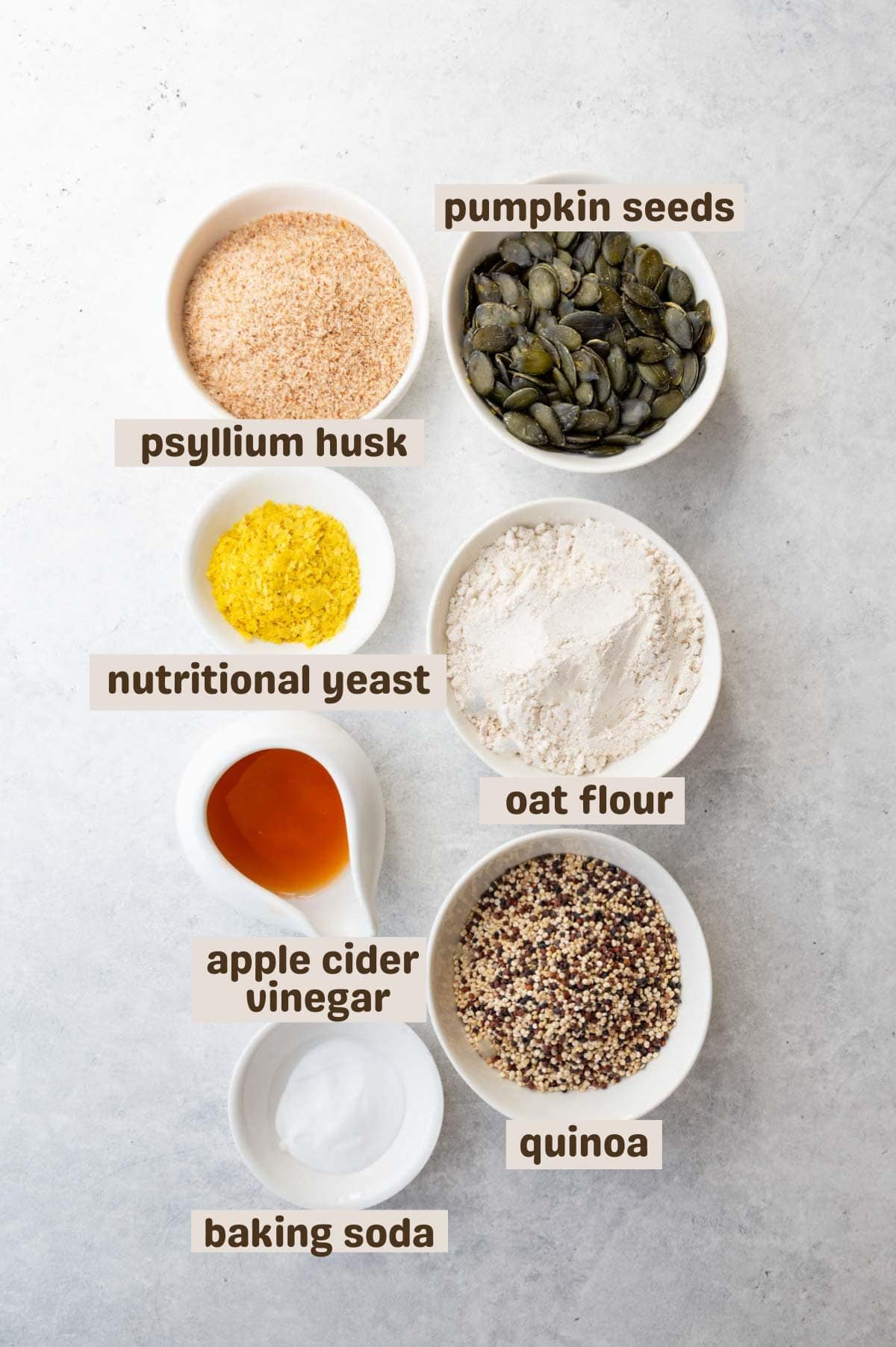
- Quinoa: The base of the bread. Soaking softens it and removes bitterness.
- Oat flour: Adds softness and helps create a more sliceable crumb.
- Psyllium husk: Essential for binding and structure-this replaces gluten.
- Baking soda + vinegar: Gives a slight lift without yeast.
- Pumpkin seeds (optional): Add texture and boost protein and minerals.
See the printable recipe card below for quantities.
🌾 Substitutions
- Oat flour: To make 1.5 cups of oat flour, blend about 1.5 cups of rolled oats until finely ground. Measure the flour after blending to ensure you have the right amount. Sorghum, buckwheat, or millet flour may be used instead, though the liquid may need slight adjustment for proper consistency.
- Quinoa: Any variety of quinoa works-white, red, black, or tricolor. Tricolor is slightly higher in antioxidants due to the red and black grains.
- Psyllium husk: Both whole psyllium husk and psyllium powder work in this recipe.
- Pumpkin seeds - These add a delicious crunch and a boost of nutrients like magnesium, zinc, and healthy fats, but the bread works just fine without them.
- Nutritional yeast: Adds a savory, cheesy flavor along with B vitamins, including B12 if fortified-but it's optional and won't affect the texture of the bread.
📝 How to Make Gluten-Free Quinoa Bread
The complete recipe with exact amounts is below. These additional tips will help you get the best results.
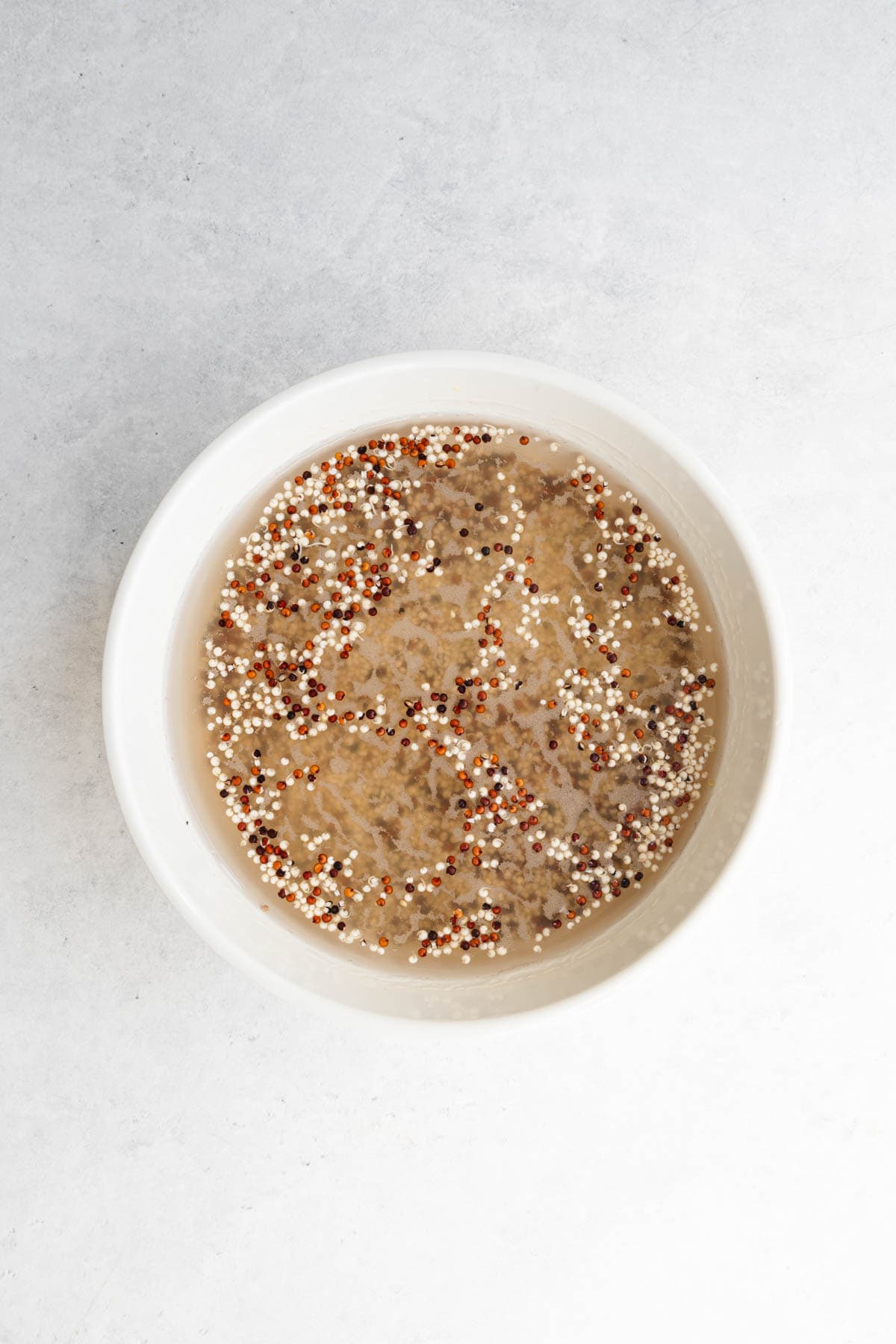
- Add enough water to cover it by at least 2 inches. Soak for at least 3 hours or overnight (no more than 12 hours).
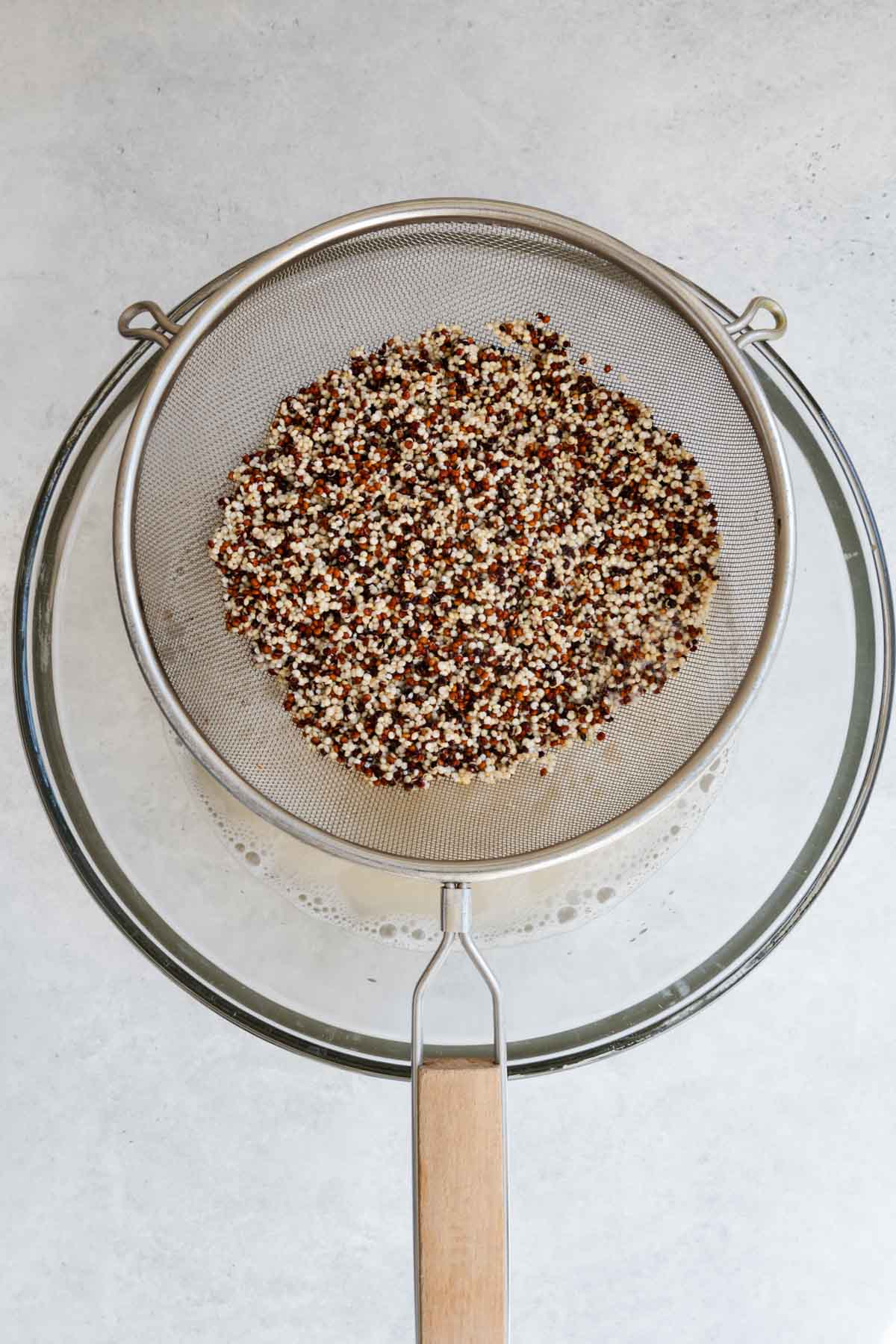
- Drain using a fine-mesh strainer, rinse thoroughly, and drain well. Discard of the soaking water.
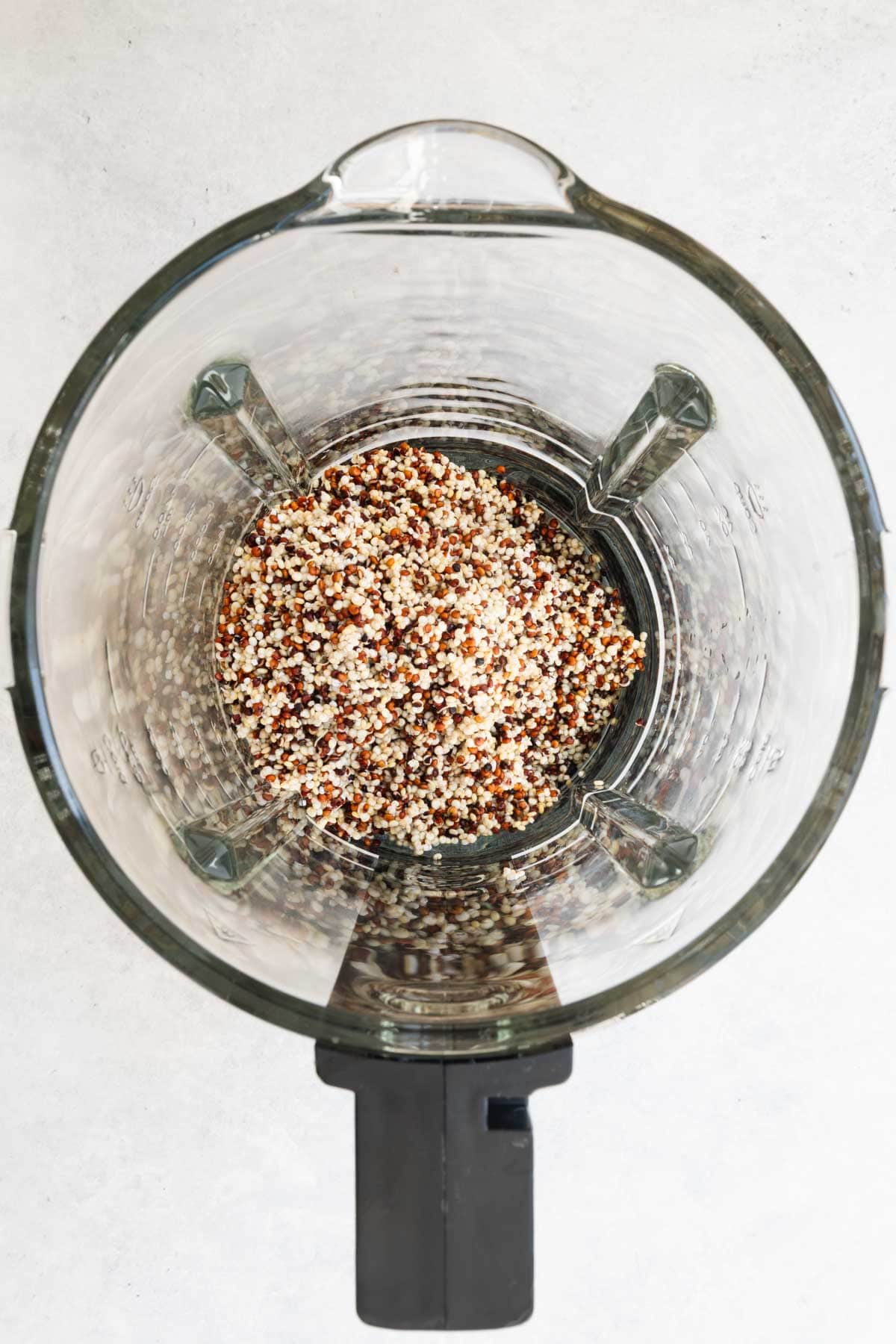
- Add the soaked and drained quinoa to a high-speed blender along with the fresh lukewarm water.
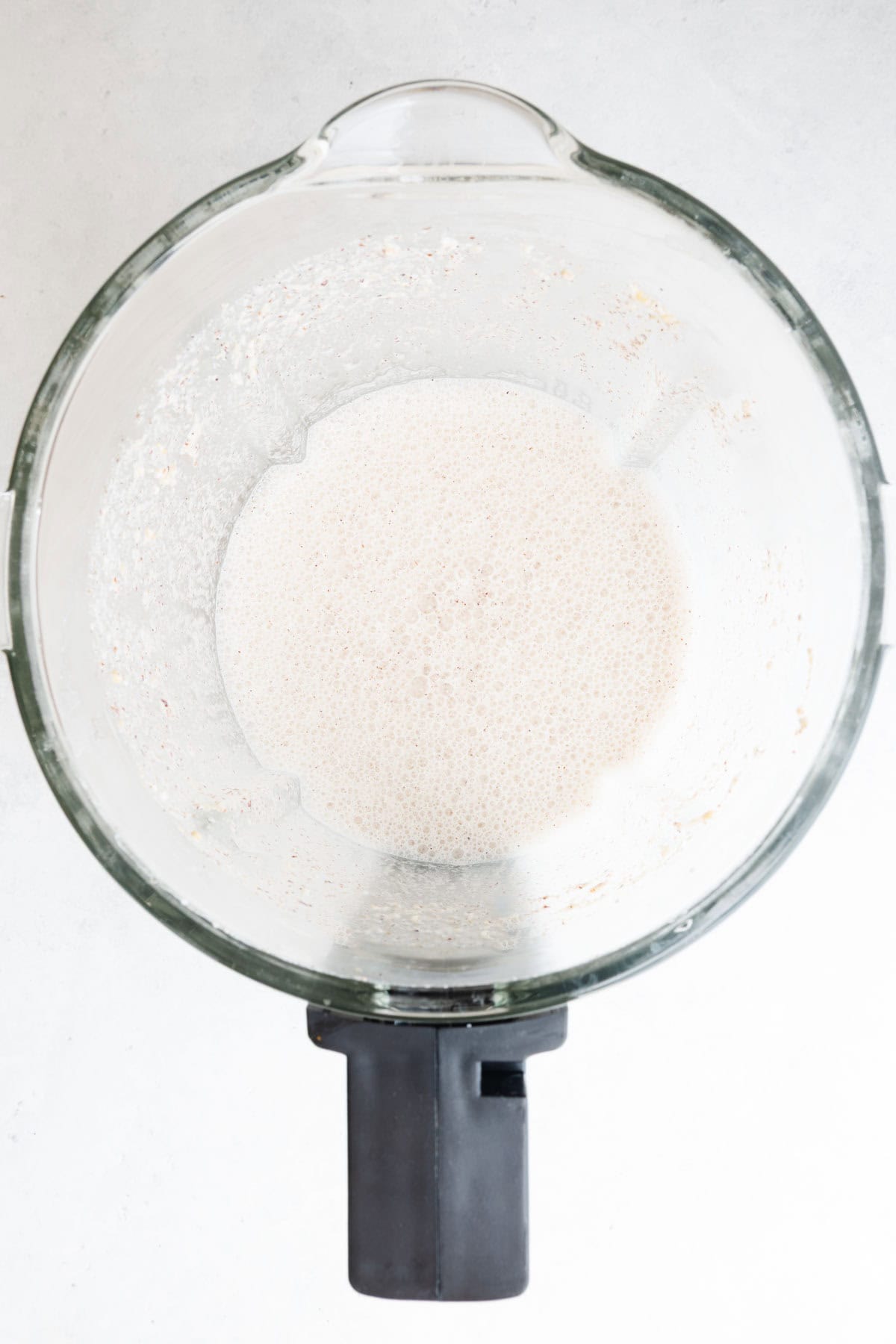
- Blend on high until smooth with no visible specks of quinoa. Set aside.
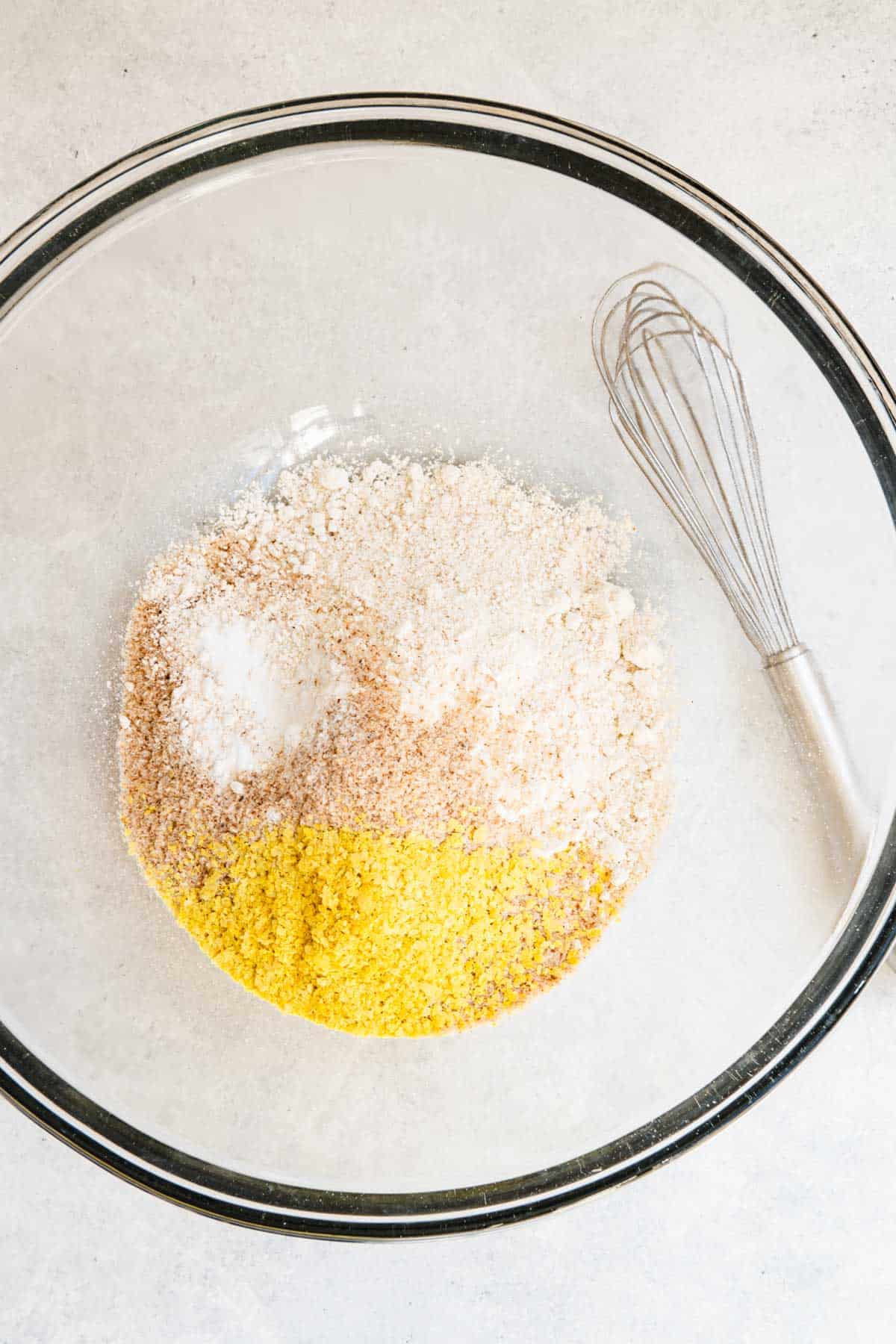
- In a medium bowl, whisk together the dry ingredients until well combined.
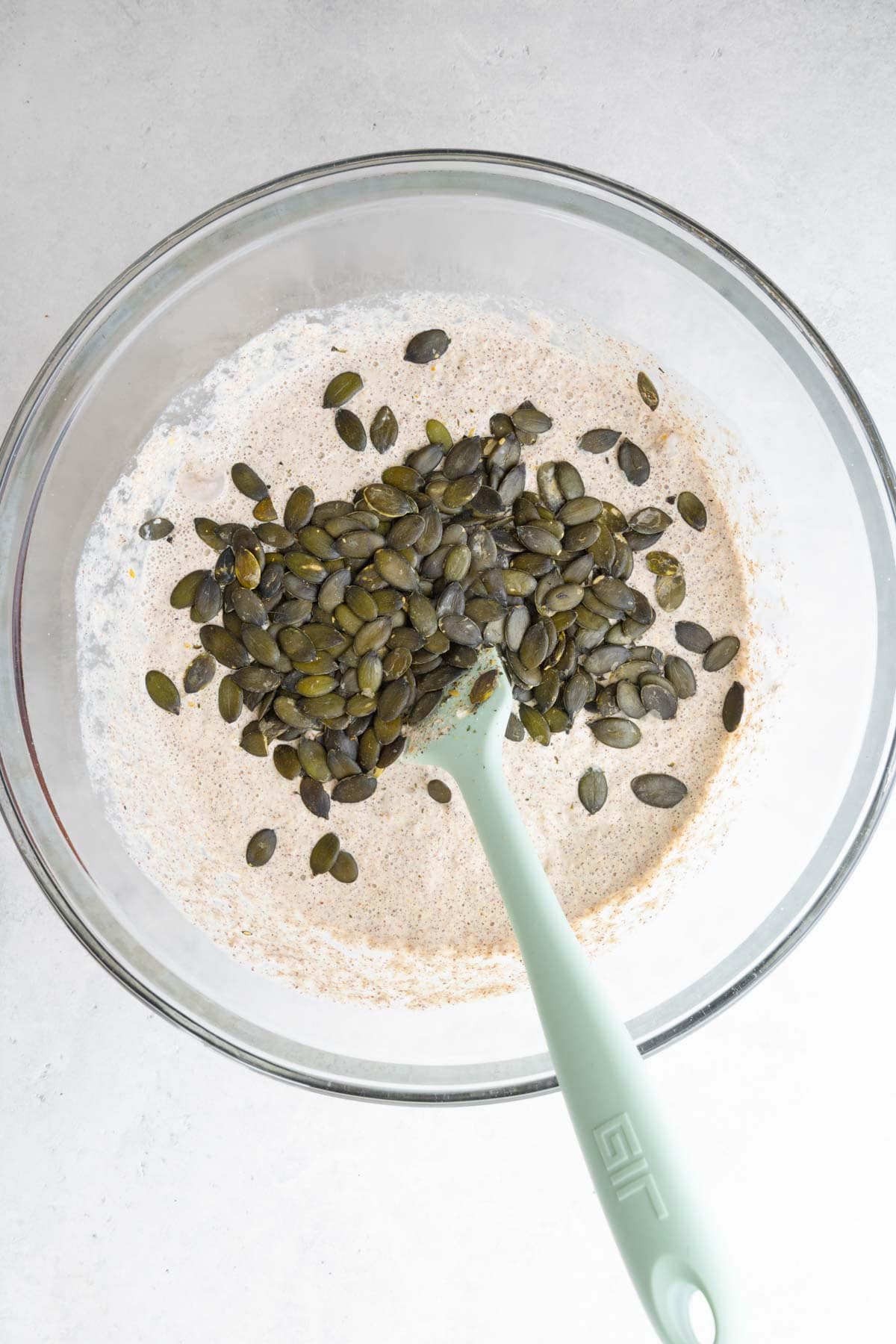
- Create a well in the center of the dry ingredients and pour in the blended quinoa mixture. Stir well. Fold in the pumpkin seeds. The mixture will form a thick, moist, greyish dough within about a minute as the psyllium and oats absorb the liquid. Let the dough rest to firm up.
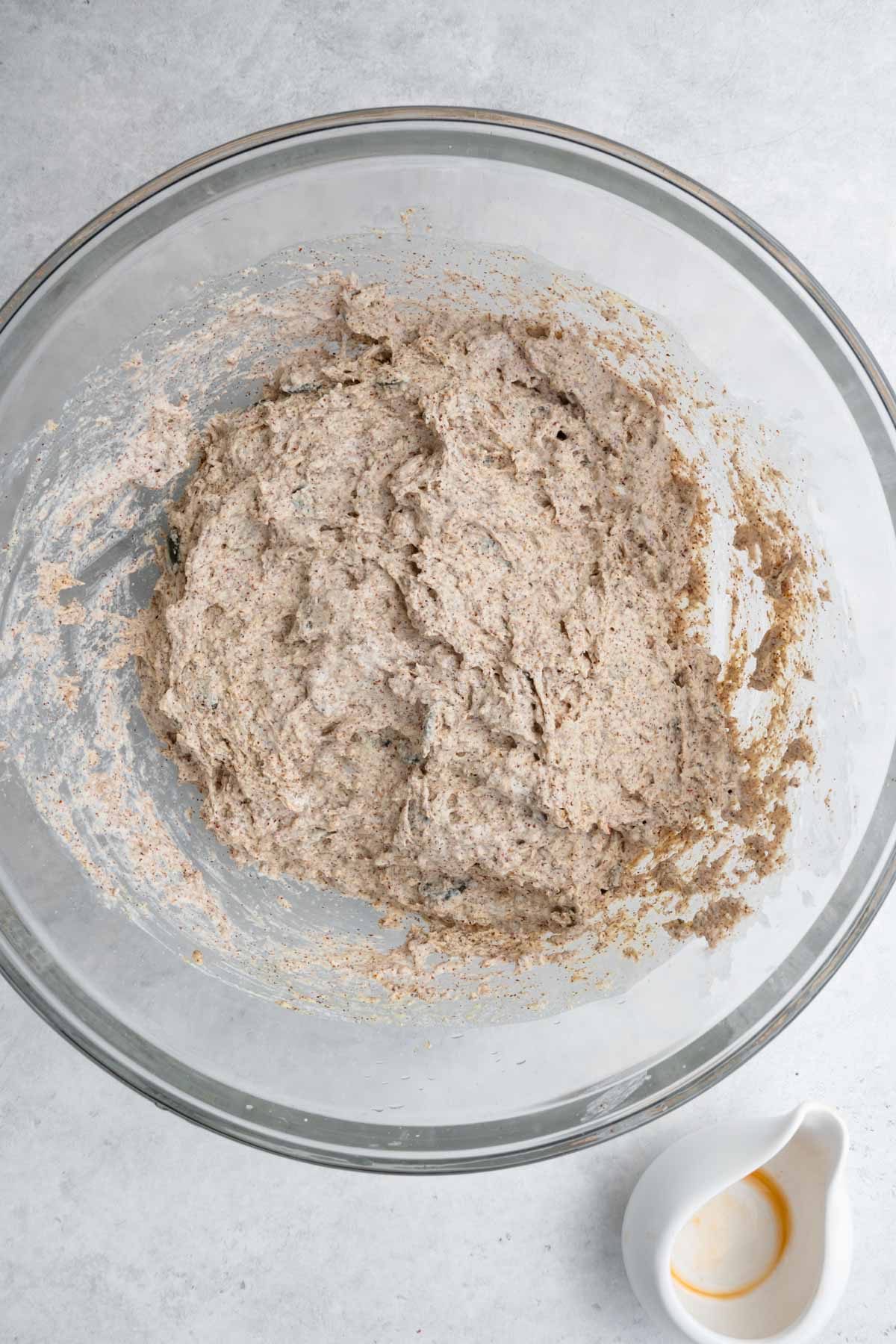
- Lightly oil your hands. Add the apple cider vinegar and gently knead it into the dough by hand-avoid overworking.
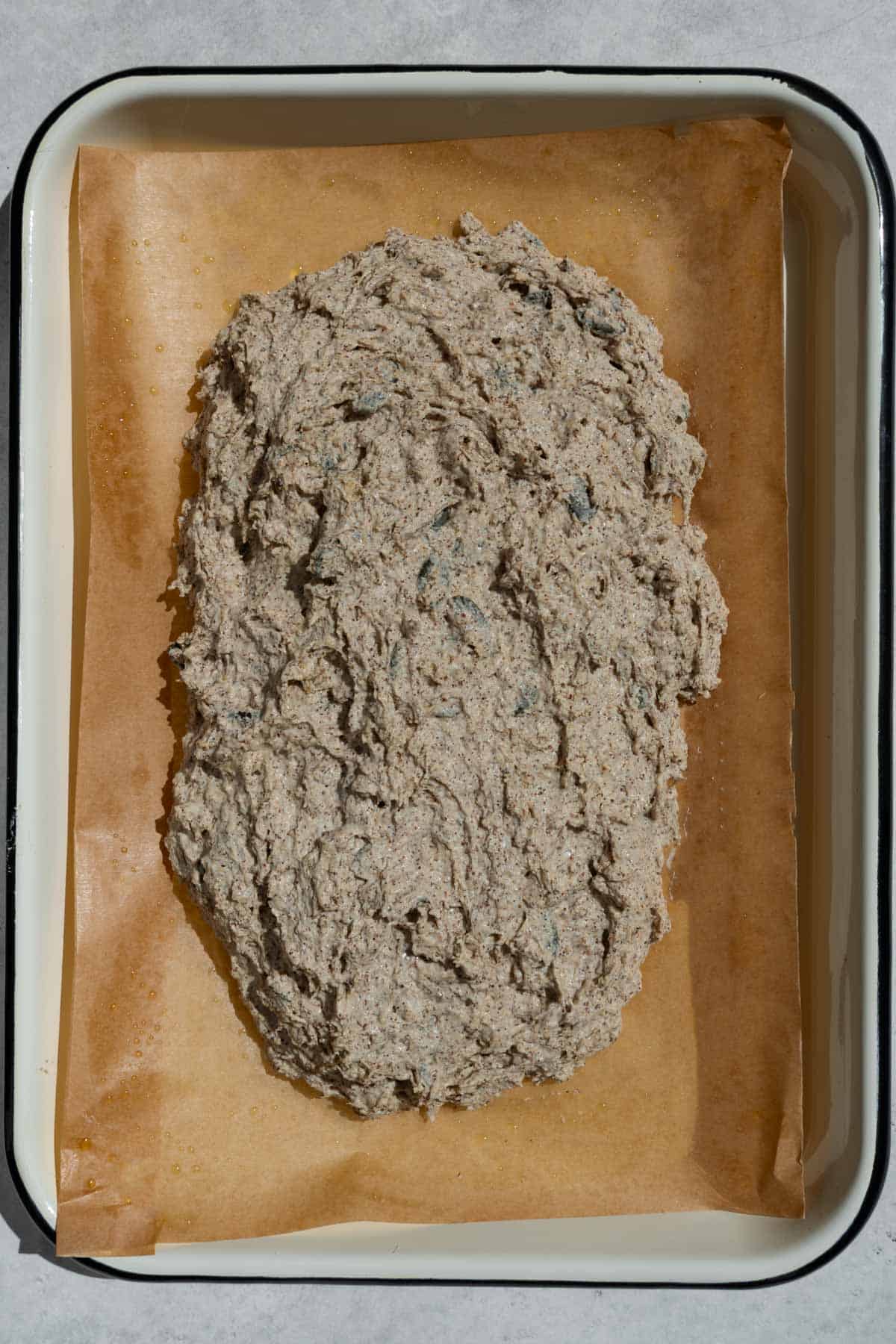
- Transfer the dough to the prepared baking sheet. Shape it into an oval loaf. Keep it no taller than 1 ½ inches (4 cm) so it bakes evenly.
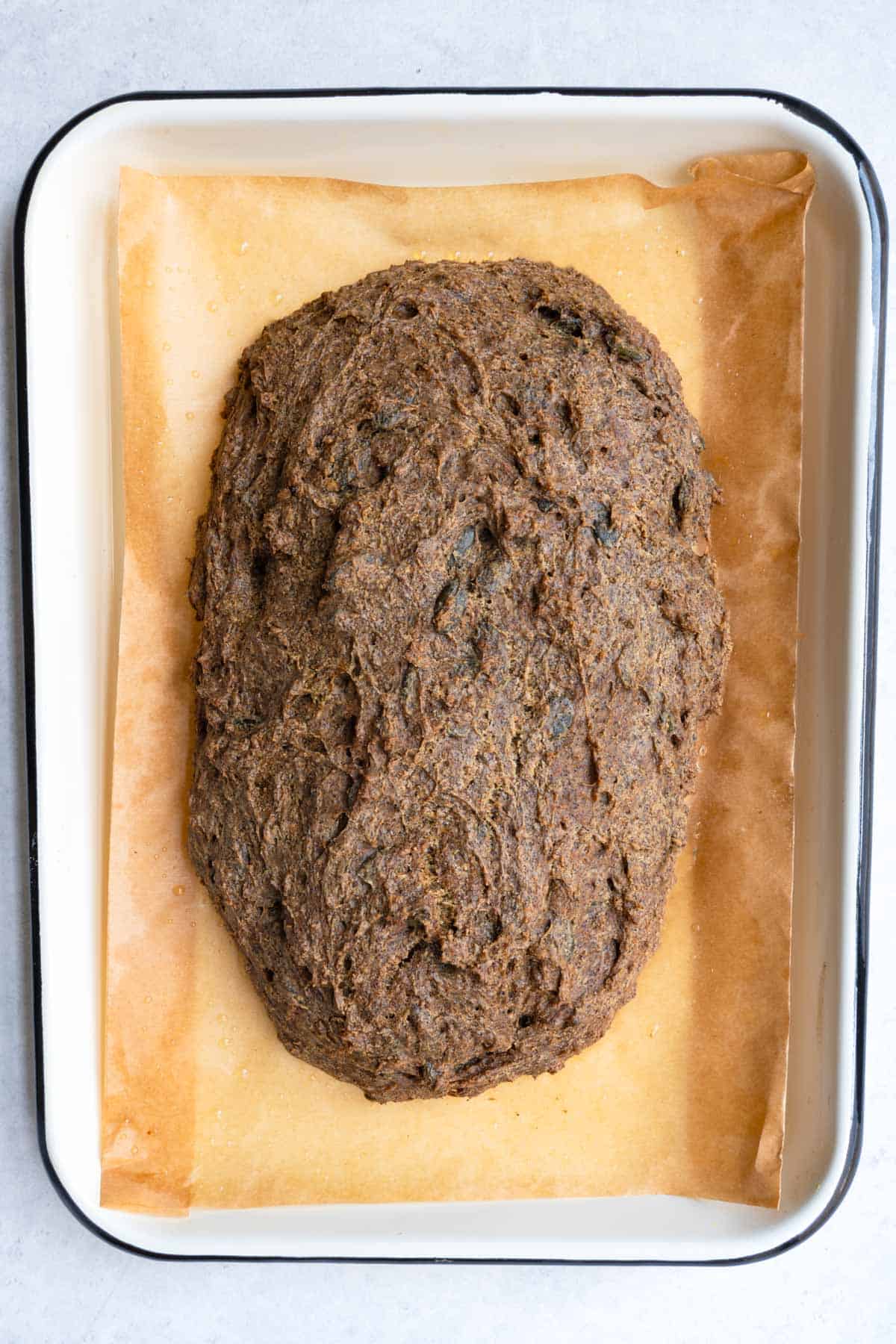
- Bake on the center rack until the loaf is crusty on the outside and a toothpick inserted into the center comes out with just a minimal amount of sticky batter.
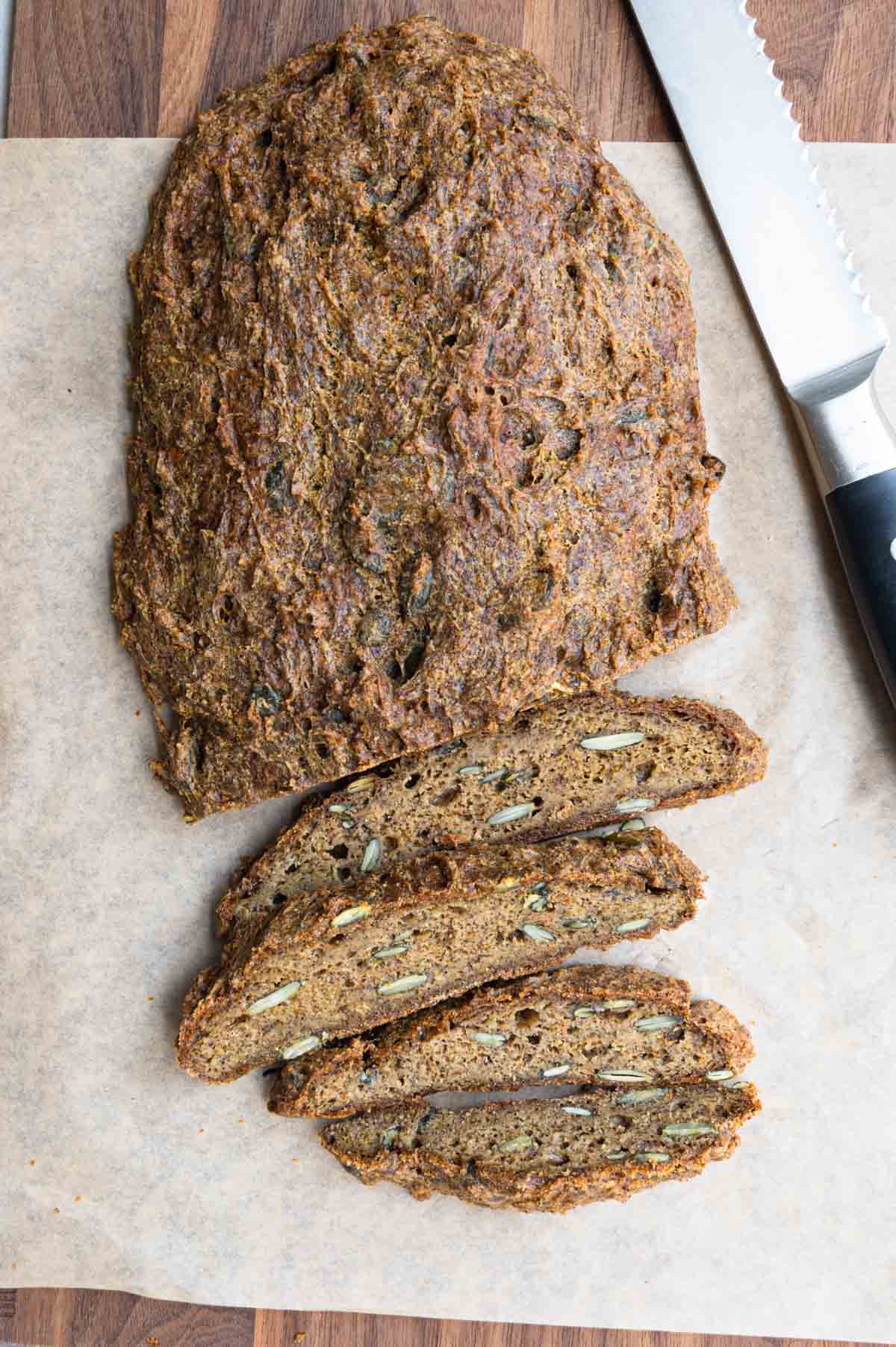
- Let the bread cool completely before slicing with a bread knife.
✏️ Expert Tips
These make or break the texture:
- Blend fully: Any grainy bits = dense bread
- Don't skip psyllium: It's what holds everything together
- Keep the loaf low: Too tall = undercooked center
- Cool completely: It firms up as it cools
- Soak, but don't over-soak: More than 12 hours = too much moisture
✔️ Storage Tips
These simple steps help preserve freshness and flavor:
- Storage: This bread can be stored in an airtight container at room temperature or in the fridge for up to 4 days.
- Freezer tips: This bread can be frozen for up to 3 months. Slice before freezing for easy grab-and-go portions. Thaw in the refrigerator or reheat directly in the oven at 350°F until warmed through.
🍞 Delicious Ways to Serve Quinoa Bread
- Toasted with almond butter and chia jam - a nourishing, high-fiber breakfast or snack
- Topped with smashed avocado and hemp seeds for a satisfying, protein-rich toast
- Spread antioxidant-rich dips like beet hummus, red lentil hummus, or edamame guacamole on top
- Dipped in soups and stews - its hearty texture holds up well in this Creamy Vegan Broccoli Soup.
- As a base for open-faced sandwiches - add roasted veggies, tofu scramble, or tofu sandwich
- On its own - enjoy warm or at room temperature for a wholesome, grab-and-go snack
🙋🏽♀️ Recipe FAQs
Yes. It's made from whole quinoa, which provides fiber, minerals, and plant-based protein without refined flour.
No-this recipe relies on soaked raw quinoa for structure.
Usually it comes down to not blending the quinoa fully, adding too much liquid, or skipping the psyllium. This bread is naturally hearty, so shaping it before baking (rather than expecting it to rise) also makes a big difference.ore baking.
🥪 Related Recipes

👩🏽🍳 Made this recipe?
Let me know your thoughts on Gluten-Free Quinoa Bread by leaving a ⭐️ rating below or sharing it on Instagram.
⚖️ Convert the Recipe to Metric (g & mL)
Use these AI tools to do this:
Quinoa Bread Recipe
Ingredients
- 1 cup dry quinoa
- 1 ½ cups lukewarm water
- 1 ½ cups oat flour
- 3 tablespoons whole psyllium husk or powder
- 1 teaspoon baking soda
- 1 teaspoon salt or salt substitute (optional)
- 1 tablespoon nutritional yeast (optional)
- ½ cup pumpkin seeds (optional)
- 2 tablespoons apple cider vinegar
- Olive oil for brushing (optional)
Save This Recipe!
Type your email & I'll send it to you!
EQUIPMENT
- Blender
- Oven
Instructions
- Soak the quinoa: Transfer the dry quinoa to a medium bowl and add enough water to cover it by at least 2 inches. Soak for at least 3 hours in lukewarm water (or overnight in room-temperature water). Do not soak longer than 12 hours. Drain using a fine-mesh strainer, rinse thoroughly, and drain well. Discard of the soaking water.
- Blend: Add the soaked and drained quinoa to a high-speed blender along with 1 ½ cups fresh lukewarm water. Blend on high until smooth with no visible specks of quinoa. Set aside.
- Preheat the oven: Preheat the oven to 350°F (180°C). Line a baking sheet with parchment paper and lightly oil it.
- Mix dry ingredients: In a medium bowl, whisk together the oat flour, psyllium husk, baking soda, salt (if using), and nutritional yeast until well combined.
- Combine wet and dry: Create a well in the center of the dry ingredients and pour in the blended quinoa mixture. Stir well until fully incorporated. Fold in the pumpkin seeds using a rubber spatula. The mixture will form a thick, moist, greyish dough within about a minute as the psyllium and oats absorb the liquid.
- Rest the dough: Let the dough rest for 10 minutes to allow it to firm up.
- Add apple cider vinegar: Lightly oil your hands. Add the apple cider vinegar and gently knead it into the dough by hand-no more than 2 minutes to avoid overworking.
- Shape the loaf: Work quickly, transferring the dough to the prepared baking sheet. (It will be sticky.) Shape it into an oval loaf with oiled hands, smoothing the surface. Keep the loaf no taller than approximately 1½ inches (4 cm) so it bakes evenly.
- Optional topping: Sprinkle with bagel seasoning or za'atar, if desired.
- Bake: Bake on the center rack for about 1 hour, or until the loaf is crusty on the outside and a toothpick inserted into the center comes out with just a minimal amount of sticky batter. (Optional: For a deliciously moist yet crusty loaf, lightly brush the top with olive oil every 15 minutes while baking.)
- Cool and slice: Let the bread cool completely before slicing it with a bread knife.
Notes
Nutrition
This information is provided as a courtesy and is only an estimate. Nutritional values may vary depending on factors such as product types and brands used.
🛍️ Shop Recipe Cookware and Ingredients

Note: As an Amazon Associate, I earn from qualifying purchases.
Nisha's Favorites
Get my tried-and-true products.
Savannah says
I've made this bread twice now. My hubs and I love hearty healthy bread. I did find some tweaks that actually simplify and shorten the prep that led to a rise double the height or the original recipe. Because this bread has no gluten, none of the glutinous bread steps enhance this type of bread. On the contrary, they were limiting the rise. Following were my tweaks to leave alot more air inside and get a much taller bread.
Ingredients. If using Psyllium husk powder cut the measurement in half. If using whole leave it the same.
The rest has to do with the combining and baking portion.
1. Pour the vinegar directly into your liquid quinoa blend in the blender and give it a quick pulse.
WORK QUICKLY
Pour the combined liquid into the dry ingredients bowl.
2. Stir with a wooden spoon or spatula for 30 to 45 seconds, no more, just until the wet and dry ingredients have come together.
DO NOT use your hands.
DO NOT knead it.
DO NOT rest it.
3. Pour the loaf mixture quickly into a loaf pan or on a baking sheet. If pouring on baking sheet work quickly. Shape it into an oval loaf with a wooden spoon. Do not use your hands if possible. You want to keep all the air inside the mixture and get it as quickly as possible into a 400F oven for the first 15 minutes to get the most rise possible.
Bake: Bake on the center rack for 15 minutes at 400F.
Turn oven down to 350F for final 45 minutes.
These tweaks made all the difference in the world in getting double the rise i got the first time around. I hope it's helpful as it also cuts down on the total time.
Nisha Melvani, RDN says
Thank you so much for sharing your experience and all these detailed tweaks! I’m thrilled that you and your husband are enjoying the bread and that you found a method that gives you such a great rise. This will be really helpful for other readers who want to experiment with the technique. I especially appreciate you coming back after making it twice to share what worked for you!
Sabina says
Crunchy, delicious. Thanks!
Nisha Melvani, RDN says
So happy you enjoyed this bread. Thank you.
Ann Leahy says
I am addicted to this bread, I make a loaf every week. It is very dense and satisfying, I slice and freeze and pop into the sandwich maker when needed. I have also tried it with a sachet of yeast instead of bicarb and vinegar, it works perfectly. I add the yeast to the water (with a small dash of date syrup to activate it) and use some of this water to blend the quinoa, and the rest in the dry mix. I then just let it rise in a warm place, no kneading, just invert the bowl onto a baking sheet for baking.
Nisha Melvani, RDN says
Thanks for sharing your method. Sounds great!
Joanna says
I love this bread! Easy to make and so satisfying. I'm wondering whether you think I could bake it in muffin tins for a shorter bake time? If so, how long? Thank you for your wonderful recipes and information.
Nisha Melvani, RDN says
Hi. That should work. The baking time will depend on muffin size.
Ronda Snyder says
1c oat flour
1/2 c buckwheat flour
1c Ancient Grain Power Blend by Ancient Harvest (quinoa,light buckwheat, millet, chia, amaranth and teff)
1/2 organic buckwheat
Grains soaked and rinsed well 6 hours at room temperature
Everything else in recipe the same
Has a distinctive buckwheat flavor good with whipped maple cream.
What I had on hand! This bread reminds me of a soft biscotti, I may cut back on salt ( used Real Salt)
Thank you for this recipe!
Nisha Melvani, RDN says
Sounds delicious. Thanks for sharing.
Alison says
I made this bread recently to go with a soup. I added hemp seeds on top. The only issue I had with it is that I used a food processor instead of a high speed blender so the soaked quinoa seeds didn’t seem to want to blend in with the water so the bread was a bit gritty. I think next time I will whizz the seeds before adding the water. But great taste and super healthy. I am a nutrition student in Australia.
Nisha Melvani, RDN says
Excited to read you are studying nutrition. Yes, if you do not own a blender, grinding them first is best.
Kim Trahan says
Could you please clarify the instructions for the soaking water for the quinoa. Is added back in to the blender for blending the quinoa? Do you heat up again at this point to get it to lukewarm?
Nisha Melvani, RDN says
Drain the soaked quinoa. Transfer it to the blender with fresh lukewarm water (1 1/2 cups).
Tracy Litterer says
I originally made this to have a healthy bread choice. I now make it regularly because the whole family loves it! Thanks for so many delicious and thoughtfuly healthy recipes!
Nisha Melvani, RDN says
So happy to hear. My family loves this bread too. Have a great weekend.
Kyla says
Looks great! Can I use this recipe with a bread maker?
Nisha Melvani, RDN says
I have not tested this. I am not sure.
Laura says
This bread is my family’s new favorite!!! It’s absolutely delicious and so easy to make. It’s on repeat in my house.
Thank you so much for all of your amazing recipes and the nutritional education you always provide. I’m grateful 🙏
Nisha Melvani, RDN says
So happy to hear you are all enjoying this bread! Thank you.
Linda says
This is one of my favorite toast and flavor bread recipes. I love that I get a large amount of complete protein with this as well. I added Italian flavoring and some sunflower seeds to the mix as well. I slice and then freeze the seperate pieces and usually eat within the week.
Today I substituted the oat flour for my own ancient grain gluten free flour. I feel confident it will work well. 🙂 Thanks so much for your website.
Nisha Melvani, RDN says
I am so glad you are enjoying this bread! Thank you for sharing your variations.
Sophie Mayo says
Love love this bread! Added a few more nuts and once some dried fruit… delish! Thank you Nisha!
Nisha Melvani, RDN says
Great additions. Thank you for sharing.
Miryam Pagé says
Hi, is it possible to use lemon juice instead of vinegar ? Thank you. 🙂
Nisha Melvani, RDN says
I have not tested this and not sure how much the flavor will change. It might rise slightly less and have a citrus note.