
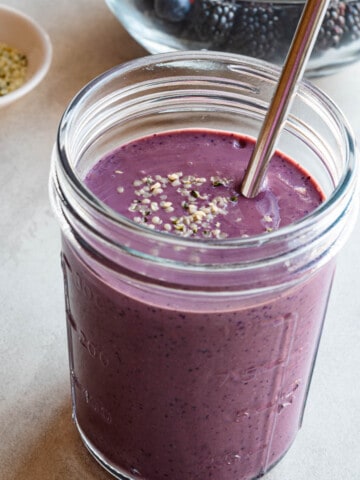
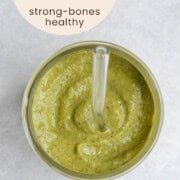
This Prune Smoothie combines prunes, leafy greens, chia seeds, and healthy fats to provide minerals like calcium, magnesium, potassium, and vitamin K-nutrients linked to long-term bone support.

Jump to:
- 👩🏽⚕️ Nutritionist's Note
- 👩🏼🌾 Ingredients & Health Benefits
- 🥬 Substitutions
- 📝 Tips for Making a Prune Smoothie
- Prune Smoothie Recipe
- ⚖️ Convert the Recipe to Metric (g & mL)
- ✔️ Storage Tips
- 🍉 More Healthy Smoothie Recipes
- 🙋🏽♀️ Recipe FAQs
- 🛍️ Shop Recipe Cookware and Ingredients
- 🍽️ Related Recipes
- 👩🏽🍳 Made this recipe?
- 💬 Comments
👩🏽⚕️ Nutritionist's Note
This smoothie was built with bone health in mind, using whole foods that naturally provide calcium, magnesium, vitamin K, potassium, protein, and antioxidants.
Lightly cooking the collard greens reduces oxalates, improving calcium absorption, while still delivering vitamin K. Pumpkin seeds, chia seeds, and almond butter contribute calcium and magnesium-minerals essential for bone formation and mineralization-along with heart-healthy fats that support nutrient absorption.
Prunes add natural sweetness along with potassium, antioxidants, and unique polyphenols. Research links prune consumption to reduced bone loss, particularly in postmenopausal women. Finally, an optional clean, one-ingredient protein powder supports muscular and skeletal strength, making this prune smoothie a satisfying, food-first way to help your bones thrive over time.
See all the Top Strong Bone Foods for vegans.
👩🏼🌾 Ingredients & Health Benefits
As a Registered Dietitian Nutritionist, my goal is to highlight the health benefits of each ingredient. Below, I've included notes on the ingredients from a nutrition expert's perspective.
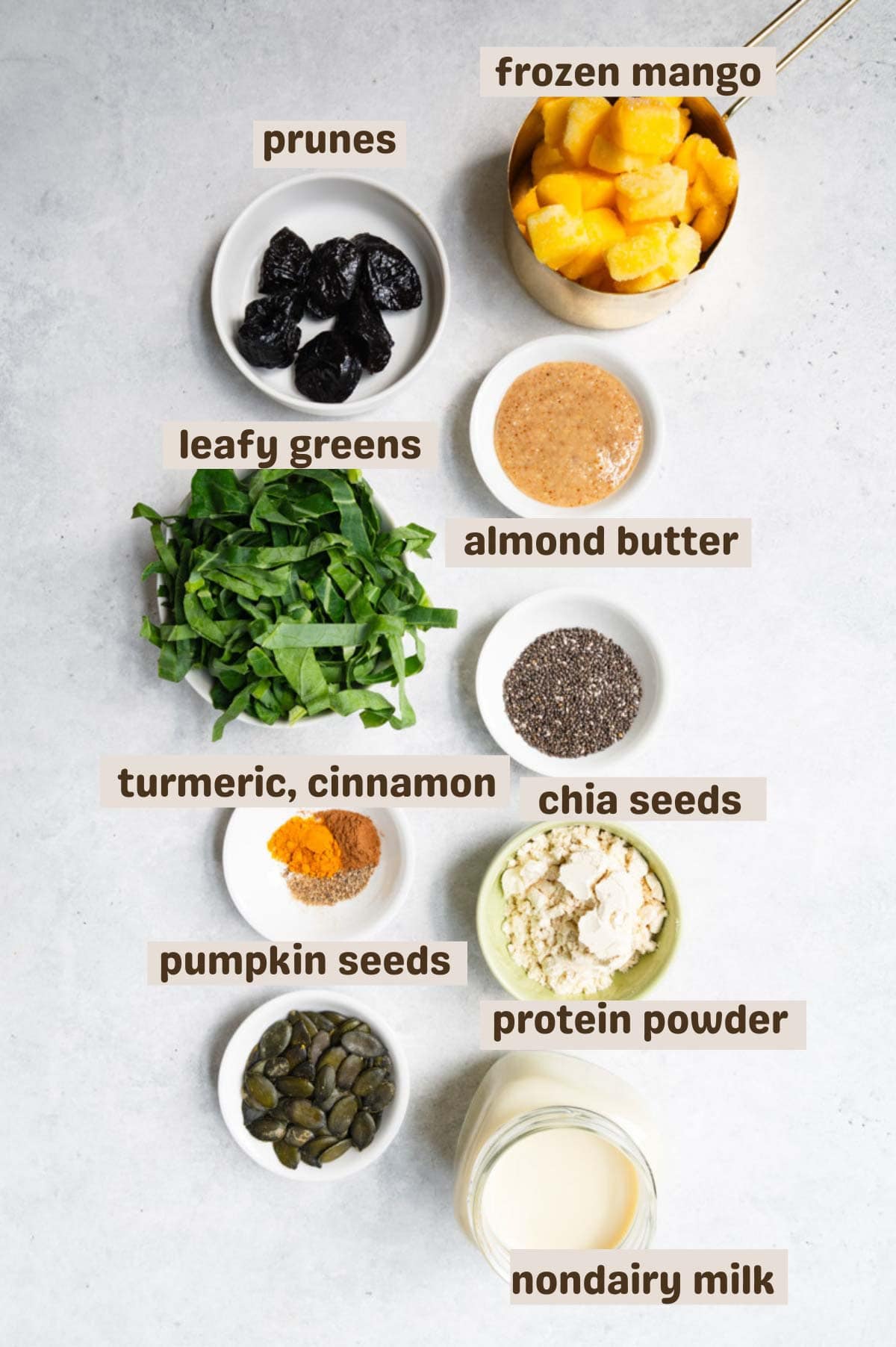
- Collard Greens: Mild when cooked, collards blend smoothly without overpowering the smoothie. They are one of the richest plant sources of calcium and vitamin K.
- Pumpkin seeds: These add a subtle nuttiness and body without changing the flavor. They contribute magnesium and plant protein.
- Almond butter: Creamy with a gentle nutty sweetness, almond butter gives the smoothie richness while adding magnesium, calcium, and healthy fats.
- Chia seeds: Nearly flavorless but transformative for texture, chia seeds thicken the smoothie and create a creamy mouthfeel. They provide calcium and magnesium.
- Nondairy Milk: Soy, pea, or hemp milk adds creaminess and a neutral base while contributing protein and, when fortified, calcium.
- Prunes: Naturally sweet and caramel-like, prunes eliminate the need for added sweeteners. They provide fiber, vitamin K, potassium, magnesium, and polyphenols that support digestive regularity and have been linked to reduced bone loss with regular intake.
- Frozen mango, berries, or banana: Use frozen mango for a naturally creamy texture and mild sweetness. Or add berries instead for a brighter, slightly tart flavor, less sugar, and to keep the smoothie tasting fresh. Alternatively, frozen banana makes the smoothie thicker and more milkshake-like, with a neutral sweetness that lets the other ingredients shine.
Optional:
- Protein powder: A clean, one-ingredient protein powder blends in seamlessly and boosts protein.
- Turmeric and Black Pepper: Turmeric's active compound, curcumin, has been proven to benefit inflammatory diseases. It adds warmth without sweetness. A pinch of black pepper enhances curcumin absorption, supporting its anti-inflammatory effects without affecting flavor.
- Cinnamon is one of the cheapest common food sources of antioxidants. I use Ceylon cinnamon to avoid the higher coumarin levels in cassia, making this smoothie safe and nourishing.
See the printable recipe card below for quantities.
🥬 Substitutions
This recipe is versatile and easy to adapt. Below are some simple ingredient substitutions.
- Leafy greens - substitute collard greens with kale, bok choy, or other calcium-rich, low-oxalate greens
- Almond butter - use tahini instead for nut-free, or omit it entirely.
- Nondairy milk - use your choice of milk or substitute with coconut water
- Protien powder - substitute with 1 scoop of desired protein powder or omit it entirely and reduce the quantity of milk as needed
- Prunes - use pitted dates instead to taste
- Mango - substitute with frozen berries, or banana as desired
📝 Tips for Making a Prune Smoothie
These additional tips will help you get the best results from this recipe.
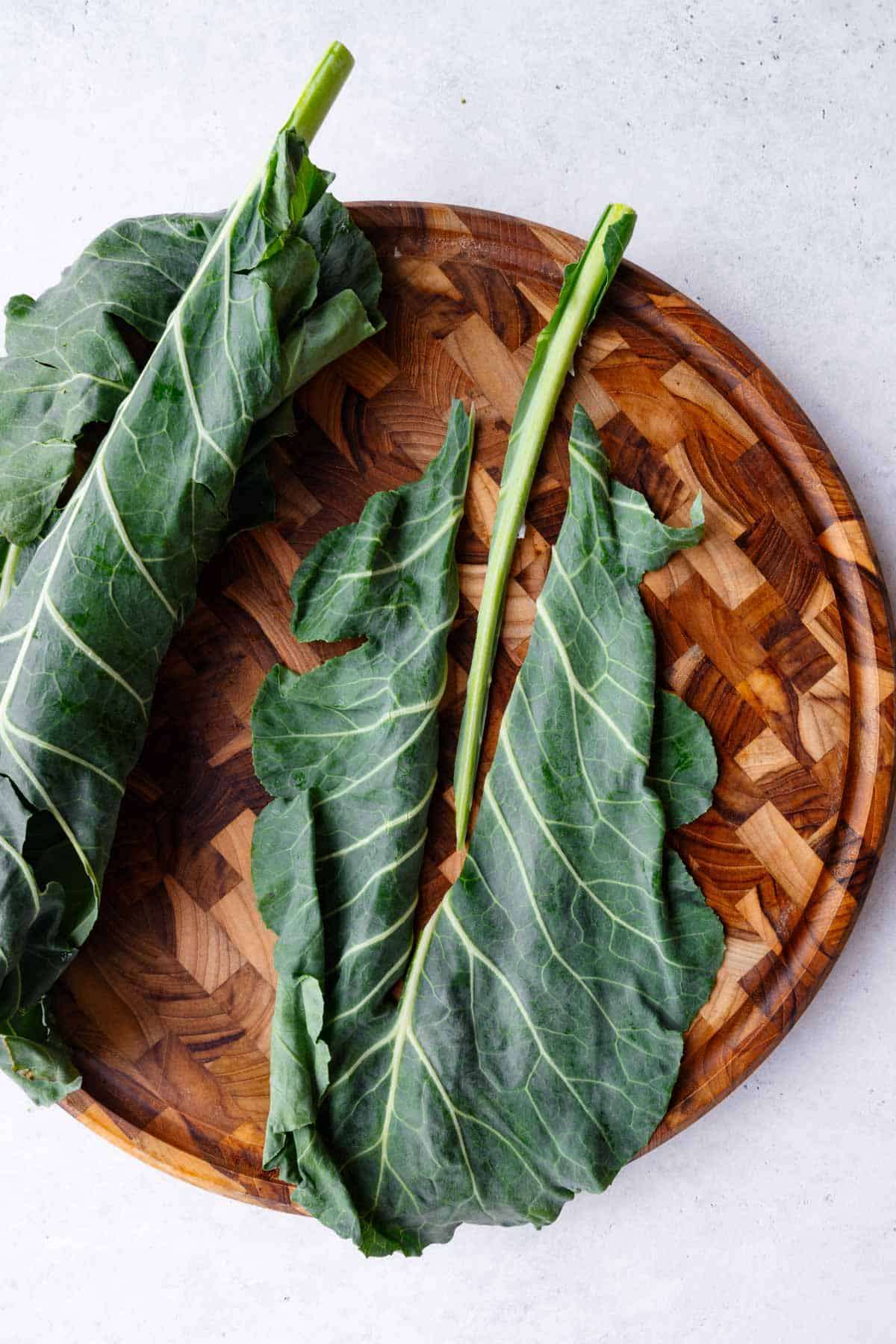
- Prepare the leafy greens: Remove the tough stems (optional) from the collards or kale leaves. Rinse them and roughly chop.
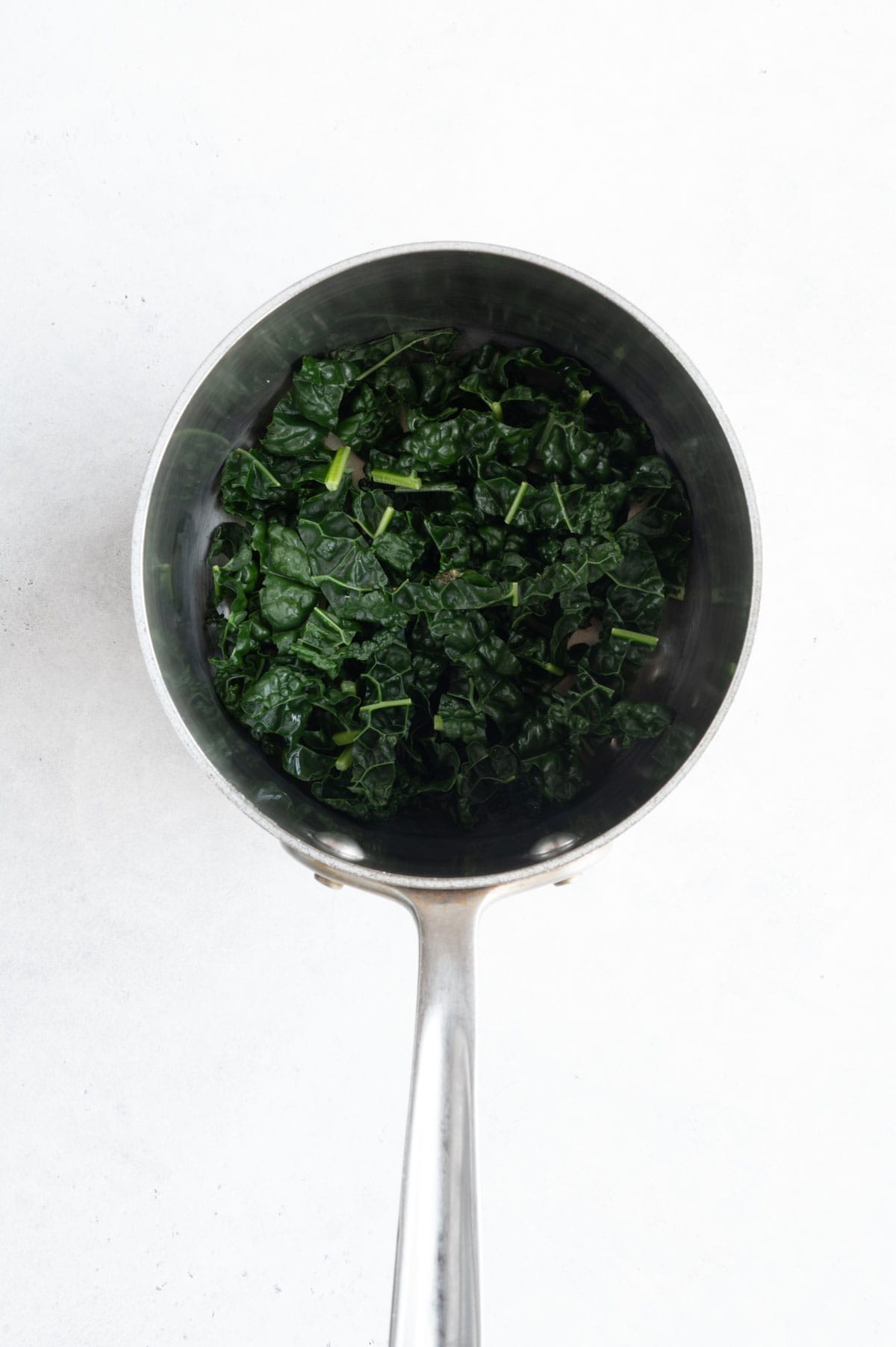
- Cook: Place the greens in a small saucepan. Cover and steam over low heat until just wilted.
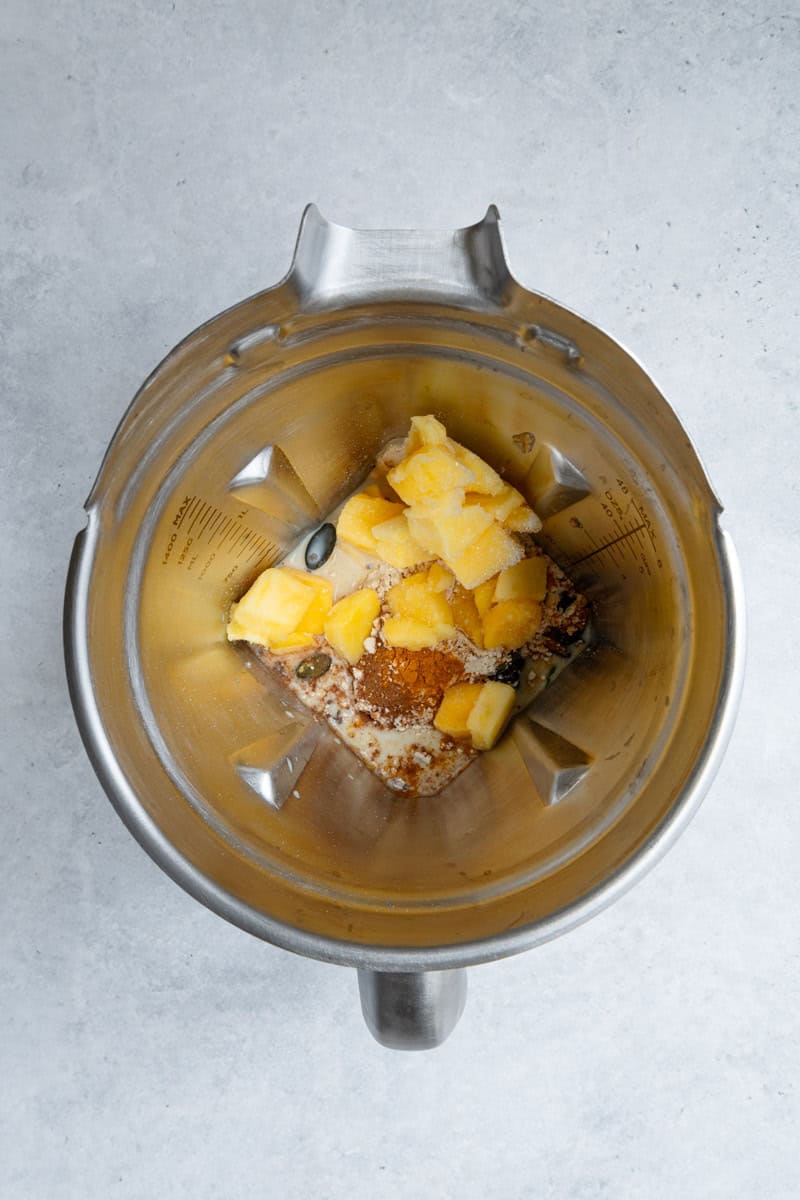
- Add the nondairy milk to the blender first before the seeds and spices. This helps prevent ingredients like chia seeds, turmeric, and cinnamon from sticking to the bottom and ensures everything blends smoothly and evenly. Add the steamed greens, prunes, frozen mango, almond butter, pumpkin seeds, chia seeds, protein powder, turmeric, black pepper, and cinnamon (if using).
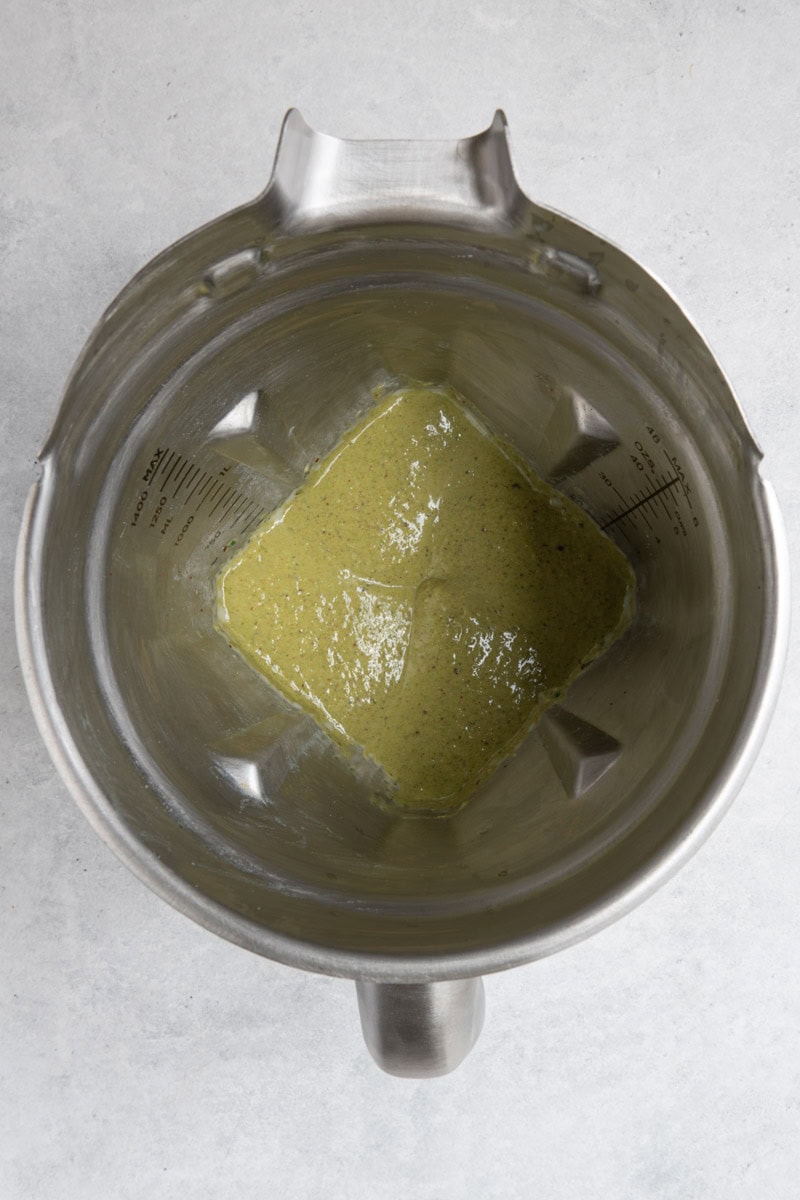
- Blend on high until smooth, using a tamper if needed to help everything blend evenly.
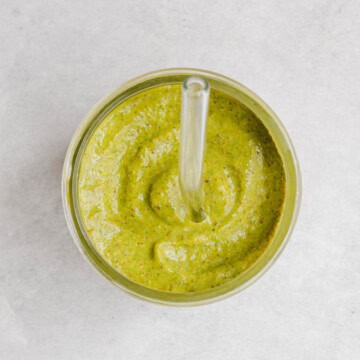
Prune Smoothie Recipe
Ingredients
- 1 cup chopped leafy greens (collard greens, kale, or bok choy)
- 1 cup unsweetened nondairy milk (soy, pea, hemp, or high-protein milk) plus more milk or coconut water as needed
- 6 prunes (soaked in hot water for 5 minutes)
- 1 cup frozen mango or frozen berries or 1 frozen banana
- 1 tablespoon almond butter or nut butter or tahini
- 2 tablespoons raw pumpkin seeds
- 1 tablespoon chia seeds
- 1 scoop protein powder (optional-see notes)
- ¼ teaspoon turmeric optional
- Pinch of black pepper optional
- ¼ teaspoon cinnamon optional
Save This Recipe!
Type your email & I'll send it to you!
EQUIPMENT
- High-Speed Blender
Instructions
- Prepare the leafy greens: Rinse the chopped greens and place them in a small saucepan. Cover and steam over low heat for about 3 minutes, or until just wilted.
- Add to a blender the nondairy milk, steamed greens, prunes, frozen mango, almond butter, pumpkin seeds, chia seeds, protein powder, turmeric, black pepper, and cinnamon (if using).
- Blend on high until smooth, using a tamper if needed to help everything blend evenly. Add more milk or coconut water until the desired consistency is reached.
Notes
Nutrition
This information is provided as a courtesy and is only an estimate. Nutritional values may vary depending on factors such as product types and brands used.
⚖️ Convert the Recipe to Metric (g & mL)
Use these AI tools to do this:
✔️ Storage Tips
These simple steps help preserve nutrients, flavor, and texture:
- Storage: Refrigerate in an airtight container for up to 4 days. This prune smoothie keeps well in the fridge due to the fiber from prunes and chia seeds. It holds its texture and does not separate or become watery over time.
🍉 More Healthy Smoothie Recipes
My Smoothie with Flax is packed with science-backed ingredients to support longevity and healthy aging.
This No-Banana Berry Smoothie skips the banana to preserve the most antioxidants from the berries while delivering amazing flavor!
Try my Skin Nourish Watermelon Smoothie for skincare in a glass.
This All-Natural Protein Smoothie is loaded with whole-food ingredients that provide a satisfying boost of protein, fiber, and antioxidants, and no protein powder.
🙋🏽♀️ Recipe FAQs
Prunes contain both soluble fiber and sorbitol, which help draw water into the stool and support regular bowel movements. Blending whole prunes into a smoothie provides fiber and fluid together, which can be gentler and more effective for supporting regularity than juice alone when consumed consistently.
California prunes are dried plums grown primarily in California and are known for their consistent quality, soft texture, and naturally sweet flavor. Nutritionally, they provide the same fiber, potassium, vitamin K, and polyphenols found in prunes more broadly, making them a reliable choice for both digestion and bone support.
Research indicates that consuming 5-6 prunes daily (approximately 50 grams) can help maintain bone density, particularly in postmenopausal women. Incorporating this amount into a smoothie is an effective and convenient way to support bone health.
🛍️ Shop Recipe Cookware and Ingredients

Note: As an Amazon Associate, I earn from qualifying purchases.
Nisha's Favorites
Get my tried-and-true products.
🍽️ Related Recipes

👩🏽🍳 Made this recipe?
Let me know your thoughts on this Prune Smoothie recipe by leaving a ⭐️ rating below or sharing it on Instagram.
John Allen says
You mention that cooking collard greens reduces oxalate, but collards, kale and bok choy are all already very low in oxalate. However, almond butter and tahini are both extremely high in oxalate! So for those who want to limit oxalate, it would be best to swap the almond butter for sunflower seed butter.
Nisha Melvani, RDN says
You're absolutely right that collard greens, kale, and bok choy are already naturally low in oxalates. I mentioned cooking because it can reduce oxalates further, but in this case they're low to begin with. For most people, the oxalates in tahini are not a reason to avoid it. Tahini is rich in calcium, unsaturated fats, protein, lignans, and other beneficial nutrients, and there is no evidence that people without a history of calcium oxalate kidney stones need to limit it because of its oxalate content.
Ziyi Xiao says
so delicious. I am getting addicted to it. Looking forward to more recipes with prunes and pumpkin seeds.
Nisha Melvani, RDN says
Happy to make some more! Love those ingredients. Thank you.
Lilo Stephens says
Made it; loved it; will add this to my bone-health regimen. Thank you!
Nisha Melvani, RDN says
Yay! I drink this on repeat!
Ronnie says
Hello! Can frozen kale be used? A saw a comment about adding mustard seeds if using frozen greens, how much would be recommended? I'd like to maximize calcium if possible. Also, can ground flaxseeds be used instead of chia seeds? Thank you 🙂
Nisha Melvani, RDN says
Hi. Yes, frozen kale is good. Add about 1/4 teaspoon mustard powder. Chia seeds contain substantially more calcium than flaxseeds.
John Allen says
But basil seeds contain even more calclum than chia seeds, and also less oxalate!
Nisha Melvani, RDN says
Absolutely! Both basil seeds and chia seeds are excellent choices. Basil seeds provide even more calcium and are lower in oxalates, while chia seeds are especially rich in ALA omega-3s and have been studied more extensively. I enjoy using both and often rotate them depending on the recipe. Basil seeds just may not be as easy to find.
Lilo Stephens says
This is definitely a keeper and such an easy, delicious way to consume prunes and support bone health.
Nisha Melvani, RDN says
So glad you enjoyed this smoothie. Thank you.
Colleen says
Can you use frozen spinach for low oxalate or should it be steamed and add mustard?
Nisha Melvani, RDN says
Spinach is high in oxalates and not cruciferous, so it doesn’t form sulforaphane — for lower oxalates and sulforaphane benefits use steamed kale or other cruciferous greens and add mustard seeds to help activate sulforaphane, especially if the greens are frozen or cooked.