
How to Make Fresh Chamomile Tea for Longevity: Steeping chamomile flowers in hot water creates a soothing herbal infusion. This relaxing tea after a meal can help regulate blood sugar more effectively than water or black tea. It may also lower LDL cholesterol and triglycerides, reduce inflammation, improve mood and sleep, and boost antioxidant levels.

Save This Recipe!
Type your email & I'll send it to you!
Chamomile isn't a true tea; it's technically classified as a tisane, another term for herbal tea. The main differences between tea and tisane lie in their plant source, caffeine content, and processing method:
Processing Method: Tea undergoes heat-fixing, while tisanes are dried without heat-fixing. Tisanes can be steeped at around 200°F for 5-7 minutes, though brewing times and proportions may vary.
Plant Source: Tea comes from the Camellia sinensis plant, while tisanes are made from various other plants, including leaves, roots, stems, spices, flowers, fruits, and herbs.
Caffeine Content: Tea naturally contains caffeine, whereas tisanes are typically caffeine-free.
Chamomile's mild flavor hides a surprising array of health benefits! It's one of the most flavone-rich beverages, with many health benefits attributed to a key flavonoid component, apigenin. This powerful compound plays a significant role in chamomile's calming, anti-inflammatory, and antioxidant properties. Sipping fresh chamomile tea after each meal is a simple yet powerful way to boost your health throughout the day.
Jump to:
- 🌻 What Does Chamomile Tea Taste Like?
- 💤How Does It Promote Better Sleep
- ⚕️ Maximizing Its Health Benefits
- 👩🏽⚕️ Lead and Cadmium in Tea
- 👩🏼🌾 Equipment & Ingredients
- 🫖 Substitutions
- 🫚 More Delicious Ways to Enjoy Chamomile Tea
- 📖 Instructions
- 🛒 Shop Nisha's Tea & Products
- ✔️ Expert Tips
- 🙋🏽♀️ Recipe FAQs
- 🍵 Related Recipes
- 👩🏽🍳 Made this recipe?
- Chamomile Tea
- 💬 Comments
🌻 What Does Chamomile Tea Taste Like?
When you brew this tea, you'll notice its delicate, soothing taste. The subtle floral notes, with a hint of apple mint and a touch of honey, create a calm, relaxing experience. The tea's smooth, mild character and golden hue make it perfect for those new to herbal teas. Plus, it's caffeine-free, so it's great for unwinding anytime, day or night.
💤How Does It Promote Better Sleep
Calming the Nervous System:
Chamomile tea contains apigenin, a natural compound that binds to GABA receptors in the brain. These receptors help calm the nervous system, reduce anxiety, and promote relaxation, making falling asleep easier.
Reducing Stress and Improving Mood:
The antioxidants in chamomile, including apigenin, help lower stress and ease feelings of sadness. By reducing emotional stress, chamomile supports a more peaceful state of mind, allowing for better sleep.
Supporting Sleep Cycles:
Studies have shown that people who consume more apigenin tend to have better sleep quality. This is because apigenin interacts with brain receptors involved in regulating sleep cycles, promoting deeper and more restful sleep.
⚕️ Maximizing Its Health Benefits
- Brew It Right:
To unlock chamomile's calming properties, steep 2 to 3 teaspoons (or 4 grams) of chamomile flowers in 8 fluid ounces of water at around 200°F for 5-7 minutes. If you prefer a stronger tea, double the flowers to 4 teaspoons or 8 grams per cup. Avoid boiling the flowers directly to preserve their delicate oils and flavors. - Choose the Right Time:
Drink chamomile tea about 30-60 minutes before bedtime to help your body relax and prepare for sleep. Sipping slowly while winding down in a calm environment enhances its soothing effects. - Select High-Quality Chamomile:
Use organic chamomile flowers, or tea bags from a reputable brand, for the best results. Whole flowers tend to be more potent than pre-packaged tea bags. - Store Properly:
Keep dried chamomile flowers in an airtight container in a cool, dark place to maintain freshness and potency. This prevents the flowers from losing their essential oils, which provide the tea's relaxing benefits.
Following these tips, you can enjoy a delicious cup of chamomile tea while maximizing its calming and sleep-enhancing effects.
👩🏽⚕️ Lead and Cadmium in Tea
Is lead and cadmium a problem?
While most commercially available chamomile teas contain these metals at low levels within safety guidelines, it's still important to be cautious.
How can I avoid lead and cadmium in tea?
To minimize your exposure to lead and cadmium, purchase tea from reputable brands that conduct rigorous testing for heavy metals. Look for organic options and teas that are third-party tested to ensure they meet safety standards.
Can you recommend a lead-free tested chamomile tea?
🔗Find my longevity tea essentials and recommended brands here. Choose brands known for testing their tea for heavy metals, including lead and cadmium. They should follow strict quality control measures to ensure their products are safe for consumption.
For more LongeviTEAS, visit my Anti-Aging Teas and Coffee recipes. In addition to chamomile, I suggest adding Sencha Green Tea and Hibiscus Tea to your daily routine.
👩🏼🌾 Equipment & Ingredients
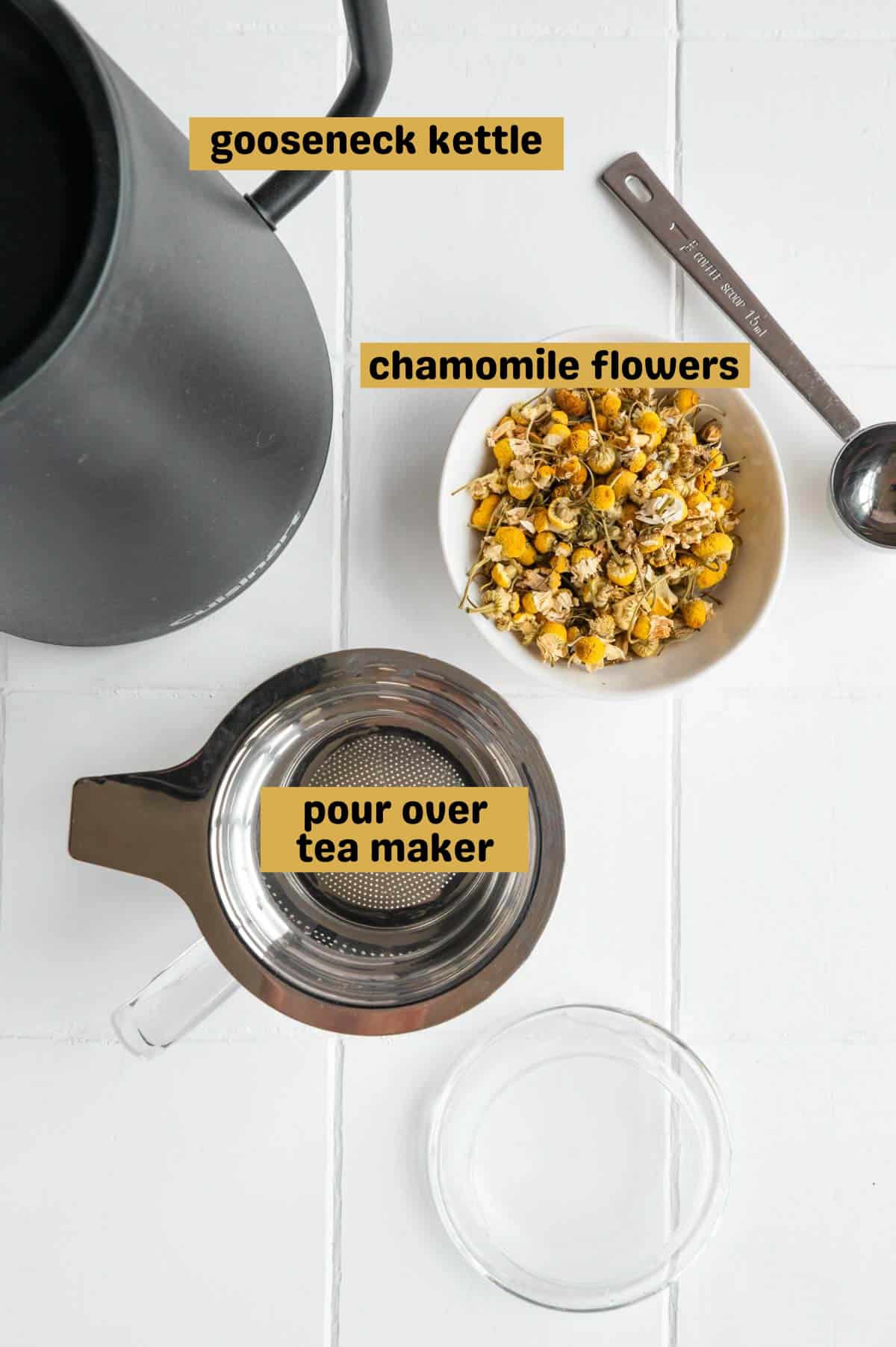
- A gooseneck kettle allows you to precisely control the speed and direction of your pour.
- If you're using fresh chamomile flowers, you'll need a tea infuser and a heat-safe mug.
- 🔗Find my recommended brands for tea bags and fresh flowers here.
See the recipe card for quantities.
🫖 Substitutions
- Chamomile flowers - Substitute with tea bags from reputable brands known for their stringent testing processes.
- Mint - Add fresh mint for a refreshing blend of flavors with a perfect balance of calm and coolness.
- Ginger - Grate some fresh ginger into the tea for a warm, spicy kick that adds depth to this mild-tasting herbal tea.
- Lemon verbena - Add lemon verbena for a bright citrusy note and more anti-aging benefits.
🫚 More Delicious Ways to Enjoy Chamomile Tea
- Mint:
Add a few fresh mint leaves to your chamomile tea while steeping. Mint provides a refreshing, cool flavor that balances the calming warmth of chamomile, creating a soothing yet invigorating blend. Additionally, mint is thought to reduce the effects of oxidative stress by neutralizing harmful free radicals, supporting overall health. - Ginger:
Grate fresh ginger into your tea for a warm, spicy kick. Ginger adds depth to chamomile's mild taste. Research also suggests that ginger may help lower blood sugar levels, making it beneficial for people managing diabetes. - Lemon Verbena:
Add lemon verbena leaves for a bright, citrusy twist. This enhances the tea's calming effect while adding extra antioxidants that support healthy aging, making your tea both refreshing and beneficial. - Tartary Buckwheat:
Brew chamomile flowers with tartary buckwheat tea for a nutty, earthy flavor. Himalayan Tartary Buckwheat is rich in flavonoids like rutin, which may help reduce blood cholesterol levels while keeping capillaries and arteries strong and flexible. This makes it a heart-healthy addition to your tea blend. - Hibiscus Flowers:
Steep chamomile with hibiscus flowers for a tart, fruity note. Hibiscus flowers are rich in antioxidants quickly absorbed into the bloodstream, boosting antioxidant levels within an hour. Drinking 2-3 cups of hibiscus tea daily may also support heart health by improving cholesterol levels, regulating blood sugar, and reducing inflammation.
These creative additions not only enhance the flavor of chamomile tea but also boost its health benefits, making it a soothing, nutritious, and enjoyable beverage. For more healthy beverages, visit my Longevity Teas page.
📖 Instructions
For the full recipe with quantities, scroll down to the bottom of the post. This is an overview.
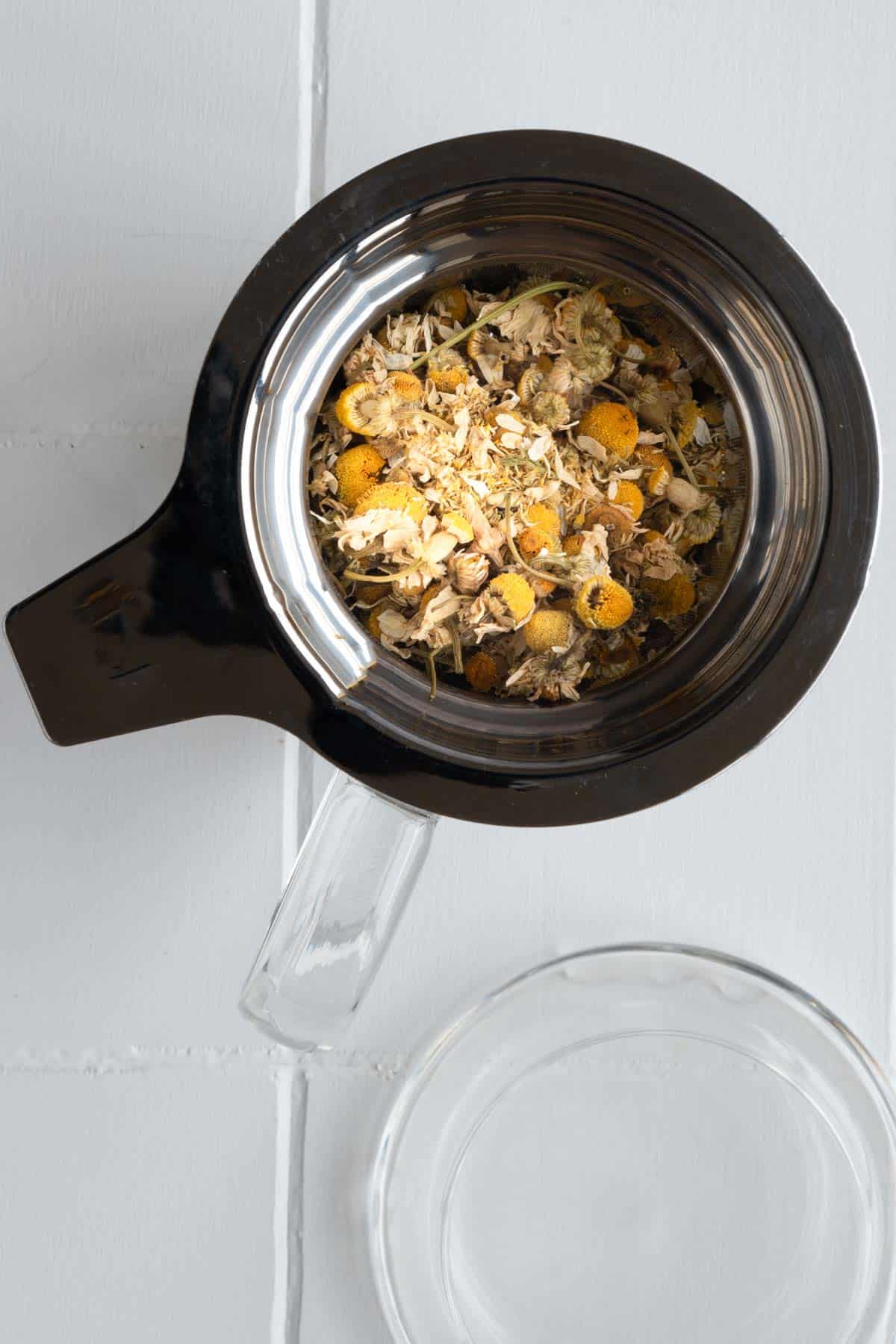
- Place 2 to 3 teaspoons of chamomile flowers in a single-cup tea infuser. Insert the infuser into a mug.
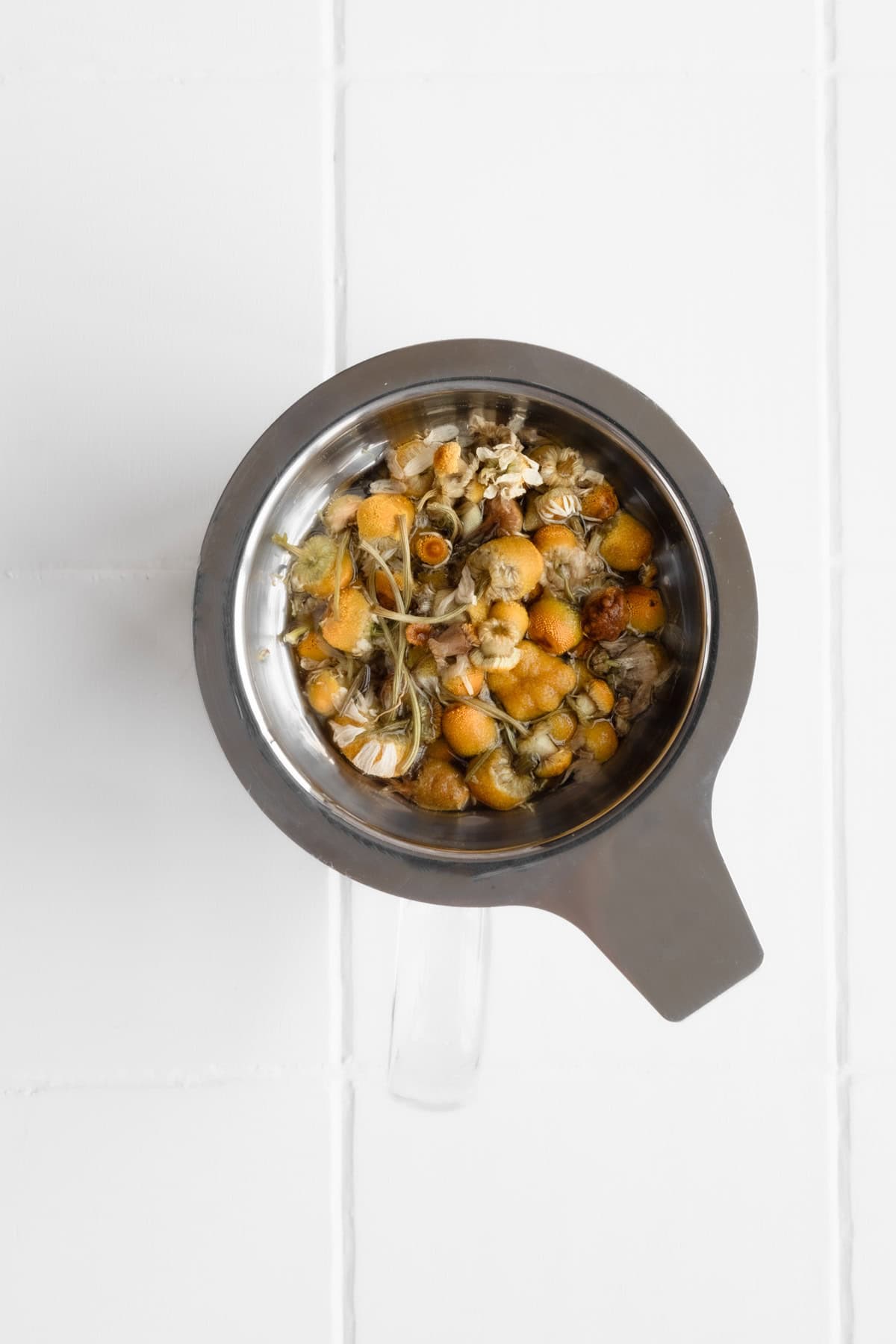
- Add about 8 ounces of warm water, 205-212 °F, pouring it over the flowers. Let it sit for 5 to 7 minutes.
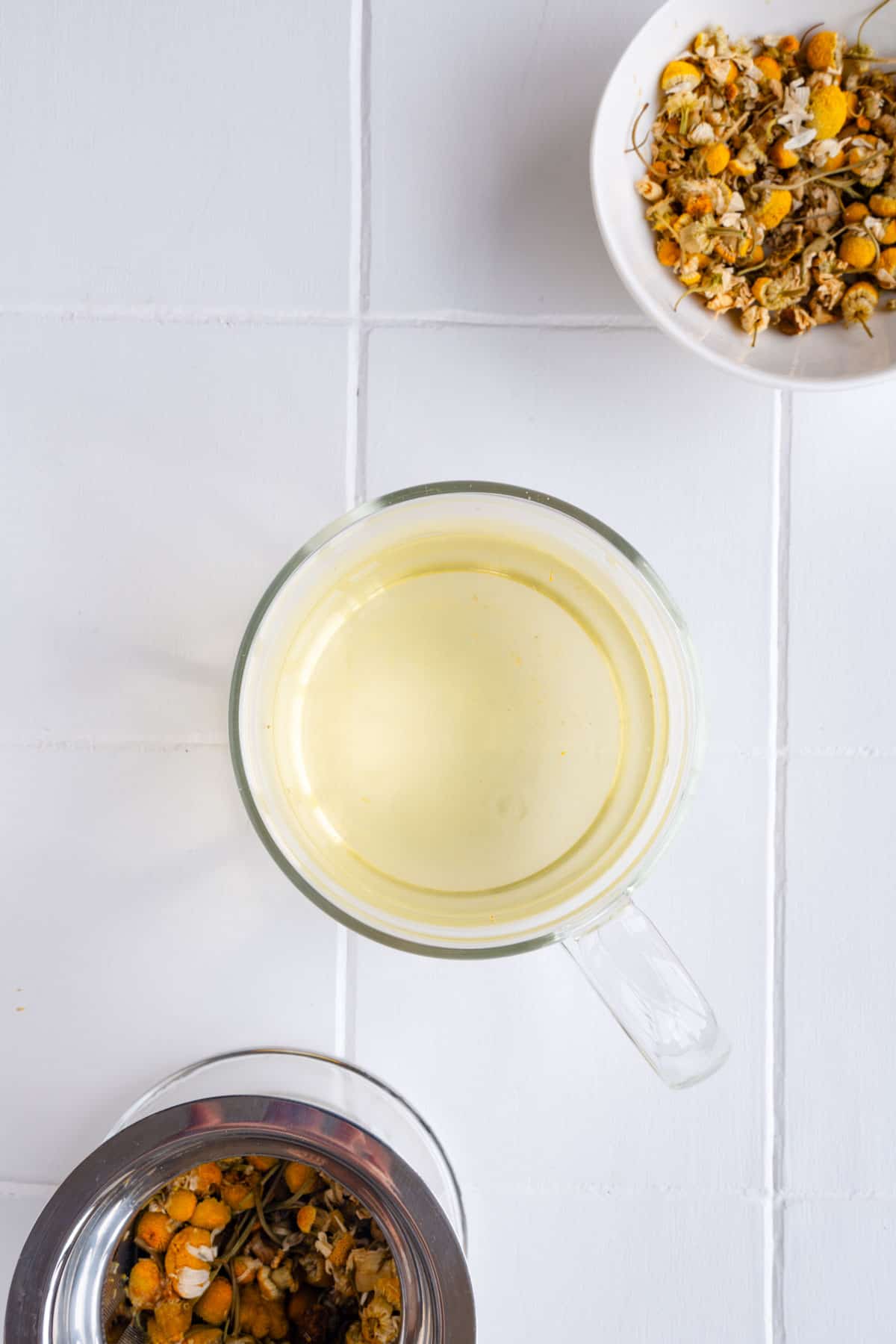
- Remove the infuser. Set aside. You can reuse chamomile for a second steeping, but the flavor will be milder than the first infusion. To get the taste you want, extend the steeping time accordingly.
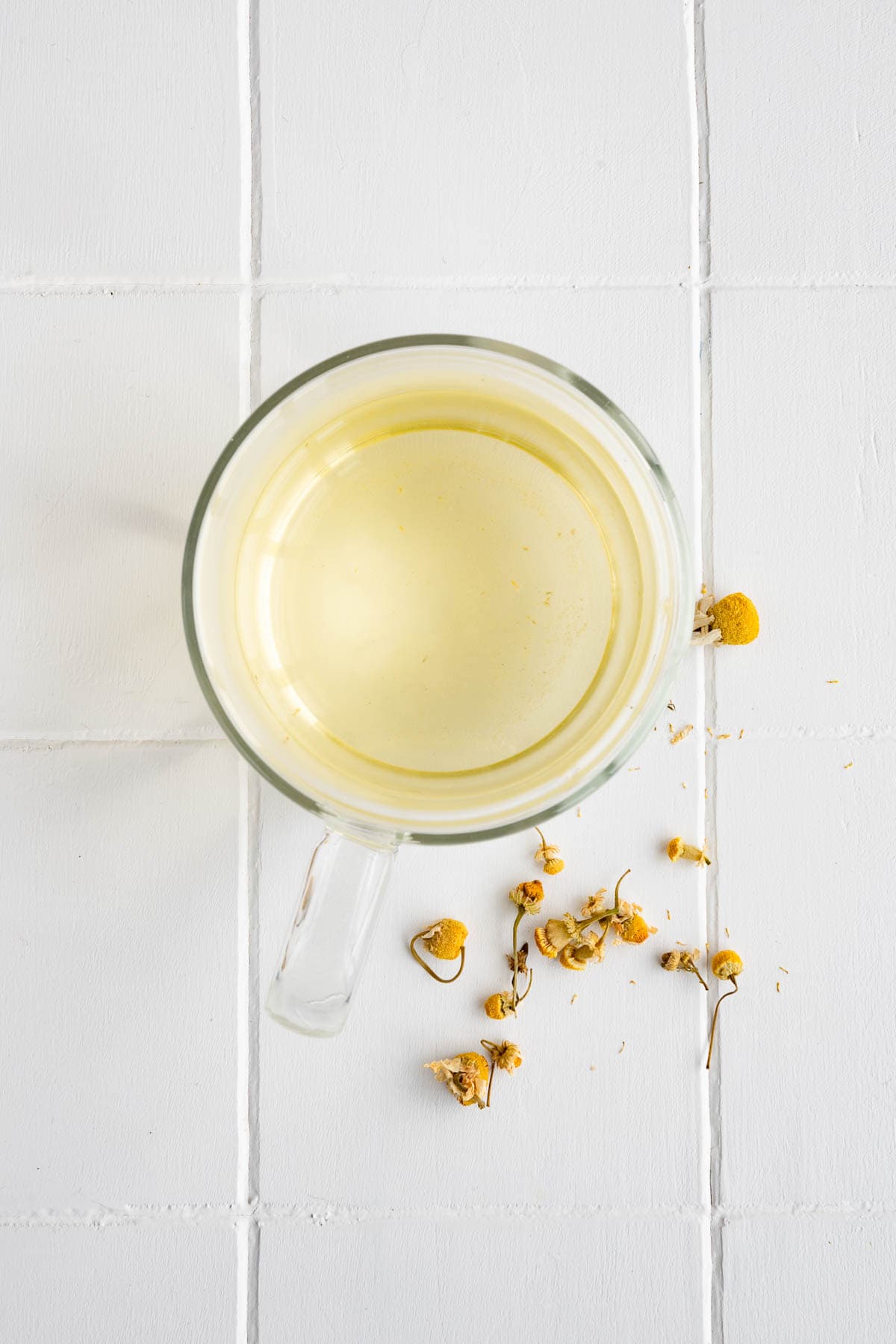
- Enjoy after a meal for the blood sugar-stabilizing effects.
🛒 Shop Nisha's Tea & Products

Note: As an Amazon Associate, I earn from qualifying purchases.
Nisha's Tea Favorites
Get my tried-and-true cooking products here.
✔️ Expert Tips
- For one cup of tea, use 2 to 3 teaspoons (or 4 grams) of flowers per 8 fluid ounces of water. For those who like their tea strong, you can double the amount of chamomile flowers used to 4 teaspoons or 8 grams per 8 fluid ounces.
- To minimize your exposure to lead and cadmium, choose tea from reputable brands that conduct rigorous testing for heavy metals.
- Check the FAQs below to see who should limit or avoid chamomile tea.
- Storage: Keep chamomile flowers in a cool, dark place to preserve their freshness and potency.
🙋🏽♀️ Recipe FAQs
Chamomile tea, like green tea, helps block the absorption of sugars through the intestinal wall. That's why I recommend enjoying a cup after a meal.
Chamomile tea is generally safe and enjoyed for its calming benefits. However, it's important to note a few exceptions:
Pregnant Women: You may want to limit intake. Some studies suggest it could increase the risk of preterm labor. Always consult your healthcare provider before drinking chamomile during pregnancy.
Allergies: If you have allergies to plants in the daisy family, like ragweed, chamomile could trigger a reaction. Symptoms might include skin rashes or respiratory issues.
Medication Interactions: Chamomile can interact with certain medications, including blood thinners, such as warfarin, and sedatives. If you're on any medication, check with your doctor first.
For most people, 1 to 3 cups per day is safe. If you're in a sensitive group, stick to the lower end or consult your healthcare provider.
Chamomile tea is a soothing choice, but if you have concerns, it's best to seek medical advice. For more LongeviTEAS, explore my Anti-Aging Teas and Coffee recipes, and consider adding green tea and hibiscus tea to your day!
For a refreshing change, make chamomile tea using the cold brew method. Just place chamomile flowers in cold water and let them steep in the fridge for 4 to 6 hours or longer, depending on your taste. Strain and enjoy.
🍵 Related Recipes


👩🏽🍳 Made this recipe?
Let me know your thoughts on my Anti-Aging Tea creation by leaving a ⭐️ rating below or sharing it on Instagram.
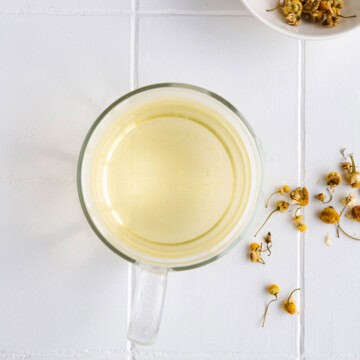
Chamomile Tea
Ingredients
- 2 teaspoons chamomile flowers (use 2 to 4 teaspoons according to taste)
- 8 ounces water (205-212 °F, 96-100°C)
Save This Recipe!
Type your email & I'll send it to you!
Instructions
- Place 2 to 3 teaspoons of chamomile flowers in a single-cup tea infuser. Insert the infuser into a mug.
- Add about 8 ounces of warm water, 205-212 °F, pouring it over the flowers. Let it sit for 5 to 7 minutes.
- Remove the infuser. Set aside. You can reuse chamomile for a second steeping, but the flavor will be milder than the first infusion. To get the taste you want, extend the steeping time accordingly.
- Enjoy after a meal for the blood-stabilizing effects.
Notes
- For one cup of chamomile tea, use 2 to 3 teaspoons (or 4 grams) of flowers per 8 fluid ounces of water. For those who like their tea strong, you can double the amount of chamomile flowers used to 4 teaspoons or 8 grams per 8 fluid ounces.
- To minimize your exposure to lead and cadmium, choose chamomile tea from reputable brands that conduct rigorous testing for heavy metals. (See the blog post for my recommended brands.)
- Check the FAQ section in the blog post to see who should limit or avoid chamomile tea.
- Storage: Keep chamomile flowers in a cool, dark place to preserve their freshness and potency.
Nutrition
This information is provided as a courtesy and is only an estimate. Nutritional values may vary depending on factors such as product types and brands used.


Yvonne Renoult says
I appreciate your beautiful recipes and tips. You mention that it is good for women to eat 30 minutes after waking unless fasting. I find that if I eat breakfast, I am sluggish and hungry all day. If I plow through my first hunger and just have decaf or tea instead of eating. I have more energy and I don’t experience cravings. I am 70 and sleep 6-7 hours (usually 6). I could stand to loose about 15 pounds (pot belly). I do best when I walk more, but can’t always fit it in. I get in 10,000 steps most days, but a few days a week it’s only 6,000.
So, holding off on eating? Is eating before walking important?
Thank you for your beautiful offerings!
Nisha Melvani, RDN says
It’s especially helpful to eat before being active, since your body needs fuel to perform and recover well. I also recommend an early dinner and aligning meals with daylight—this supports weight management and usually means you’ll be hungry for breakfast.
Faith Saito says
Mahalos
Nisha Melvani, RDN says
You are so welcome:)
Sue Powell says
Hi, last winter I started making my chamomile tea using milk instead of water. Omg, I put my chamomile in a pan with the milk and heat gently, drain it through a sieve and add a teaspoon of honey. Game changer for me, if you like horrlicks you'll love the slightly malty taste of this. A winter hug in a mug. I also use full fat milk but I would think any milk is OK.
Nisha Melvani, RDN says
I will try this with nondairy milk!
Ninette Abdo says
Please send me the brands of tea that are best to use that are free of contaminants, Thank you for the wonderful recipes and healthy information and suggestions!!!🤲
Nisha Melvani, RDN says
https://amzn.to/3TjHCng