
Easy Vegan Omelette That Doesn't Stick! High protein, high fiber, zero cholesterol, and no pan scraping required. This chickpea flour omelette (or omelet) employs a simple veggie-first technique that naturally prevents sticking, even without oil. The result is a fluffy, tender omelette that folds and flips easily every time. Perfect for breakfast, meal prep, and customizable with your favorite fillings.

Save This Recipe!
Type your email & I'll send it to you!
👩🏽⚕️ Nutritionist's Note:
One omelette provides approximately 290 calories, 19 grams of protein, and 10 grams of fiber. Eggs contain no fiber and about 200 mg of cholesterol each, while this vegan version contains none. Chickpea flour provides plant-based protein, iron, and fiber to keep you full and maintain steady blood sugar levels. Spinach adds folate, vitamin K, and iron; onions provide prebiotics for gut health. Nutritional yeast brings savory depth and B vitamins. This breakfast supports heart health, satiety, and balanced energy.
Jump to:
- 👩🏽⚕️ Nutritionist's Note:
- 👩🏼🌾 Ingredients & Health Benefits
- 🤷🏽♀️ Besan vs Chickpea Flour vs Gram Flour
- 🧅 Substitutions
- 📝 Tips for Making a No-Stick Vegan Omelette
- Vegan Omelette Recipe
- ⚖️ Convert the Recipe to Metric (g & mL)
- ✔️ Storage & Reheating Tips
- 🐣 More Chickpea Flour or Vegan Egg Recipes
- 🙋🏽♀️ Recipe FAQs
- 🛍️ Shop Recipe Cookware and Ingredients
- 👩🏽🍳 Made this recipe?
- 🍽️ Related Recipes
- 💬 Comments
🥚 Why This Omelette Doesn't Stick
Most vegan omelettes fall apart because the batter hits the pan first and sticks instantly - unless you drown it in oil. This recipe reverses the order. The onions cook first and soften, releasing moisture. Spinach goes right on top, creating a protective layer. When the batter is poured over the vegetables, it sets on top instead of directly touching the pan. No sticking, no tearing, no frustration. Just a clean flip.
With this method, any nonstick or cast-iron pan can be used without oil. I use the nontoxic ones linked here.
👩🏼🌾 Ingredients & Health Benefits
As a Registered Dietitian Nutritionist, my goal is to highlight the health benefits of each ingredient. Below, I've included notes on the ingredients from a nutrition expert's perspective.
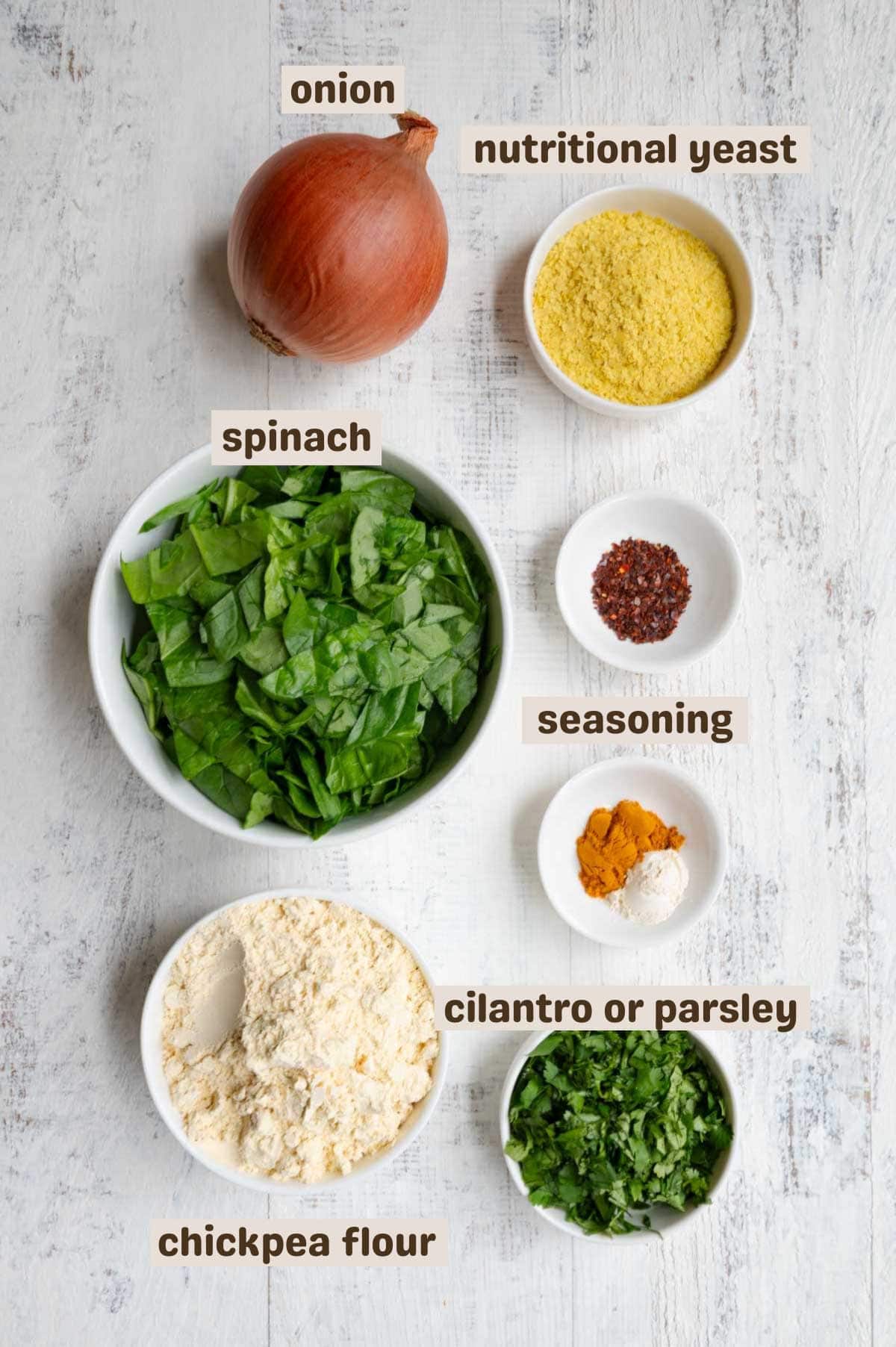
- Onion: As onions cook, they release natural moisture, which helps prevent sticking and creates the non-stick layer this recipe is known for. They also add prebiotic fibers that support gut health and a subtle sweetness once browned.
- Chickpea/Besan flour: High in protein and fiber, chickpea flour forms the structure of the omelette, much like eggs would. It creates a tender, slightly fluffy base without cholesterol, helping keep you full and energized.
- Spinach: Rich in iron, folate, vitamin K, and antioxidants, spinach boosts the nutrient density of the omelette without adding many calories. Its moisture also helps soften the onion layer and keeps the filling tender.
- Turmeric: A pinch of turmeric adds a warm golden color reminiscent of eggs, along with anti-inflammatory compounds. It pairs well with savory flavors and adds visual appeal without overpowering the dish.
- Nutritional Yeast: Provides savory, cheesy flavor with a boost of B vitamins (including B12 if fortified). It deepens flavor and enhances richness, especially in egg-style recipes.
- Garlic Powder: Adds gentle aroma and savory depth without chopping garlic. It rounds out the flavor and balances the earthy notes of chickpea flour.
- Oil (optional): Crisps the edges and promotes browning, but is not required.
See the printable recipe card below for quantities.
🤷🏽♀️ Besan vs Chickpea Flour vs Gram Flour
Chickpea Flour:
Made from whole dried chickpeas. Slightly coarser texture and a more pronounced chickpea flavor. Works perfectly for omelettes, but can make the batter a bit thicker and heartier.
Besan:
Finely milled flour made from chana dal (split brown chickpeas/garbanzo beans). Smoother and silkier than standard chickpea flour, which creates a softer omelette texture. Common in Indian cooking.
Gram Flour:
Typically used as a general term for besan, though in some regions it may refer to flour from other legumes. Most packages labeled "gram flour" are identical to besan in texture and performance.
🧅 Substitutions
This recipe is versatile and easy to adapt. Below are some simple ingredient substitutions.
- Besan flour and chickpea flour can be used interchangeably. Besan or gram flour gives the softest texture, while chickpea flour works just as well with a slightly heartier bite.
- Water: Use soy milk instead of water for higher protein and a creamier texture.
- Spinach: Swap for kale, arugula, chard, or collard greens.
- Yellow onion: Use white onion or shallot for a milder onion flavor.
- Salt: Use black salt (kala namak) instead of regular salt for an egg-like taste.
- Spices & Herbs: Add cumin, smoked paprika, or fresh herbs for variation.
📝 Tips for Making a No-Stick Vegan Omelette
These additional tips will help you get the best results from this recipe.
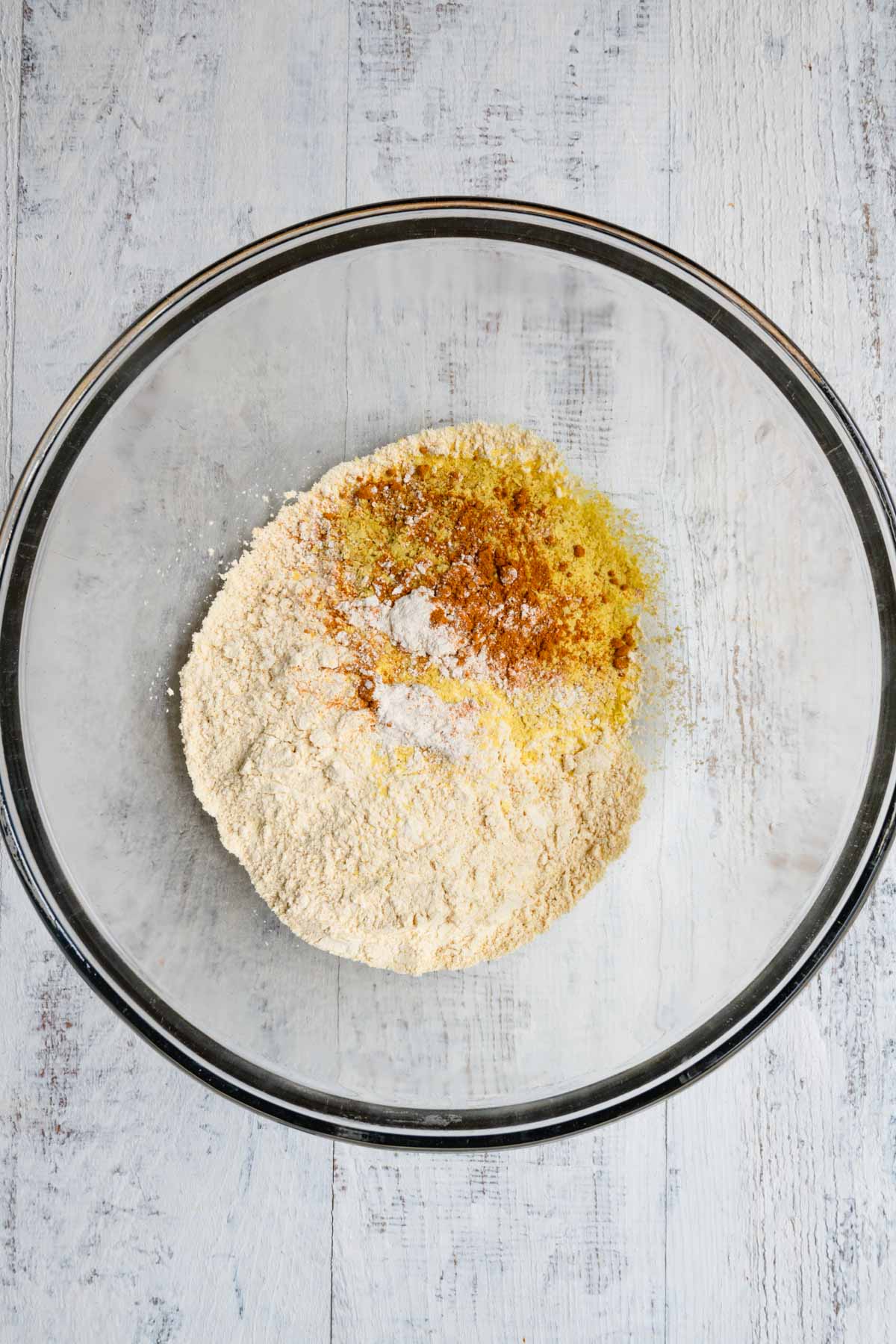
- Whisk all dry ingredients together first.
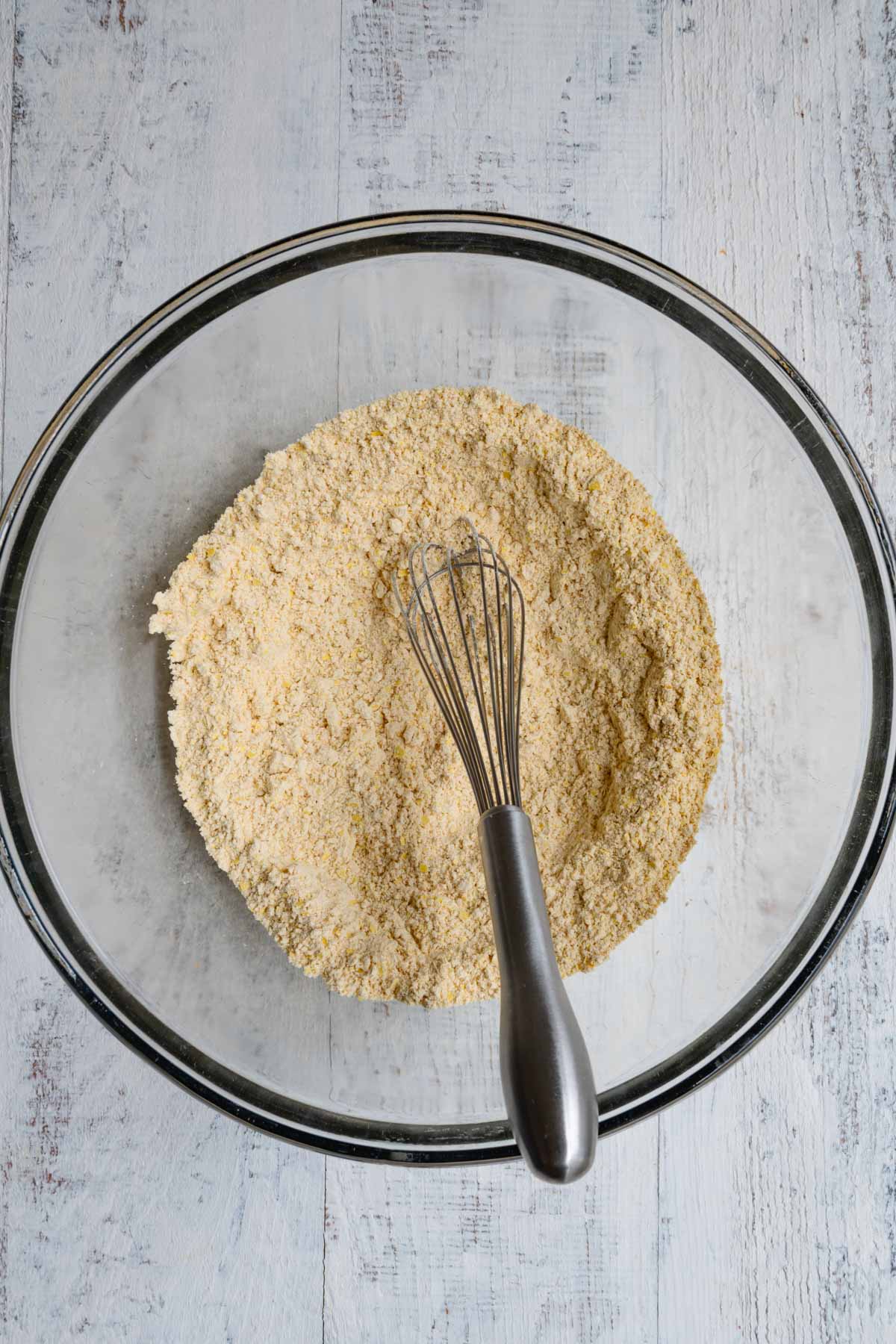
- This way, the turmeric, garlic powder, salt, pepper, and nutritional yeast distribute evenly.
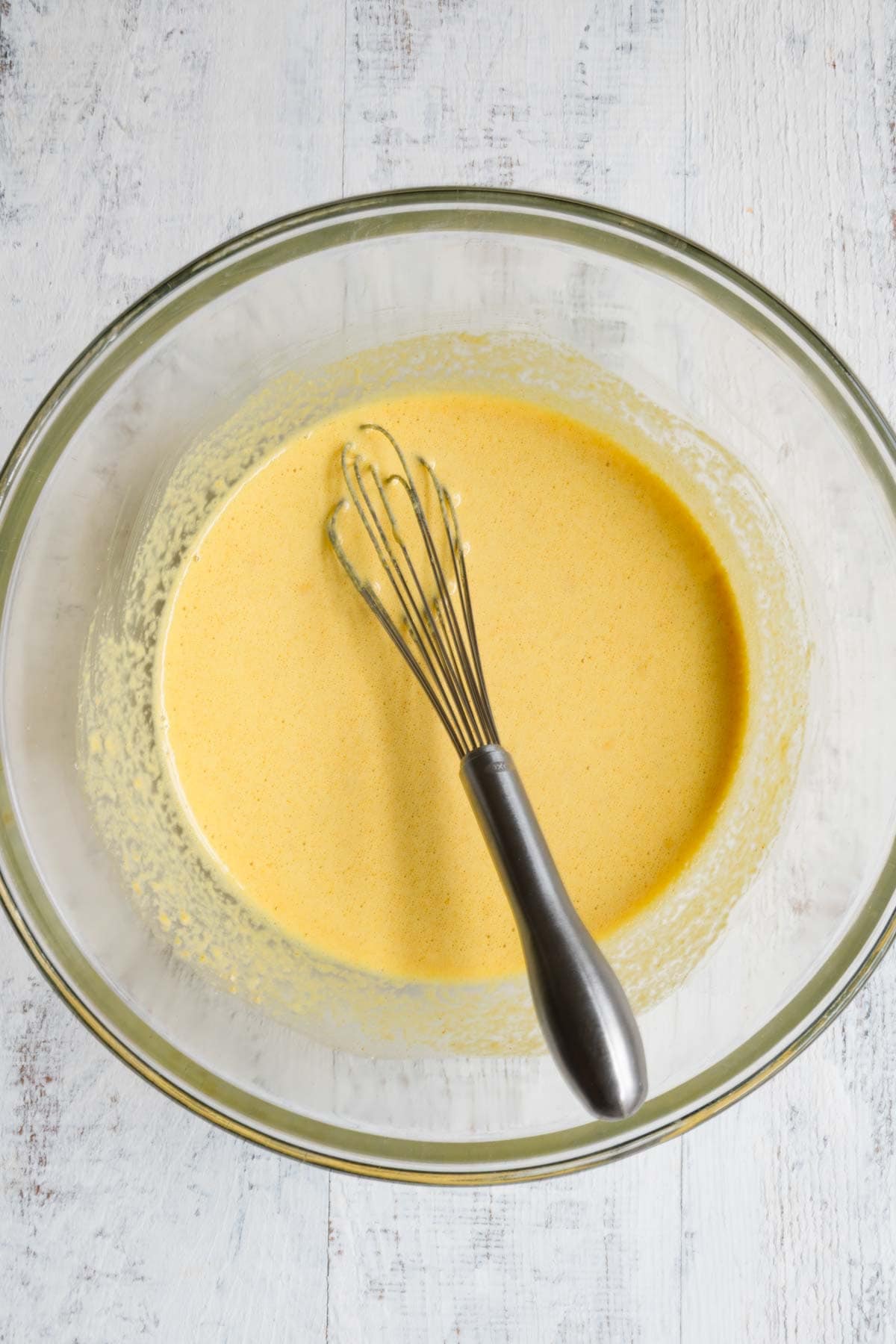
- Add water slowly while whisking to avoid lumps. Rest the batter 10 minutes so the flour hydrates and the texture becomes tender, not grainy.
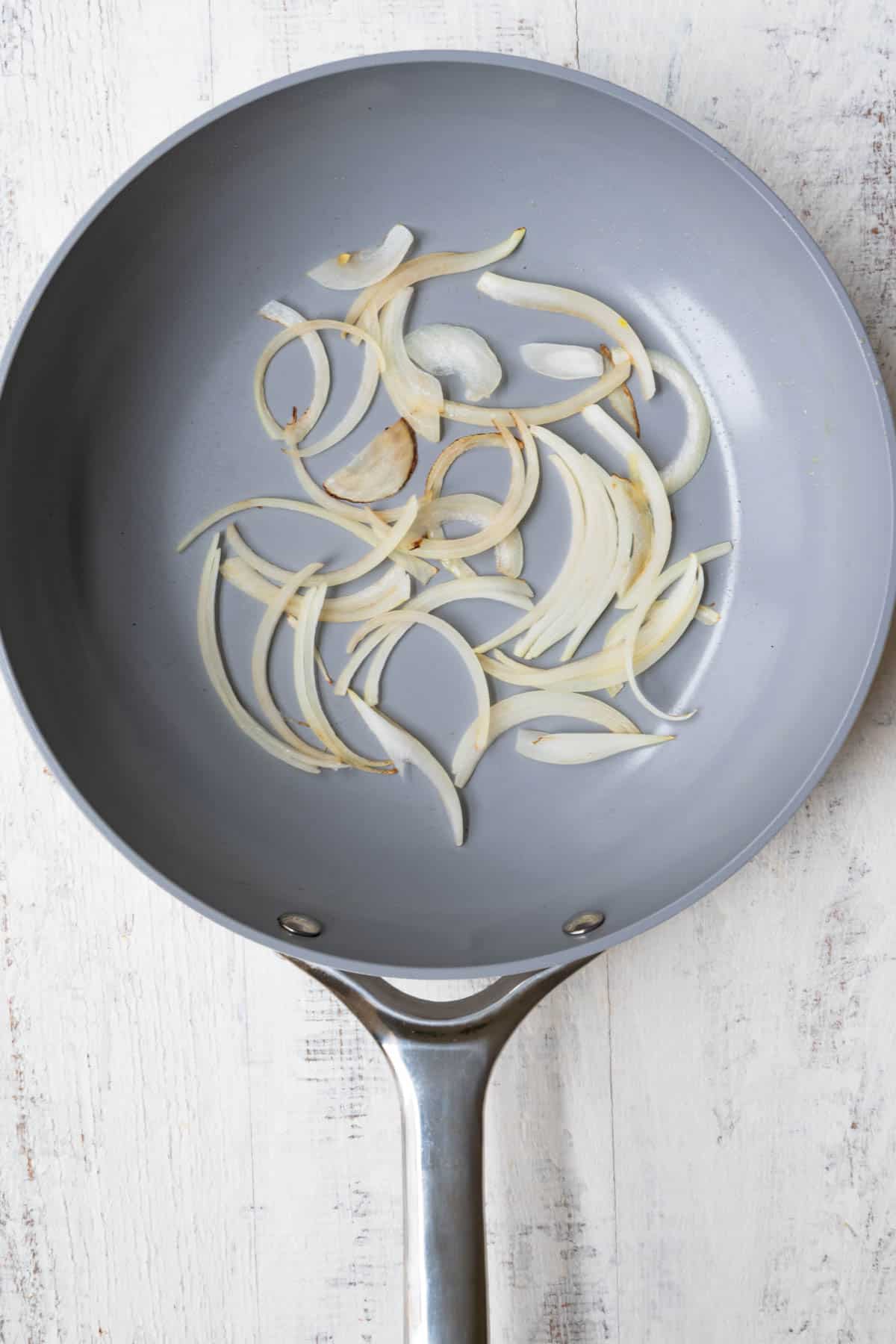
- Cook the onions first so they brown evenly.
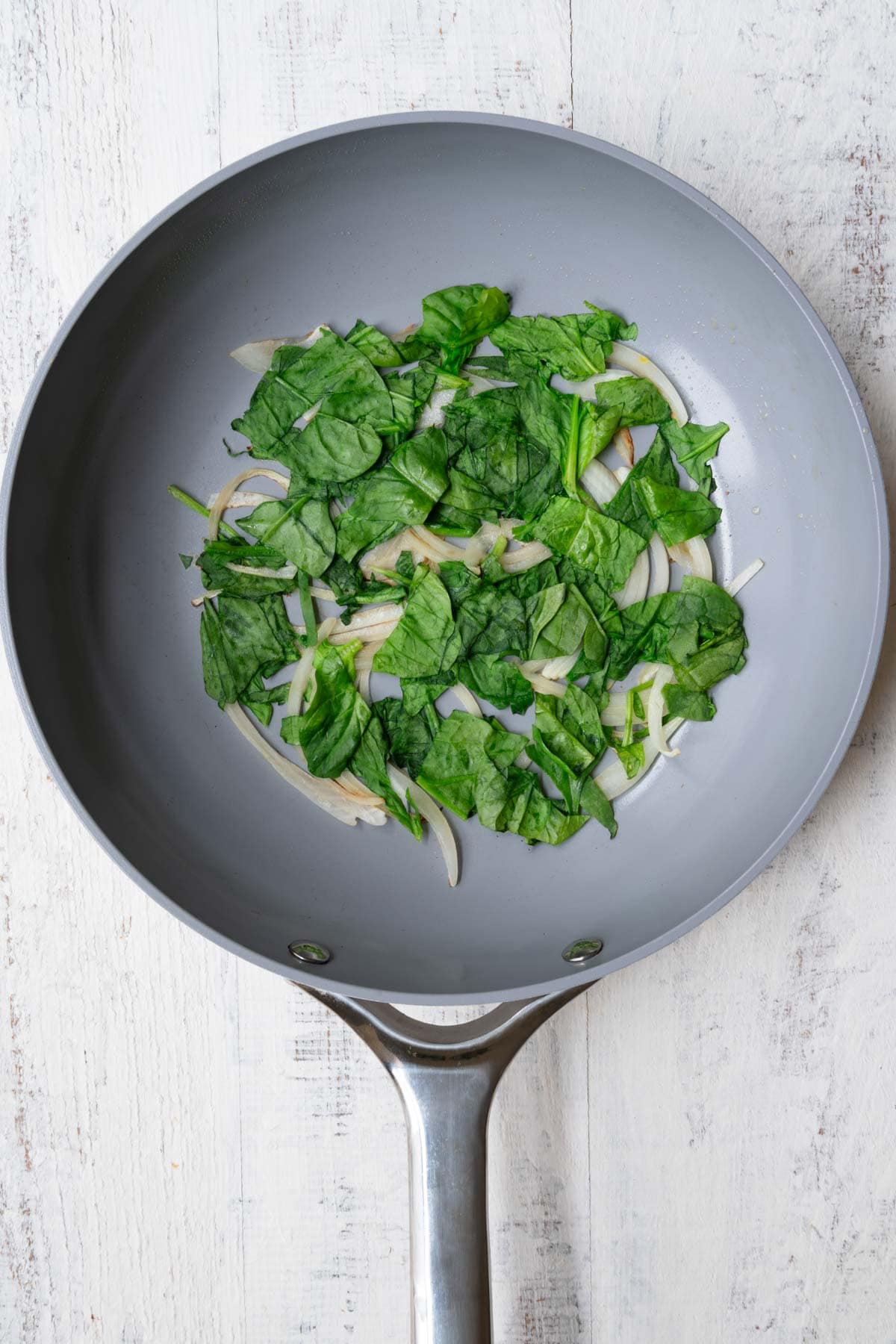
- Spread veggies into a neat circle before adding the batter. This way, they prevent the batter from sticking to the pan.
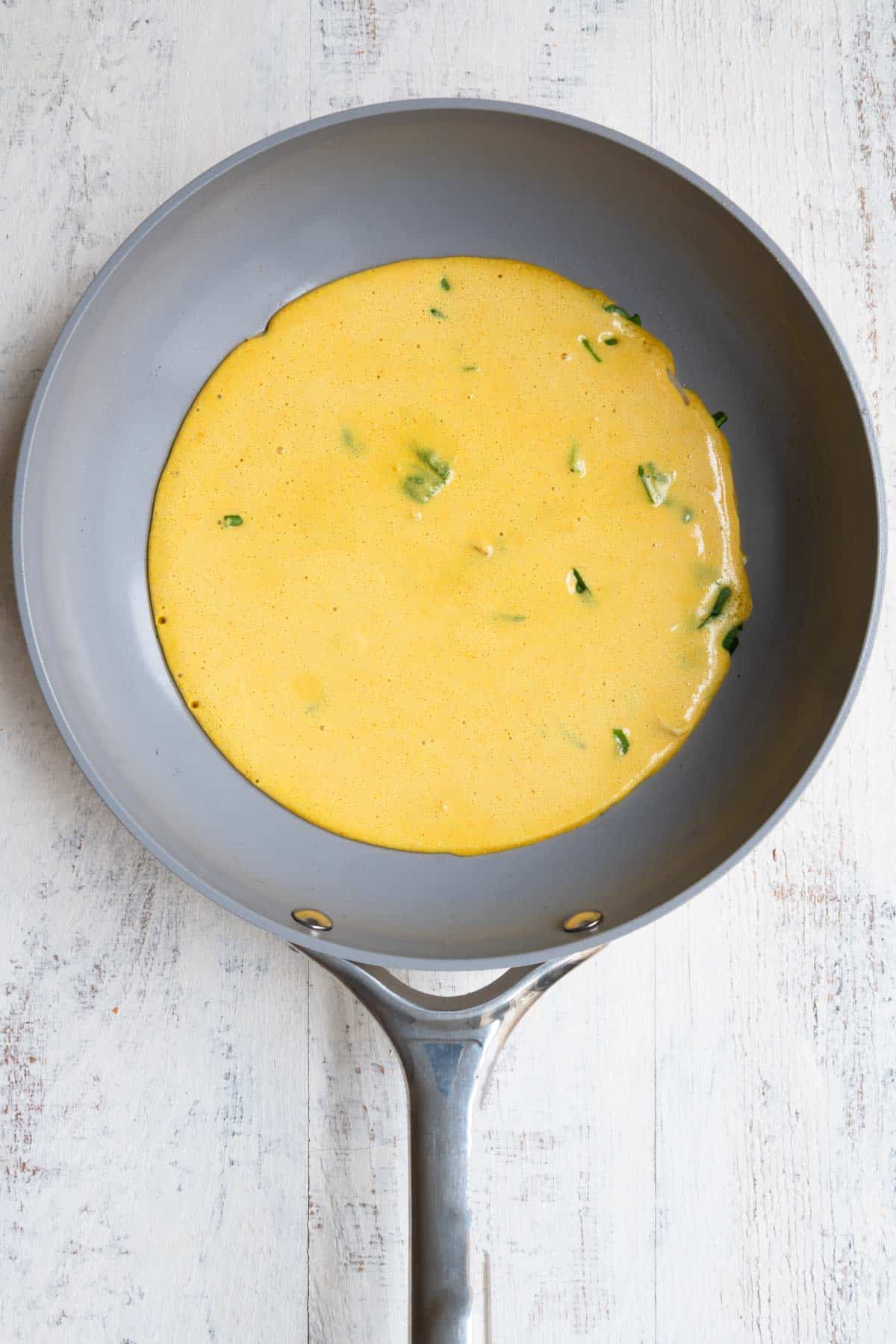
- Keep the heat medium-low and add the batter. Slow cooking prevents burning and ensures the center cooks through.
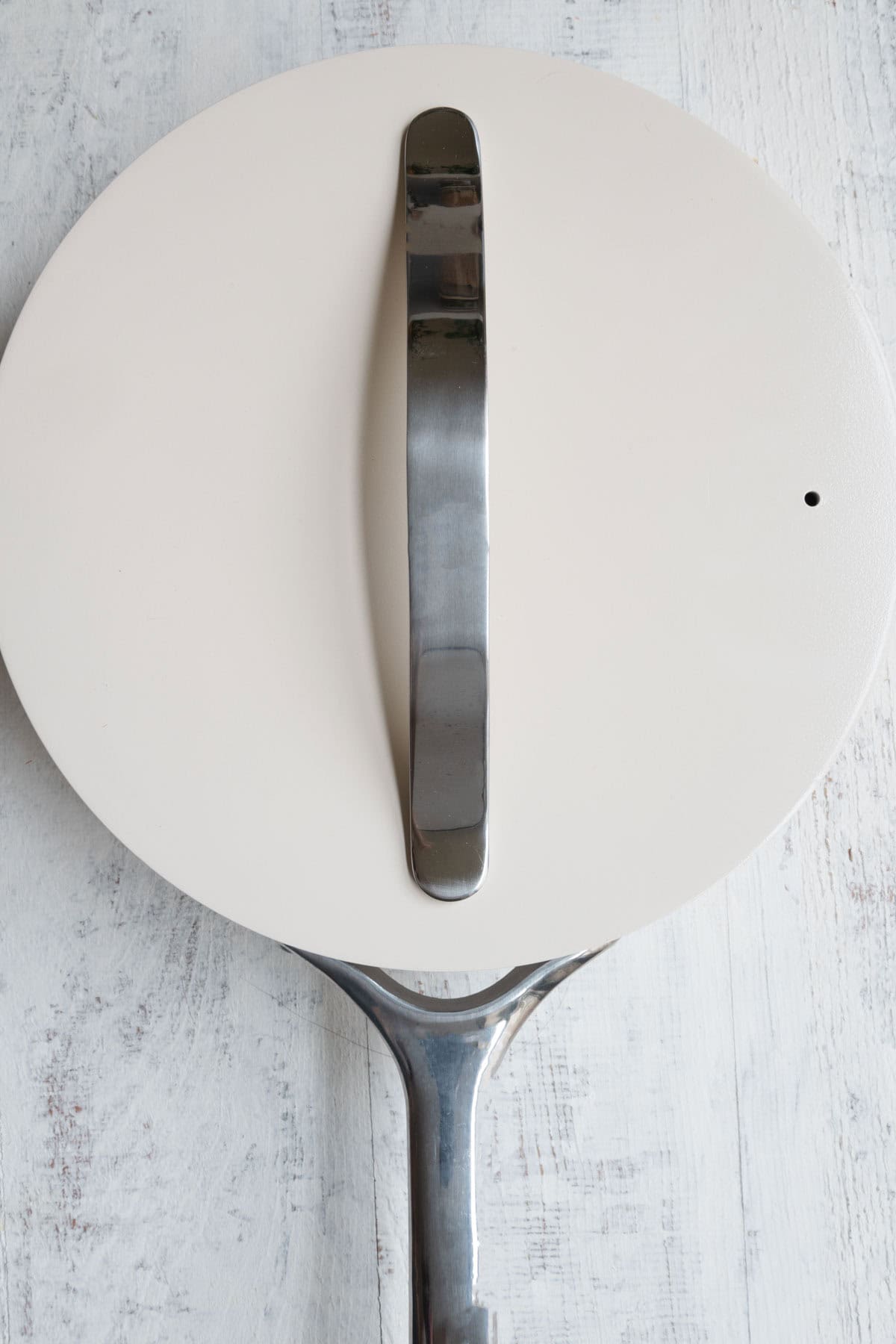
- Cover the pan so the top steams and sets without needing to flip prematurely.
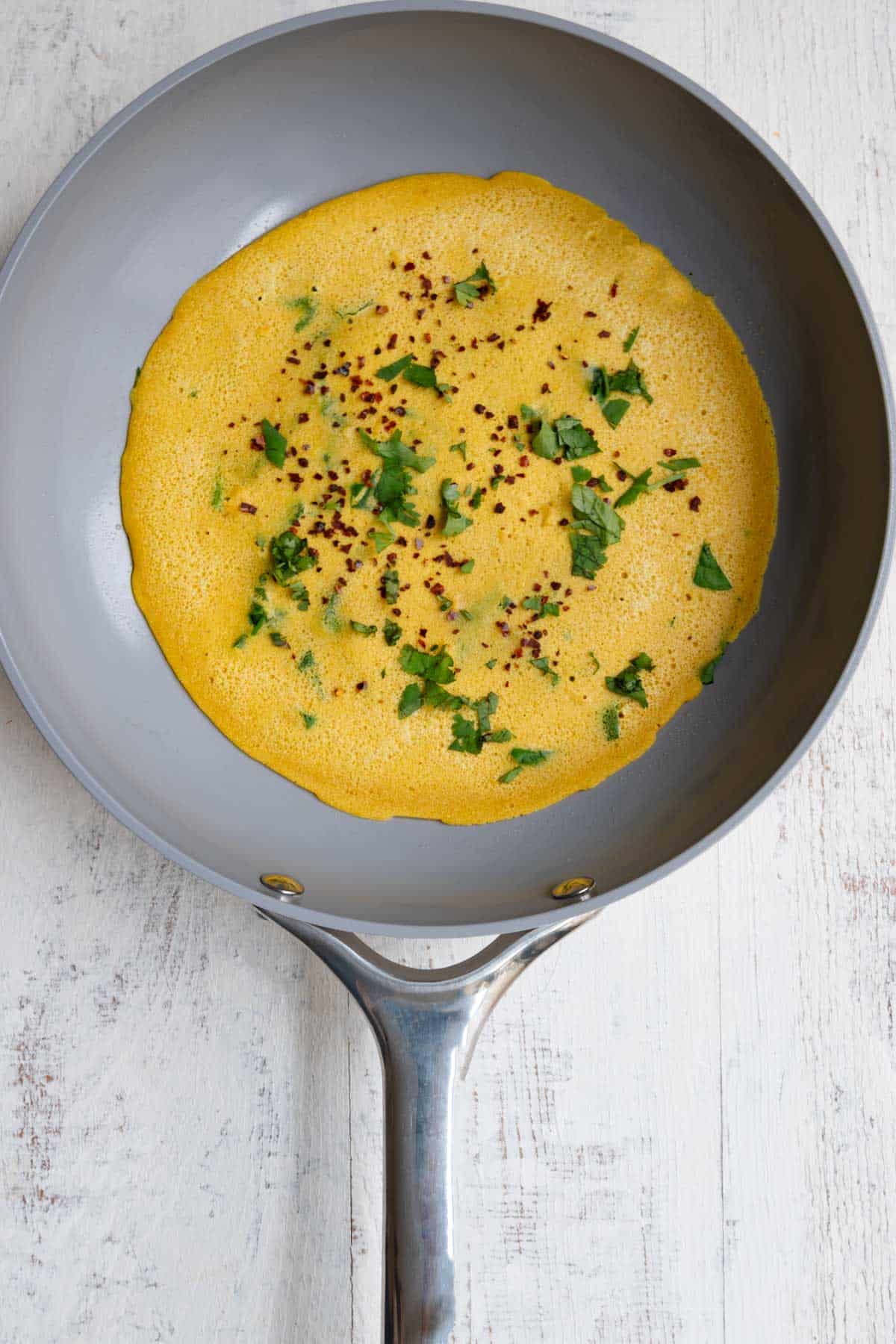
- Wait until edges lift easily before folding to avoid tearing. For crisp edges, add a drizzle of oil after the batter sets. This is the time to add fillings: vegan cheese, crushed red pepper, chopped herbs.
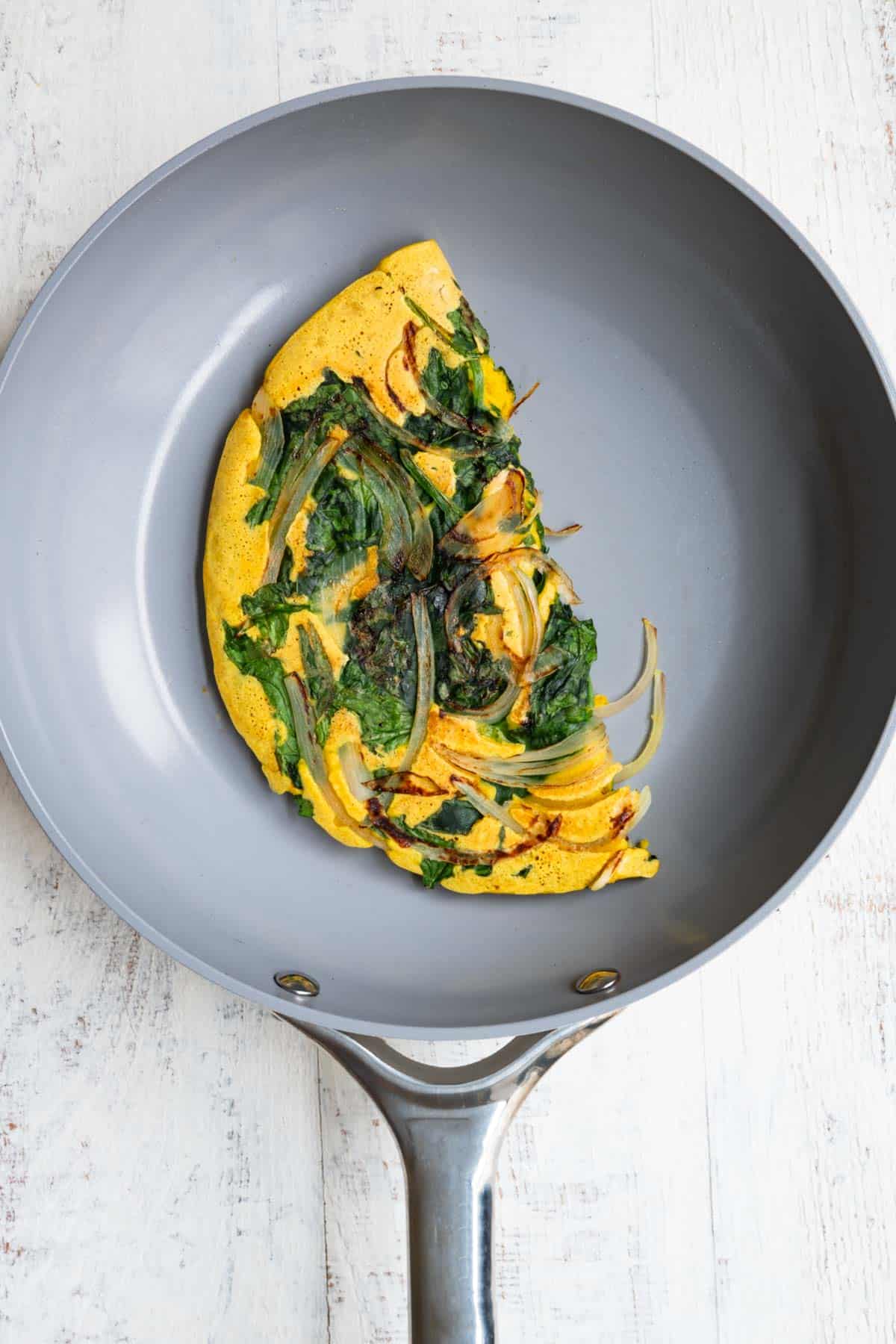
- Run a spatula around the edges, fold in half, and flip once more if needed. Serve.
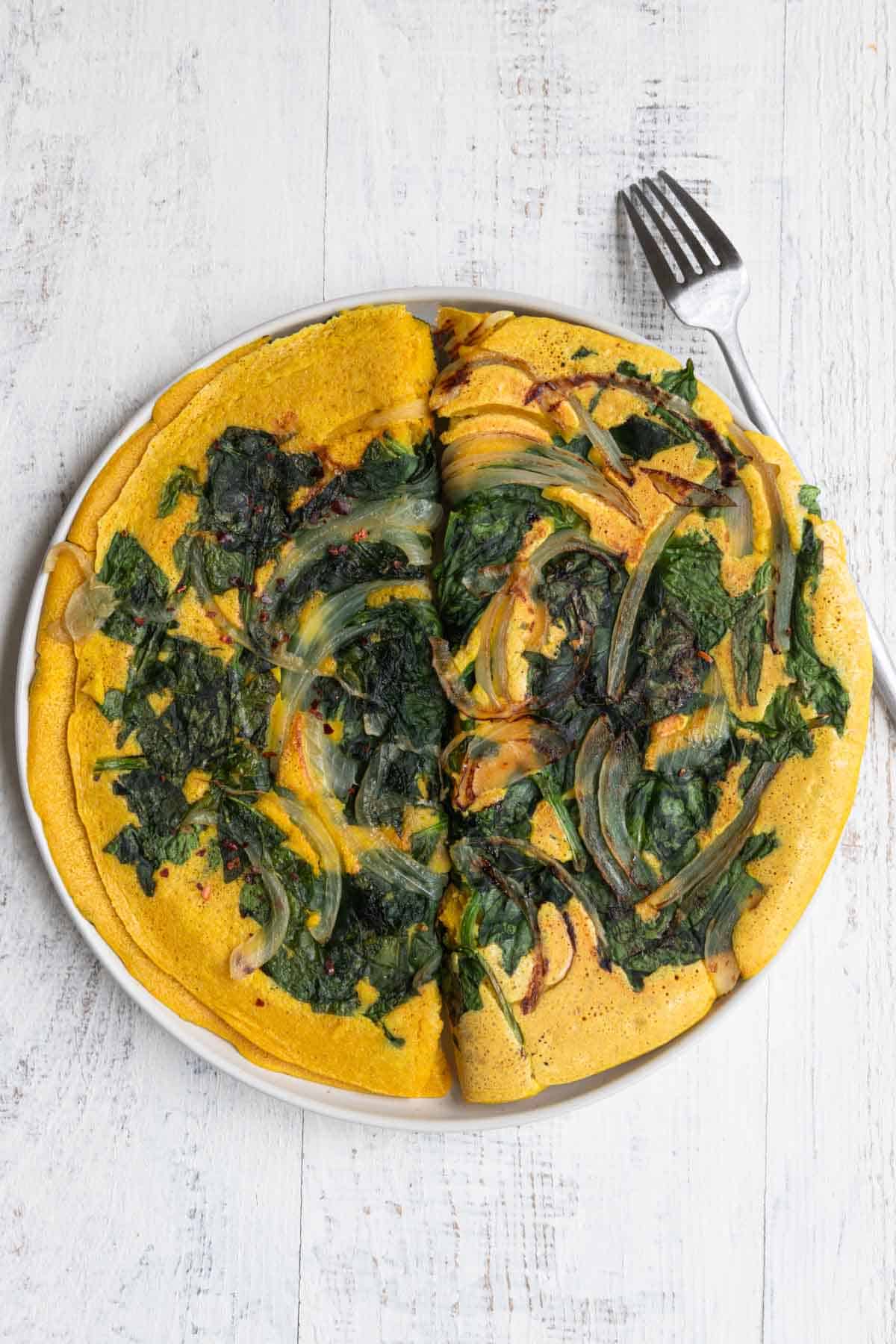
- Make two, freeze one, and reheat in a toaster oven for a quick breakfast.
Vegan Omelette Recipe
Ingredients
- ½ cup chickpea flour
- ½ cup water plus more as needed
- 1 tablespoon nutritional yeast
- ¼ teaspoon turmeric
- ¼ teaspoon garlic powder
- Salt and black pepper to taste
- Drizzle of olive oil optional
- ⅓ cup thinly sliced onion
- ¾ cup spinach or kale, or collards
- 1 tablespoon chopped cilantro or parsley, optional for garnish
- Dash of crushed red pepper optional
Save This Recipe!
Type your email & I'll send it to you!
EQUIPMENT
- 1 medium skillet preferably nonstick
Instructions
- Whisk the chickpea flour, water, nutritional yeast, turmeric, and garlic powder. Add salt and pepper to taste. Let it rest 5-10 minutes to hydrate for a better texture.
- Heat a nonstick or cast-iron pan over medium-low heat. Add optional olive oil or cook dry. If using oil, add a light mist of oil (or wipe with a paper towel if keeping low oil).
- Add the thin onion slices. Sauté the onions for about 4 minutes, or until lightly browned and softened. Spread evenly in a circle about the size of the omelette.
- Add the chopped spinach on top. Press it down so the veggies form a flat layer. Cook for 3 minutes to steam and soften greens.
- Pour the batter over the vegetables, tilting the pan slightly to spread. Cover and cook for about 7 minutes, or until the mixture is set.
- Optional add-ins: Add cheese, herbs, or spices, if using. Spread them evenly over the surface.
- Fold and serve. Run a spatula around the edges, and fold gently in half.
Notes
Nutrition
This information is provided as a courtesy and is only an estimate. Nutritional values may vary depending on factors such as product types and brands used.
⚖️ Convert the Recipe to Metric (g & mL)
Use these AI tools to do this:
✔️ Storage & Reheating Tips
These simple steps preserve flavor, texture, and the powerful nutrients.
- Refrigerate cooked omelettes for up to 5 days. Allow them to cool completely before storing.
- Store batter separately for up to 3 days in an airtight container. It may thicken as it rests - stir well and add a splash of water or soy milk if needed.
- Freeze cooked omelettes (or wrap into breakfast burritos) for up to 3 months. Place parchment between layers to prevent sticking.
- Reheat on a skillet over medium-low heat for the best texture. A tiny splash of water and a lid help restore softness. A toaster or air fryer gives crisp edges - great for meal prep lunches. Microwave works for quick heating, though the texture will be softer.
🐣 More Chickpea Flour or Vegan Egg Recipes
Chickpea Flour Recipes
3-Ingredient Chickpea Tofu (Burmese Tofu or Panelle) recipe made with vegetable broth for extra flavor.
These 5-ingredient Vegan Protein Biscuits are loaded with plant-based protein and ready in 20 minutes.
Try my 4-Ingredient Gluten-Free Zucchini Muffins, high in protein, healthy, and naturally sweetened with dates.
2-ingredient Homemade Gluten-Free Crackers. These one-bowl vegan crackers are crispy and flavorful.
Vegan Egg Recipes
These Easy Vegan Eggs taste better than store-bought alternatives like Just Egg and work perfectly every time.
An easy 20-minute Tofu Scramble-the best tofu scramble you have ever tasted!
🙋🏽♀️ Recipe FAQs
Because the veggies cook first, they create a moisture buffer between the pan's surface and batter.
Yes - fill cups ¾ full and bake at 350°F (175°C) for 22-26 minutes.
Add kala namak at the end if you want that classic eggy aroma without cholesterol. Nutritional yeast adds a mild, cheesy, savory depth, rounding out the flavor and making the omelette richer and more satisfying. Kala namak provides a sulfur note, while nutritional yeast brings umami.
Yes. Use an oven-safe skillet (cast iron or stainless). Once the vegetables are cooked and shaped like an omelette base, ladle the batter over the top and transfer it straight into the oven to finish cooking. Bake at 190°C / 375°F for 10-12 minutes or until the omelette is set and firm on top. This is helpful if you prefer a hands-off method or want a thicker, frittata-style texture.
🛍️ Shop Recipe Cookware and Ingredients

Note: As an Amazon Associate, I earn from qualifying purchases.
Nisha's Favorites
Get my tried-and-true products.

👩🏽🍳 Made this recipe?
Let me know your thoughts on High-Protein Vegan Omelette by leaving a ⭐️ rating below or sharing it on Instagram.


Kathy says
How should the consistency of the batter be thick or thin? When I made this recipe the batter was thick. I still enjoyed it. I really liked the layering of the onions, spinach , and batter. The omelette is very light, I will make it again.
Nisha Melvani, RDN says
Hi. So glad you enjoyed it. You can adjust the consistency to your preference.
Ioana says
This came out great! Had some leftover chickpea flour from multiple farinata failed attempts and did not expect this to work out so good!!
Nisha Melvani, RDN says
So glad you enjoyed it! Success!
Mary says
thank you for all your work to help make folks healthy. Can you please give a few recipes for folks with the FUT2 GG gene version? We do not have the enzyme to break down oxalates. When not broken down oxalates rip up the gut lining. As a vegan I cannot breakdown legumes and beans and as a vegetarian I am lactose intolerant. I am wheat sensitive as well. Tofu is high in oxalates. Wild rice is a current favorite but doesn't provide enough protein so I taking all the amino acids for my body to make its own protein. I soak and eat the tiny black lentils and I find macadamia nuts and walnuts the lowest in oxalates. I am learning to use a pressure cooker as well. Your advise is greatly appreciated. blessings, Mary
Nisha Melvani, RDN says
Hi. I will look into this. Note that the oxalate content of tofu varies depending on the soy variety, manufacturing process (coagulants used, water content, how it’s pressed), and how “serving” is defined.
Because of this variability, some brands of tofu may be relatively low in oxalates.
Neena Chandiramani says
Amazing, I love ❤️ this one!
Nisha Melvani, RDN says
Thank you so much!