
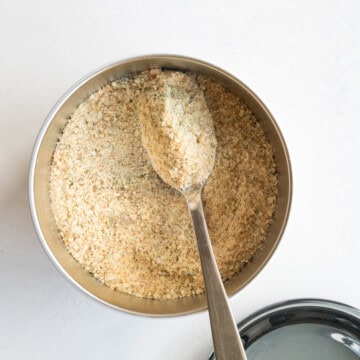
5-minute Homemade Protein Powder that tastes good! This researched formula is the best recipe out there. It's vegan, with an option for gluten-free and nut-free. Add this to smoothies to pack in more fiber, antioxidants, heart-healthy fats, and protein, and eliminate the risk of heavy metal contaminants!

Save This Recipe!
Type your email & I'll send it to you!
Jump to:
Boost smoothies, oats, chia pudding, and baked goods with protein, and nutrients. This protein powder recipe incorporates spermidine, known for its anti-aging benefits such as reducing age-related diseases and promoting longevity through enhanced autophagy.
This assortment of nuts and seeds provides a range of health advantages, as each brings unique benefits to the table!
This easy homemade protein power recipe was inspired by my 4 Nutritious Oatmeal Toppings Combinations, as well as this recipe for Longevity Powder. See my Longevity Spice Mix with the top 8 anti-aging spices, designed for savory recipes.
👩🏼🌾 Ingredients

- Peanuts - A randomized controlled study found that adding 30 grams of peanut protein to a resistance training program improved muscle growth and strength in older adults, benefiting both men and women. Peanuts provide all 20 amino acids, with the highest arginine content for muscle health. Roasting and boiling enhance their bioactive compounds, making them even more beneficial. For this recipe, use roasted or boiled peanuts, or toast raw ones as an alternative. For a nut-free option, substitute with an extra half cup of pumpkin seeds.
- Pumpkin seeds are an excellent source of plant-based protein, providing about 7 grams of protein per ounce. They are also rich in leucine, a key amino acid for muscle protein synthesis. Pumpkin seed oil was found to promote hair growth in this double-blind study. If you're using pumpkin seeds as a substitute for peanuts in a recipe, a ½ cup serving (about 64 grams) would provide approximately 12-14 grams of protein. This makes them an excellent plant-based protein option.
- Hemp hearts - Two tablespoons of hemp hearts have about the same amount of protein as two egg whites. Hemp is also a great source of magnesium - 30 g of hemp seeds contains 210 milligrams (mg) of magnesium. For bones, magnesium contributes to bone density by supporting calcium absorption and activating vitamin D. Around 60% of the body's magnesium is stored in bones, making it a critical mineral for maintaining their strength and structure.
- Wheat germ (optional) is the nutrient-rich core of the wheat kernel, located at its center. This part of the grain can sprout into a new plant, making it packed with essential nutrients. Wheat germ is loaded with protein, fiber, healthy fats, vitamins (especially vitamin E and B vitamins), and minerals like zinc, magnesium, and iron. It is high in protein and the anti-aging compound, spermidine.
- Sunflower seeds are rich in selenium and magnesium. Magnesium is essential for both muscle and bone health. It helps regulate muscle contractions, reducing the risk of cramps and spasms, and plays a vital role in energy production for muscle recovery.
See the printable recipe card below for quantities.
🥜 Substitutions
- Wheat germ - substitute with quinoa flakes or oat bran for gluten-free
- Peanuts - use almonds, almond flour, or more pumpkin seeds
- Nut-Free - substitute with more pumpkin seeds instead for nut-free
For more healthy breakfast ideas, visit my Vegan Breakfast Recipes page.
📖 How to Make Homemade Protein Powder
For the full recipe with quantities, scroll down to the bottom of the post. This is an overview.
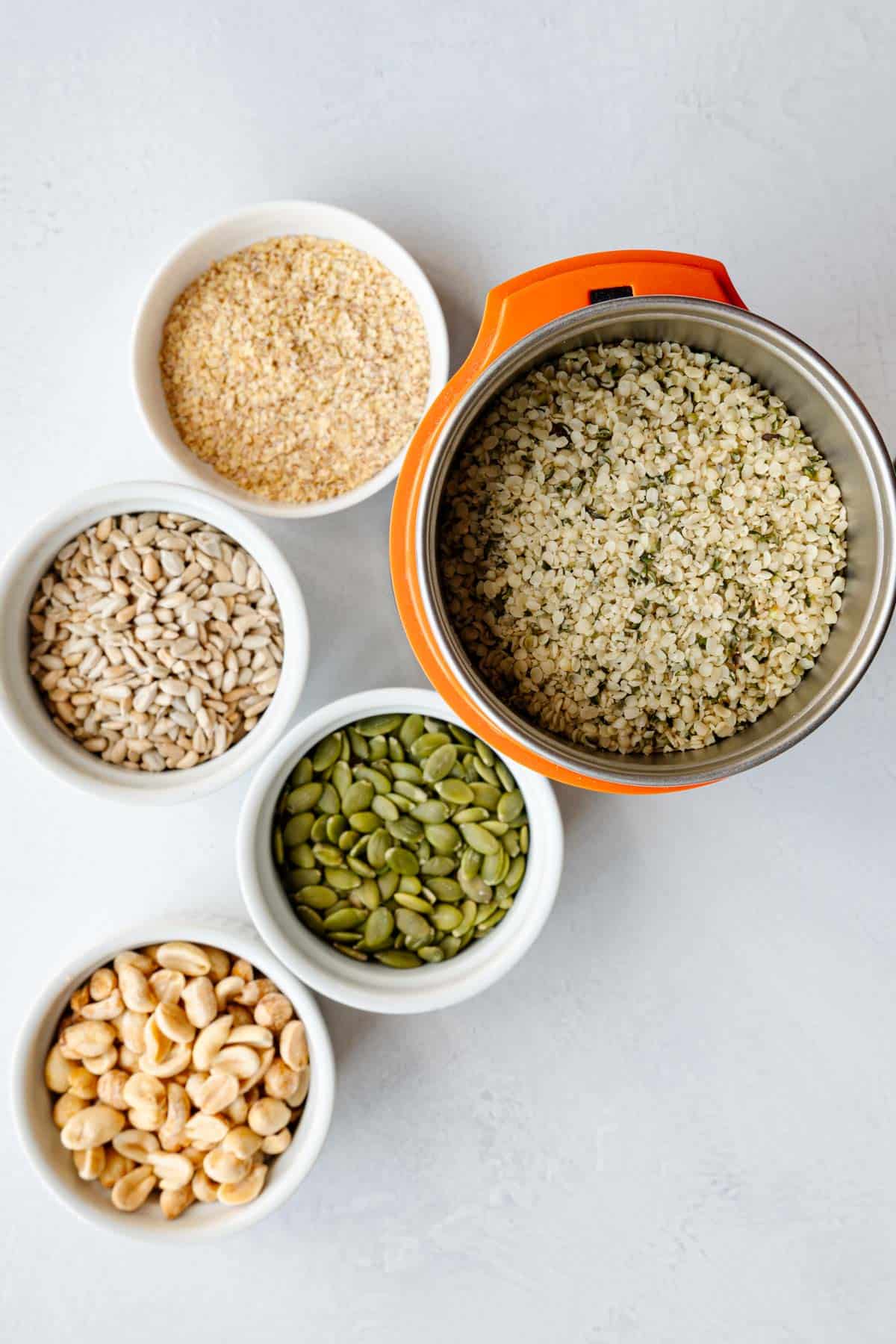
- Transfer the ingredients separately to a grinder. Do not overfill the bowl or they will not grind evenly. Fill it about halfway each time.
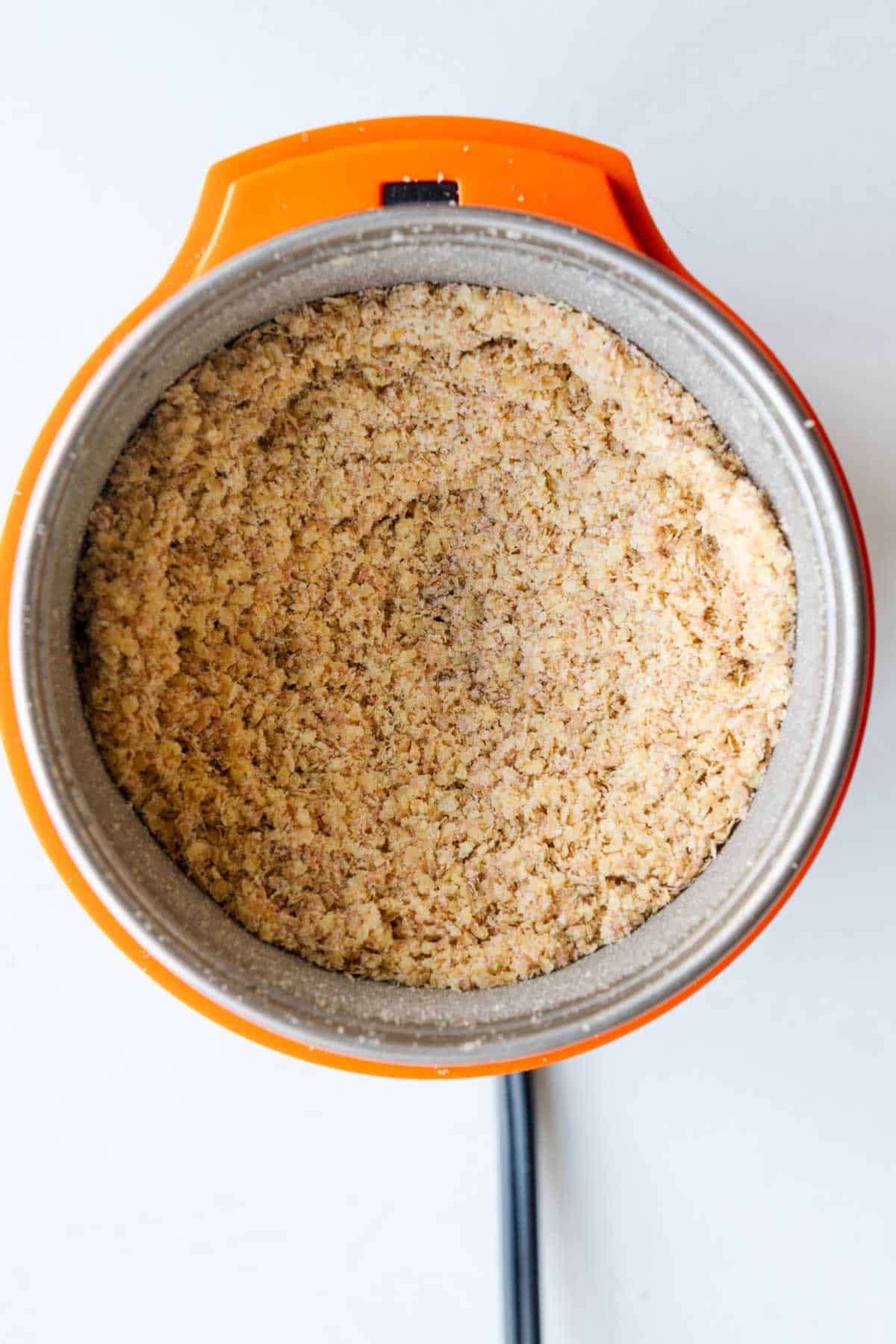
- Pulse briefly until a powder forms. Stop and stir after a few pulses. Transfer to a dark airtight container. Refrigerate for up to one month.
🧋 Make a Protein Shake
- Add to a blender: 3 tablespoons Homemade Protein Powder, ½ cup unsweetened soymilk or non-dairy milk, ⅓ cup frozen mango, 4 ice cubes, 3 grams creatine monohydrate (optional), 2 teaspoons cocoa powder (optional), and 1 to 2 soaked and pitted Medjool dates (optional).
- Blend the mixture on high until smooth.
Note: Research shows that creatine offers valuable health benefits, especially when combined with resistance training. It can boost strength, muscle mass, and overall body composition. (Ingredients are linked below.)
🛒 Shop Homemade Protein Powder

Note: As an Amazon Associate I earn from qualifying purchases.
Favorite Ingredients
Get my tried and true favorites.
✔️ Expert Tips
- This recipe makes about 3 cups of protein powder. Feel free to make one-half or less of the recipe. (One serving is 3 tablespoons.)
- Container: Use a dark airtight container to prevent nutrient damage from light or oxidation. This is the container I use.
- Grinder: This grinder has a removable bowl for easy cleaning (paid).
- Storage: Refrigerate in an airtight container for up to 30 days. Store in a dark container to prevent oxidation.
🙋🏽♀️ Recipe FAQs
Use a tablespoon to measure the powder depending on the grams of protein and calories you want to add. This information is in the recipe card. Add the protein powder to the blender with the smoothie ingredients and blend until smooth. You can also sprinkle it on oatmeal or chia pudding as a topping.
It is best to refrigerate this protein powder, as nuts can quickly become rancid due to their heart-healthy fat content. I refrigerate all of my nuts once they are opened.
This protein powder is made from whole foods high in heart-healthy fats, iodine, fiber, protein, and selenium. Plus, wheat germ contains spermidine which is anti-aging.
Peanuts are a versatile and nutrient-packed source of plant-based protein, containing variable amounts of all 20 amino acids, including the highest amount of arginine, which supports muscle health. A recent study showed that incorporating 30 grams of peanut protein alongside resistance training significantly improved muscle growth and strength in older adults, with no differences between men and women. Their rich nutrient profile, affordability, and availability make peanuts a practical choice for boosting protein intake. The study used roasted peanuts, so I suggest roasted or boiled peanuts in this recipe-or toasting raw peanuts for a homemade alternative. Roasting and microwaving (4 minutes at 6 KW) reduce aflatoxins in contaminated peanuts, and Valencia peanuts are an excellent choice.
🥣 Related Recipes
🫙Pairing

👩🏽🍳 Made this recipe?
Let me know your thoughts on Homemade Protein Powder by leaving a ⭐️ rating below or sharing it on Instagram.
Homemade Protein Powder
Ingredients
- 1 cup hemp hearts
- ¾ cup raw pumpkin seeds
- ½ cup unsalted peanuts
- ½ cup wheat germ or quinoa flakes
- ⅓ cup raw sunflower seeds
Save This Recipe!
Type your email & I'll send it to you!
Instructions
- Grind: Add each ingredient to a grinder and pulse briefly until a powder forms. Do not overpack the grinder bowl for even grinding. Fill it about halfway each time. Stop and stir after a few pulses.
- Storage: Transfer to a dark airtight container.
Notes
- The serving size is 3 tablespoons.
- This recipe makes about 3 cups of protein powder. Feel free to make one-half or less of the recipe.
- Proportions: hemp hearts 1:pumpkin seeds 0.75: peanuts 0.5: wheat germ or quinoa flakes 0.5: sunflower seeds 0.3
- For nut-free: Use ½ cup more pumpkin seeds instead of peanuts.
- More peanut substitutes: use almonds or almond flour
- For gluten-free: Use quinoa flakes or oat bran instead of wheat germ.
- An assortment of nuts and seeds provides a range of health advantages, as each has unique benefits!
- Refer to the blog post for the research and where to buy the ingredients.
Nutrition
This information is provided as a courtesy and is only an estimate. Nutritional values may vary depending on factors such as product types and brands used.
RC says
Once again great resource. I doubled the recipe. Nice to have a lead for optiin but grinding takes a lot of time. I reused my empty Orgain container for storage. Wish it had a longer shelf life.
Nisha Melvani, RDN says
Thank you! Reusing your empty container is such a clever idea. I hear you on the grinding—it does take some patience, especially with a double batch! You can also freeze portions to help keep it fresh longer.
Marita Aylen says
This looks so much better than store bought protein powder. I was wondering what the protein and absorbed calcium amount would be in each tablespoon. I need to get 30 grams of protein at each meal due to osteoporosis. Thanks. Your recipes are awesome.
Nisha Melvani, RDN says
Thanks! At 3 tablespoons per serving, this mix provides roughly 9 grams of protein. Calcium is relatively modest—approximately 25 mg per serving before accounting for differences in absorption. I’d use it as a protein and mineral boost rather than the primary protein source at a meal.