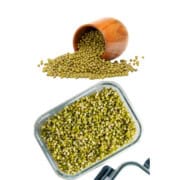
How to Sprout Mung Beans
How to Sprout Mung Beans Safely and Their Nutritional Benefits by a Registered Dietitian Nutritionist.
Servings: 8 servings
Calories: 90kcal
Equipment
- Jar
- Screen sprouting lids or cheesecloth or mesh
- Rubber band or jar ring (if using cheesecloth or mesh)
- Jar stand or drip tray
- Blackout sleeves optional (or dark space)
Ingredients
- 1 cup dried mung beans (½ cup for 1 jar, or 1 cup for 2 jars)
- Water
Instructions
- Rinse the beans: Measure ½ cup mung beans per jar. Rinse thoroughly under cool water and drain in a fine mesh sieve to remove dust and debris.
- Soak overnight: Add the mung beans to your jars and cover with 2 to 3 times as much water. Attach the screen lids (or use cheesecloth secured with a rubber band if you don’t have one). Let the beans soak at room temperature for 8 to 12 hours, until they swell and soften.
- Rinse: After soaking, drain the water through the screened lid or cheesecloth, rinse with fresh water, swirl gently, and drain again.
- Invert the jars and rest on the stand: Place the jars upside down at an angle on the jar stand (see notes), allowing excess water to drain into the tray. This keeps sprouts from getting soggy by preventing water from pooling at the bottom. To encourage strong, pale sprouts, either place the draining jars in a cool, dark cupboard or use the black covers that come with your sprouting kit. Darkness simulates underground sprouting conditions and supports growth.
- Rinse at least twice daily: Rinse and drain your sprouts morning and night. Always return the jars to the stand to drain completely.
- Harvest in 2 to 4 days: Your mung beans will be ready when small white roots appear—usually in as little as 2 days. Let them grow to your desired length (½ to 1 inch is common), then give a final rinse.
- Optional for cooked sprouts: Simmer the mung bean sprouts in boiling water for about 3 minutes, or until just tender. Drain well in a colander. Transfer to an airtight container. Store in the refrigerator and use within 5 days.
- For raw sprouts: After the final rinse, let the sprouts drain thoroughly and remove any unsprouted beans. Transfer to a clean, airtight container lined with a paper towel to absorb moisture. Store in the refrigerator and use within 3 to 4 days. Rinse again before eating raw.
Notes
Don’t have a sprouting stand? Place the jar upside down at a slight angle in a bowl or dish rack, propping it up on a folded kitchen towel or leaning it against the bowl’s edge. Just make sure the mouth of the jar stays elevated and fully open to drain, and that air can circulate. Avoid letting the jar sit flat—sprouts need good airflow to stay fresh and mold-free.
Use clean, filtered water: This reduces the risk of contamination and gives your sprouts the best environment to grow.
Keep everything clean: Wash your jars, lids, and hands thoroughly before starting and between batches.
Don’t oversoak: Soaking longer than 12 hours at the start can cause the beans to soften too much or ferment.
Watch the temperature: Sprouts grow best at room temperature (65–75°F). If your kitchen is warm or humid, rinse 3 times a day to prevent spoilage.
Smell check daily: Fresh sprouts smell clean and slightly nutty. If they smell sour or look slimy, discard them.
Darkness helps: Use the blackout sleeves or a dark cupboard to keep sprouts pale, crisp, and fast-growing.
Nutrition
Calories: 90kcal | Carbohydrates: 16g | Protein: 6g | Fat: 0.3g | Saturated Fat: 0.1g | Polyunsaturated Fat: 0.1g | Monounsaturated Fat: 0.04g | Sodium: 4mg | Potassium: 322mg | Fiber: 4g | Sugar: 2g | Calcium: 34mg | Iron: 2mg
